Create an Excellent PCB Conformal Coating Standard
Paints Conformal Coatings Requirements
1) Paint Film Thickness
The dry film thickness ranges from 25um-40um.
2) Second Coating
After the paint film has cured, a secondary coating can be applied to ensure that the product with the
highest protection needs is coated thickly.
3) Check and Repair PCB
Repair any defects and check whether the circuit board is coated according to the required quality.
Conformal coating is applied to the pins, and other areas that are protected.
Use tweezers or a cottonball dipped into water to clean it. When scrubbing, be careful not to remove the
correct paint film.
Components replacement. If you wish to replace a component after curing the paint, you may do so
as follows:
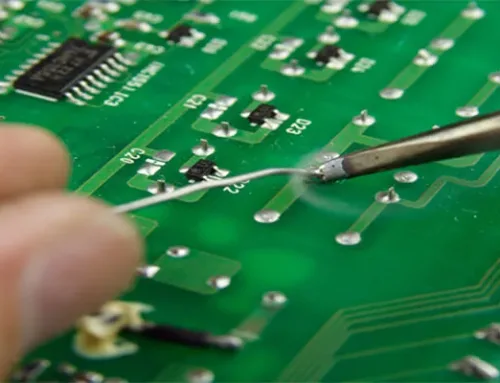
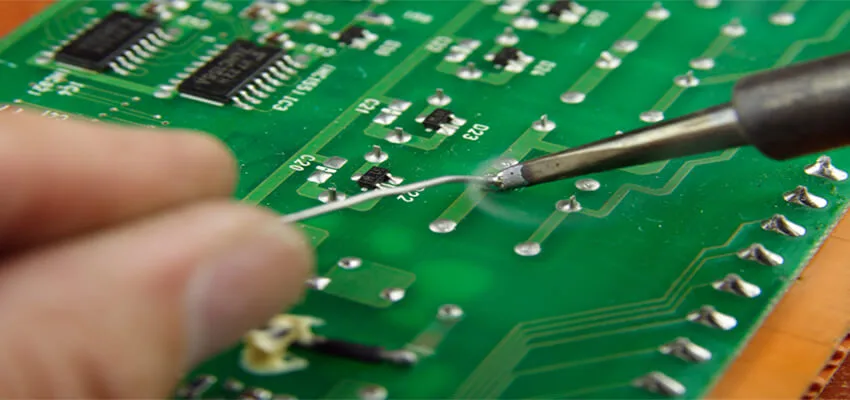
• Solder the components directly with an electric soldering tool. Then, use a cotton towel dipped into
board cleaning water to remove the residue around the soldering pad.
• Soldering replacement components.
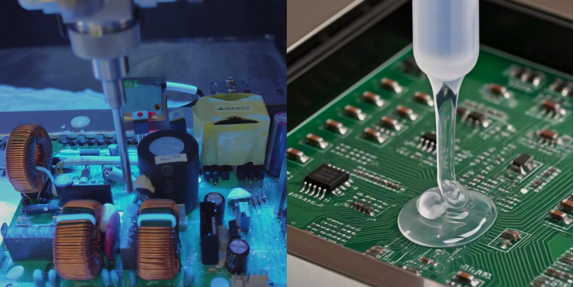
• Apply the three-proof painting to the welded parts using a brush. Wait for the film to solidify and
dry.

Operation Requirements
1) Workplace Requirements
It is essential that the workplace for conformal coating be dust-free and free of flying particles. The
workplace must have excellent ventilation and non-staff entry is prohibited.
2) Operator Protection
Wearing protective gear such as rubber gloves, chemical-resistant glasses, a gas mask or mask, and a
mask is mandatory when operating. This prevents injury to the body.
3) Clean Up After Work
After finishing the work, clean the used tools in time and close the container with the three-conformal
paint tightly.
4)Anti-Static
Circuit boards should be treated with anti-static. Do not overlap the circuit board. The PCB must be horizontally placed during the
coating process.
Quality Requirements
1)Paint Film Surface Requirements
The surface of the board should not have any paint flow. Avoid dripping paint onto isolated parts when
applying it with a brush.
To protect pads, SMT components or conductor surfaces, the conformal coating must be bright, smooth and
uniformly thick.

2)Paint Film Defect Requirements
Paint surface and component surfaces must be free of defects, foreign objects, such as bubbles and
pinholes.
3)Non-Coatable Parts
Conformal coating should not be applied to isolated or localized components.
Parts and components which cannot be coated by conformal coating
Non-coated conventional devices include: painted high-power radiators or heat sinks; power resistors
(high-power diodes); potentiometers.
4)Special Case Coating
The RD department will determine if the parts are coated or not.
There are other parts and components which cannot be painted with three-proof paint, as shown in the
drawings. These components can be found in the “Catalogue of Non Proofing Components” (Areas).
Summary
Shortly, conformal coatings are a crucial process. To ensure safety and reliability, it should be done
according to the specifications.
It can improve efficiency and reduce maintenance costs by ensuring the quality of circuit boards.