Why Is Ceramic PCB Costlier than Regular PCB?
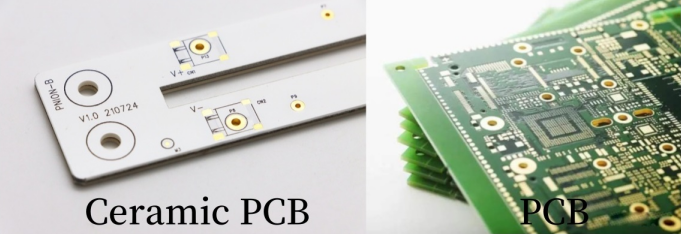
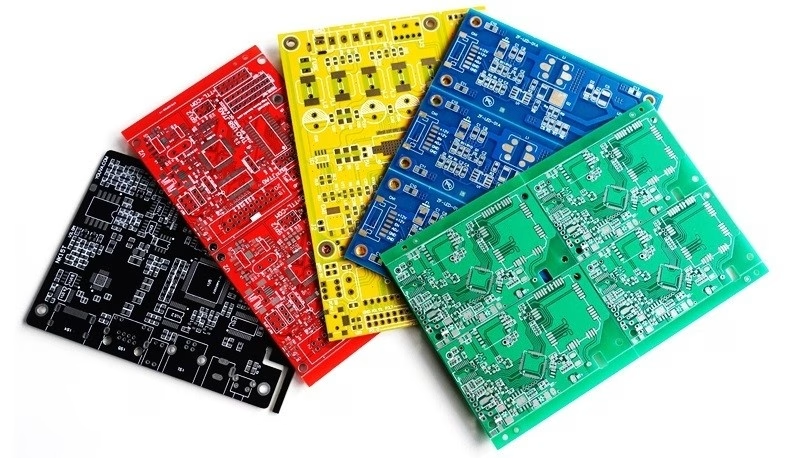
PCBs consist of a copper foil and a substrate
that are bonded together. The substrate materials include glass fiber (FR-4), resin (FR-3), or other
materials. Adhesives are typically phenolic, epoxies, etc.
Ceramic PCBs consist of metal oxide ceramics, such as aluminum oxides (Al 2O 3), aluminum nitrides
(AlN), and beryllium oxides (BeO). The performance of ceramic board and PCB 2 is very different.
Plate Rigidity
Chemical fibers are used to make PCBs. Their rigidity is inferior to ceramic substrates due to
environmental, temperature and processing conditions. It has a lower thermal expansion coefficient, a
stronger thermal stability, and is more suitable for harsh environments.
>
Thermal Performance
Ceramic substrates are excellent at dissipating heat and are ideal for devices with high power. Ordinary
PCBs, however, are restricted by the material technology. They are less impressive than ceramic
materials.
Insulation Properties
Ceramic substrates are highly resistant to high voltage and have good insulation properties, protecting
personal safety and equipment.
Strength Is Determined by the Bonding Strength of Ceramic Substrates and Copper Foils.
Using adhesive technology, the copper foil won’t fall off. This technology improves board
reliability.
To summarize the ceramic substrate has superior performance. Due to its source of material,
manufacturing process and market use, its price is higher than ordinary PCBs.