


New title

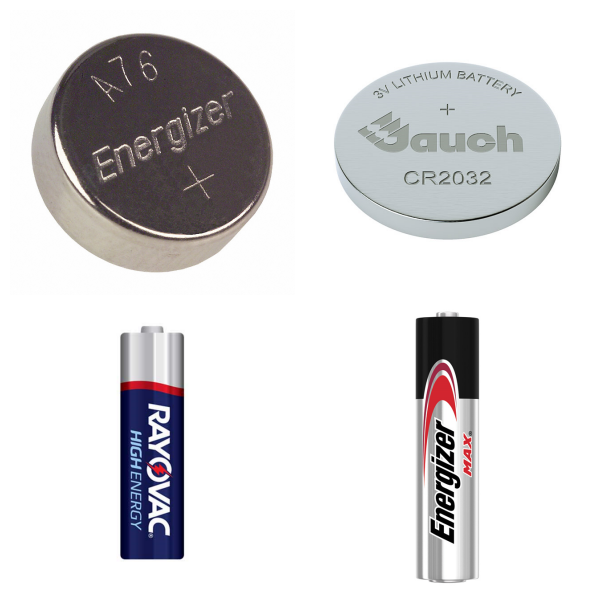
<h1> Batteries Non-Rechargeable (Primary) </h1> <h2> 1. What are Non-Rechargeable Batteries? </h2> <p> Batteries Non-Rechargeable (Primary) refers to disposable non-rechargeable batteries that directly release electrical energy through internal chemical reactions and cannot be restored by charging. This type of battery is known for its high energy density, low self-discharge rate, long shelf life (up to decades), and stability, and is suitable for low-power, long-term, or special scenarios. </p> <p>   </p> <h2> 2. What are the Main Technical Features of Non-Rechargeable Batteries? </h2> <p> <strong>1) Chemical System</strong>: including alkaline batteries (manganese dioxide-zinc formula), lithium metal batteries (such as CR series button batteries), zinc-carbon batteries, silver oxide batteries, etc. </p> <p> <strong>2) Performance Advantages</strong>: </p> <p> <strong>High Reliability</strong>: maintenance-free, ready to use, suitable for extreme environments (such as space, and military equipment). </p> <p> <strong>Low Cost</strong>: low unit price and no need for charging equipment, suitable for disposable consumer electronics. </p> <p> <strong>3) Environmental Protection</strong>: </p> <p> Some types (such as alkaline batteries) do not contain mercury and can be disposed of with domestic waste. </p> <p>   </p> <h2> 3. What are Non-Rechargeable Batteries Used for? </h2> <p> <strong>Low-power Devices</strong>: remote controls, clocks, electronic toys, etc. </p> <p> <strong>‌Special Fields‌</strong>: medical equipment (such as hearing aids), aerospace equipment (such as Mars rover atomic energy batteries), and military equipment‌. </p> <p>   </p> <h2> 4. What is the ‌Development Trends of Non-Rechargeable Batteries?‌ </h2> <p> <strong>‌Material Innovation‌</strong>: Nanotechnology improves the utilization rate of electrode active materials, and degradable materials reduce environmental burden‌. </p> <p> <strong>‌High-performance Design‌</strong>: Develop new chemical formulas such as lithium-sulfur systems to break through energy density limitations‌. </p> <p> <strong>‌Recycling technology‌</strong>: Promote harmless recycling processes and reduce the risk of pollution from discarded batteries‌. </p> <p>   </p> <h2> 5. ‌Precautions for Using Non-Rechargeable Batteries‌ </h2> <p> <strong>‌Charging is Prohibited‌</strong>: Forced charging may cause leakage or explosion‌. </p> <p> <strong>‌Adaptation Selection‌</strong>: It needs to be selected according to the device voltage, size (such as CR2032/CR2450 button battery), and operating temperature range‌. </p> <p>
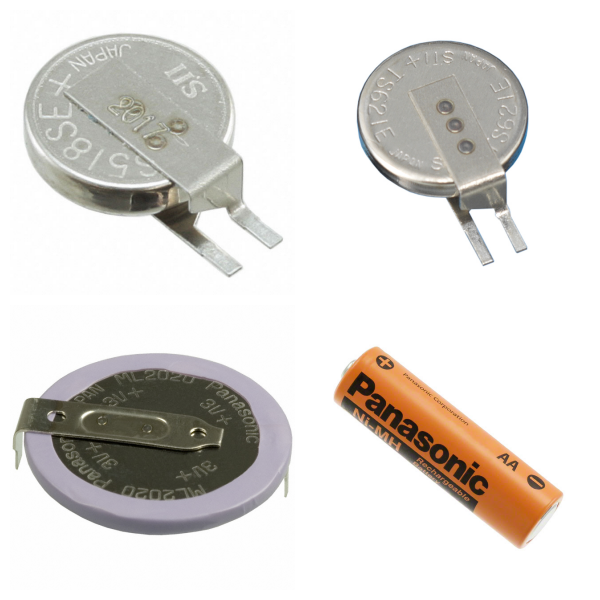
<h1> Batteries Rechargeable (Secondary) </h1> <h2> ‌1. What are Rechargeable Batteries? ‌ </h2> <p> A rechargeable/secondary battery refers to a battery that can restore active substances through charging and realize reversible conversion of electrical energy and chemical energy, and can be reused hundreds to thousands of times. Its core difference from primary batteries (non-rechargeable) lies in the reversibility of internal chemical reactions. </p> <p>   </p> <h2> ‌2. What are the Core Features of Rechargeable Batteries?‌ </h2> <p> <strong>‌Reversibility‌</strong>: Regenerate active substances through charging to achieve cyclic charging and discharging. </p> <p> <strong>‌Economical‌</strong>: Long cycle life (hundreds to tens of thousands of times), long-term use cost is lower than primary batteries. </p> <p> <strong>‌Environmental Protection‌</strong>: Reduce waste generation and meet the needs of sustainable development. </p> <p> <strong>‌Diversified Voltage and Capacity‌</strong>: The nominal voltage ranges from 1.2V (such as nickel-metal hydride) to 48V (such as lead-acid battery packs) to meet the needs of different scenarios. </p> <p>   </p> <h2> ‌3. What are the Common Types of Rechargeable Batteries?‌ </h2> <p> <strong>‌Lead-acid Battery‌</strong>: The nominal voltage is 2.0V, and it is used for transportation and energy storage systems, but the energy density is low and bulky. </p> <p> <strong>‌Nickel-cadmium Battery‌</strong>: nominal voltage 1.2V, supports large current discharge, but has memory effect and contains heavy metal cadmium‌. </p> <p> <strong>‌Nickel-metal Hydride Battery‌</strong>: nominal voltage 1.2V, high capacity and environmentally friendly, suitable for low-power electrical appliances‌. </p> <p> <strong>‌Lithium-ion Battery‌</strong>: high energy density, no memory effect, widely used in consumer electronics and new energy vehicles‌. </p> <p> <strong>‌Polymer lithium-ion Battery‌</strong>: improved safety and shape flexibility, used in high-end portable devices‌. </p> <p>   </p> <h2> ‌4. Where are Rechargeable Batteries Used?‌ </h2> <p> <strong>‌Energy Storage System‌</strong>: such as solar energy storage and grid peak regulation (lead acid, lithium-ion battery)‌. </p> <p> <strong>‌Transportation‌</strong>: electric vehicles, electric bicycles (lithium-ion, lead acid batteries)‌. </p> <p> <strong>‌Portable Devices‌</strong>: mobile phones, laptops (lithium-ion, polymer batteries)‌. </p> <p> <strong>‌Emergency Power Supply‌</strong>: UPS, emergency lighting (lead acid, nickel-metal hydride batteries)‌. </p> <p>   </p> <h2> ‌5. What are the Technical Parameters of Rechargeable Batteries?‌ </h2> <p> <strong>‌Cycle Life‌</strong>: the number of charge and discharge times when the capacity decays to 80% of the initial value‌. </p> <p> <strong>‌Self-discharge Rate‌</strong>: The rate at which the battery loses power when it is stationary, affecting long-term storage performance‌. </p> <p> <strong>‌Energy Density‌</strong>: The amount of power stored per unit volume/mass, which determines the endurance of the device‌. </p> <p>   </p> <h2> ‌6. What is the Industry Development Trend of Rechargeable Batteries?‌ </h2> <p> With the development of new energy technologies, lithium-ion batteries have become the mainstream choice due to their high energy density and long life; </p> <p>   </p> <p> New secondary battery technologies such as solid-state batteries and sodium-ion batteries are also being developed at an accelerated pace‌. </p> <p>
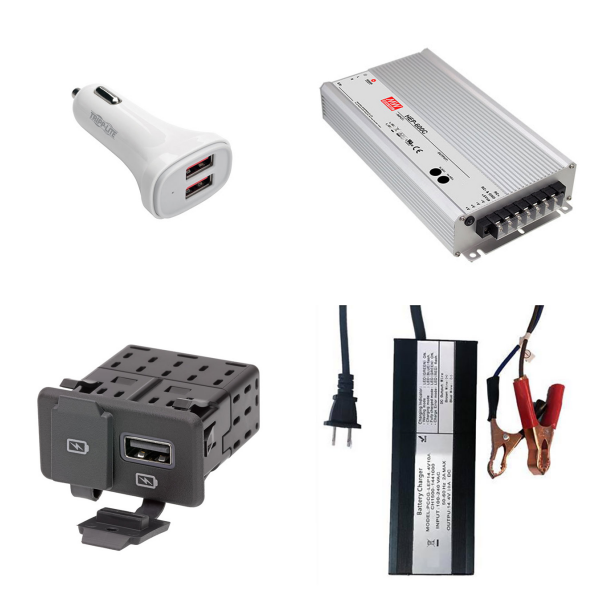
<h1> Battery Chargers </h1> <h2> 1. What are Battery Chargers? </h2> <p> <strong>Definition</strong>: A battery charger is an electronic device for rechargeable batteries such as electric vehicles, power tools, laptops, digital devices, etc. Its core function is to convert electrical energy into a form suitable for battery storage. </p> <p> <strong>Composition</strong>: It is generally composed of a housing, a power conversion module, a charging detection circuit and a charging protection module, and the output type is pure DC or pulsating DC. </p> <p>   </p> <h2> 2. What are the Types of Battery Chargers? </h2> <p> <strong>1) By Connection Method</strong>: </p> <p> Wall plug (directly plugged into a power socket); </p> <p> Desktop-type (need to be connected to the power supply via a cable). </p> <p>   </p> <p> <strong>2) By Battery Type</strong>: </p> <p> Ni-Cd/Ni-MH battery charger; </p> <p> Lead-acid battery charger; </p> <p> Lithium battery charger (including lithium iron phosphate). </p> <p>   </p> <h2> 3. How do Battery Chargers Work? </h2> <p> <strong>Charging Process</strong>: </p> <p> Convert alternating current (AC) into direct current (DC), and dynamically adjust the voltage and current according to the battery status; </p> <p>   </p> <p> <strong>Typical lithium battery charging is divided into four stages</strong>: trickle charging → constant current charging → constant voltage charging → charging cutoff. </p> <p> <strong>‌Intelligent Control‌</strong>: </p> <p> Charging current setting, thermal protection, and reverse connection protection are realized through power management IC (such as TP4054); </p> <p>   </p> <p> Chargers supporting USB-C interface must comply with BC1.2 specification and be compatible with different charging port types (such as SDP, CDP, and DCP). </p> <p>   </p> <h2> 4. Technical Specifications and Standards of Battery Chargers </h2> <p> <strong>‌USB Charging Specification‌</strong>: The charger is required to provide a maximum current of 1.5A when not configured, and the charging port type is clearly distinguished; </p> <p> <strong>‌Voltage Regulation Requirements‌</strong>: The output voltage must be stable, and some scenarios require the integration of LDO (low-dropout linear regulator). </p> <p>   </p> <h2> 5. Regulations and Certifications of Battery Chargers </h2> <p> <strong>‌EU Regulations‌</strong>: </p> <p> The "Universal Charger Directive" will be implemented in 2025, forcing the unification of USB-C interfaces and allowing consumers to choose products without chargers; </p> <p>   </p> <p> Charger compatibility icons and energy efficiency information must be marked. </p> <p>   </p> <p> <strong>‌US Certification‌</strong>: </p> <p> Battery charger products must pass DOE certification, covering small devices such as Bluetooth headsets and mobile phones. </p> <p>   </p> <h2> 6. What are the Application and Development Trends of Battery Chargers? </h2> <p> <strong>‌Wireless Charging Technology‌</strong>: It realizes contactless charging through the principle of electromagnetic induction, and needs to distinguish the technical path from wired chargers‌; </p> <p> <strong>‌Green and Environmental Protection‌</strong>: EU regulations promote the reduction of electronic waste and encourage the standardization and modular design of chargers‌. </p> <p>
<h1> Battery Holders, Clips, Contacts </h1> <h2> 1. What are the Structural Types of Battery Holders, Clips and Contacts? </h2> <h3> 1) ‌Battery Holders‌ </h3> <p> <strong>‌Surface Mount (SMT)</strong>: including low-profile coin battery holders, compact positive and negative contact sheets, etc., suitable for space-constrained PCB designs. </p> <p> <strong>‌Through-Hole Mount (THM)</strong>: such as low-profile lithium/alkaline battery holders, suitable for scenarios requiring higher mechanical stability. </p> <p> <strong>‌Leaf-Spring Contacts</strong>: Ensure reliable contact between the battery and the circuit board through a spring structure. </p> <h3> <span style="text-decoration: none;">2) ‌Battery Clips</span>‌ </h3> <p> Provide a metal clamping structure for fixing cylindrical batteries (such as AA/AAA) or button batteries, commonly found in portable devices. </p> <p>   </p> <h3> 3) ‌Contacts‌ </h3> <p> Contains positive and negative contact sheets, mostly made of conductive metals (such as copper alloys), supports surface mounting or welding connections, and ensures low resistance and high current transmission efficiency. </p> <p>   </p> <h2> 2. What are Battery Holders, Clips and Contacts Used for? </h2> <p> <strong>‌Consumer Electronics</strong>: such as button battery holders in smartwatches and remote controls. </p> <p> <strong>‌Industrial Equipment‌</strong>: Vibration-resistant and high-temperature-resistant battery clips and spring contact designs are required. </p> <p> <strong>‌Medical Equipment‌</strong>: Use low-profile SMT battery holders to save space. </p> <p>   </p> <h2> 3. Major Manufacturers of Battery Holders, Clips and Contacts </h2> <p> ‌<strong>Keystone Electronics‌</strong>: Provides a variety of SMT/THM battery holders and spring contact solutions. </p> <p>   </p> <p> <strong>‌TE Connectivity‌</strong>: Focuses on high-reliability battery connectors. </p> <p> <strong>‌KYOCERA AVX‌</strong>: Develops ceramic dielectric contact sheets with excellent high-frequency characteristics. </p> <p>   </p> <p> The selection of such components requires comprehensive consideration of the mounting method (SMT/THM), current load, and environmental adaptability. </p> <p>
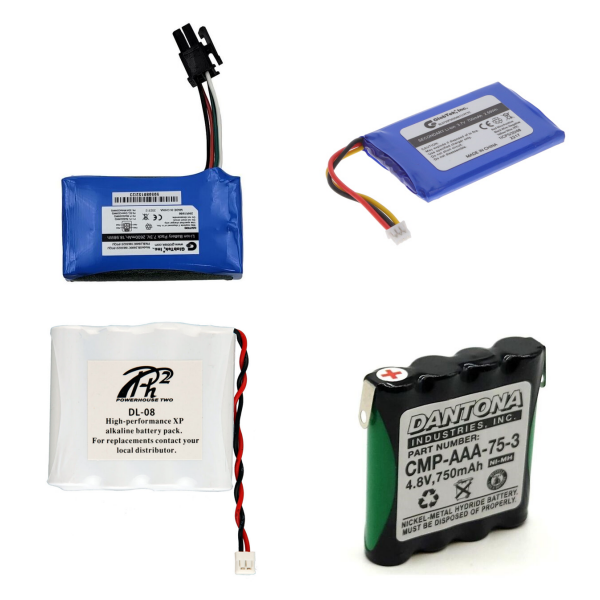
<h1> Battery Packs </h1> <p> Battery Packs are integrated energy storage units composed of multiple cells through specific packaging technology and system design. They are widely used in electric vehicles, energy storage systems, consumer electronics, and other fields. The following is a comprehensive description of its core features and structural composition: </p> <p>   </p> <h2> I. What are the Basic Composition of Battery Packs? </h2> <h3> 1) Cell </h3> <p> As the smallest unit of a battery pack, a single cell stores electrical energy through electrochemical reactions. The packaging forms include cylindrical, square, and soft packs. </p> <p>   </p> <p> Lithium-ion battery cells are composed of positive electrodes, negative electrodes, diaphragms, and electrolytes. Different packaging methods (hard shell/soft pack) directly affect their energy density and production costs. </p> <p>   </p> <h3> 2) Battery Management System (BMS) </h3> <p> Responsible for real-time monitoring of battery voltage, temperature, current, and other parameters, achieving balanced charging and discharging, fault diagnosis, and protection functions, and is the "brain" of the battery pack. </p> <p>   </p> <h3> 3) Thermal Management System </h3> <p> Using air cooling or liquid cooling technology (such as cold plate liquid cooling and immersion liquid cooling), the temperature difference of the battery pack is controlled within 5 °C to improve the cycle life and safety. </p> <p>   </p> <h3> 4) ‌Structural components‌ </h3> <p> ‌<strong>Casing‌</strong>: Made of metal or composite materials, it provides mechanical support and protects against external impact, vibration, and environmental damage. </p> <p> ‌ </p> <p> <strong>‌Electrical System‌</strong>: includes high-voltage wiring harness (transmitting power), low-voltage wiring harness (transmitting signals), and protection circuits to ensure efficient transmission of power and system stability. </p> <p> ‌ </p> <h2> 2. What are the ‌Packaging and Integration Technology of Battery Packs?‌ </h2> <h3> 1) ‌Packaging Type‌ </h3> <p> <strong>‌Cylindrical‌</strong>: high production efficiency, low cost, but relatively low energy density and safety. </p> <p> <strong>‌Square/Soft Pack‌</strong>: high space utilization, suitable for high energy density demand scenarios. </p> <p> ‌ </p> <h3> 2) ‌Integration Method‌ </h3> <p> <strong>‌CTM (module integration)</strong>: standardized module design, easy to maintain but low space utilization. </p> <p> <strong>‌CTP (module-free integration)</strong>: cancel the module structure and directly integrate the battery cell to improve space utilization. </p> <p> <strong>‌CTC/CTB (integrated integration)</strong>: the battery pack is integrated with the body/chassis to achieve lightweight and high structural strength. </p> <p> ‌ </p> <h2> 3. What are the Application Fields and Performance Requirements of Battery Packs? </h2> <h3> 1) Application Scenarios </h3> <p> <strong>New Energy Vehicles</strong>: provide power sources, directly affecting vehicle endurance and acceleration performance. </p> <p> <strong>Energy Storage System</strong>: used in grid peak regulation, photovoltaic energy storage, and other scenarios, high energy density and long cycle life must be taken into account. </p> <p>   </p> <p> <strong>Consumer Electronics</strong>: such as mobile phones, Bluetooth headsets, etc., must meet the needs of miniaturization and lightweight. </p> <p>   </p> <h3> 2) Performance Parameters </h3> <p> <strong>Voltage Range</strong>: 300-800V, high voltage supports fast charging and high power output. </p> <p>   </p> <p> <strong>Energy Density</strong>: determines endurance, which needs to be improved through material optimization and packaging technology. </p> <p>   </p> <h2> 4. How to Maintain Battery Packs? </h2> <p> <strong>Protection Mechanism</strong> </p> <p> Overcharge, over-discharge, short circuit, and temperature abnormality protection are achieved through BMS and hardware protection circuits. </p> <p>   </p> <p> Air tightness detection (such as the pressure decay method and helium leak detection method) prevents water vapor and dust intrusion. </p> <p>   </p> <p> <strong>‌Consistency Requirements</strong>‌ </p> <p> Single cells must maintain high consistency in parameters such as capacity, internal resistance, and voltage to avoid performance degradation or safety hazards caused by differences‌. </p> <p>   </p> <h2> 5. What are the ‌Development Trends of Battery Packs?‌ </h2> <p> <strong>‌High Energy Density‌</strong>: Improve energy storage efficiency through new materials (such as silicon-based negative electrodes and solid electrolytes‌). </p> <p> <strong>‌Intelligent Management‌</strong>: BMS systems with integrated AI algorithms can achieve more accurate status prediction and fault warning‌. </p> <p>   </p> <p> Battery Packs are the core link between battery cells and application terminals. Their design needs to balance performance, safety, and cost. In the future, they will continue to play a key role in the fields of new energy vehicles and energy storage‌. </p> <p>
<h1> Battery Product Accessories </h1> <p> Battery product accessories are a variety of items designed to be used with or enhance a battery-powered product. These accessories include chargers, adapters, cases, covers, straps, etc. These accessories are designed to make using the product easier and more convenient, and to protect the product from damage. </p> <p>
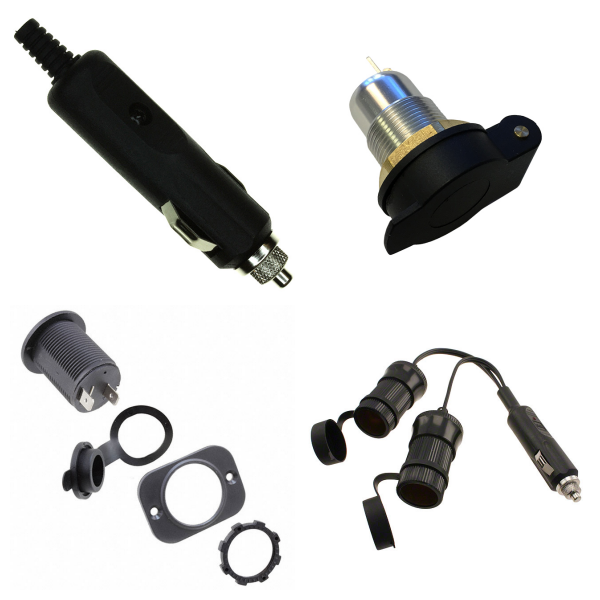
<h1> Cigarette Lighter Assemblies </h1> <p> Cigarette Lighter Assemblies are ‌component products‌ among electronic components and are mainly used in power interface modules of vehicles such as automobiles. </p> <p>   </p> <h2> What are the ‌Basic Structure of Cigarette Lighters?‌ </h2> <p> It includes a metal shell, a resistive heating element, elastic contacts, and insulating materials, and realizes 12V/24V DC power supply through a plug-in design. </p> <p>   </p> <p> Built-in temperature fuse and bimetallic temperature control switch to prevent overheating damage. </p> <p>   </p> <h2> What are the ‌Functional Features of Cigarette Lighters?‌ </h2> <p> Provides a standard power interface, which can be expanded to a USB charging port or a vehicle-mounted device power supply module. ‌ </p> <p> The working current is usually 10-15A, and it needs to be used with a fuse and an overcurrent protection circuit. </p> <p>   </p> <h2> What is the ‌Manufacturing Process of Cigarette Lighters?‌ </h2> <p> High-temperature-resistant engineering plastics (such as PBT) and nickel-plated copper alloy contacts are used to ensure durability. </p> <p> ‌ </p> <p> The packaging form is mostly a direct-insert metal cylinder structure, which meets the IP67 waterproof grade requirements. ‌ </p> <p>   </p> <p> This component belongs to the ‌C-type component‌ (composite functional module) in the classification of electronic components. It integrates basic components such as resistors, switch devices, connectors, etc., and needs to pass UL/CE and other safety certifications‌. </p> <p>   </p> <p> With the increase of in-vehicle electronic devices, modern cigarette lighter components are developing in the direction of multi-functional integration. Some high-end models have integrated voltage displays, Type-C fast charging, and wireless charging functions‌. </p> <p>

Battery Products

1.What are the Core Components of Battery Products?‌

‌Cell: As the basic unit of the battery, it is composed of a positive electrode, a negative electrode, a separator and an electrolyte, providing a voltage output of 3V-4V. The materials include lithium-ion, nickel metal hydride or lead acid, etc.

Batteries: It is composed of multiple cells connected in series/parallel to increase voltage or capacity, such as 12V modules or high-capacity combinations.

‌Battery Pack: It is integrated by a battery pack and equipped with a battery management system (BMS) to form a product that can be directly applied, such as an electric vehicle lithium battery pack. ‌

2. What are the ‌Packaging Types of Battery Products? ‌

‌Hardshell packaging: It uses steel/aluminum materials and is divided into cylindrical (high production efficiency) and square (compact structure).

‌Soft package packaging: It uses aluminum-plastic film, which has the advantages of lightweight and high energy density, but the degree of automation is low.

‌Supercapacitor: It is between batteries and traditional capacitors, supports fast charging and discharging, and has a long cycle life, and is suitable for high-power scenarios. ‌

3. What are the ‌Technical Features of Battery Products?‌

‌Patented technology‌: such as heating connector design, optimizing thermal management of battery box and external environment‌.

‌Material innovation‌: Graphene electrodes improve conductivity, and ionic liquid electrolytes enhance stability‌.

‌Process differences‌: The cylindrical winding process is highly efficient, and the square stacking process is suitable for soft-pack batteries‌.

4. What are Battery Products Used for?‌

‌Consumer electronics‌: mobile power supplies, smart devices, etc.‌.

‌Industry and transportation‌: electric vehicle power batteries, energy storage systems and outdoor equipment (such as garden tools)‌.

‌Emerging fields‌: high-power demand scenarios such as grid regulation and robots‌.

5. The ‌Industry standards and compliance requirements of Battery Products‌

‌Safety certification‌: Cross-border e-commerce needs to provide IEC/EN62133 or UL2054/UL1642 certification and temperature test reports‌.

‌MSDS file‌: Lithium batteries must include component data, hazardous materials classification and emergency disposal plans to ensure safe transportation and use‌.

‌International Standards‌: Following the GHS standards, each country should issue SDS documents (such as EU REACH, China GB/T 16483).

6.The ‌Challenges and Development Directions of ‌Battery Products

‌Energy density improvement‌: Supercapacitors need to break through the bottleneck of low energy density‌.

‌Cost and consistency‌: Soft-pack batteries rely on imported aluminum-plastic films, and production consistency needs to be improved‌.

‌Environmental protection needs‌: Promote the research and development of green technologies such as cobalt-free batteries and solid electrolytes‌.

7. ‌Battery Products FAQs

1) Whether the Temperature Affects the Life of the Battery Products?‌

Yes. High or low-temperature environments may affect battery performance. It is recommended to avoid charging or discharging at extreme temperatures‌.

Some batteries have low/high-temperature protection functions:

‌When charging‌: Charging stops automatically when the temperature is below 0°C or above 55°C‌.

‌When discharging‌: Discharging stops when the temperature is below –10°C or above 55°C‌.

2) What are the Precautions When Charging with Battery Products?‌

Using the original charger can optimize charging efficiency and extend battery life‌.

When using a new battery for the first time, it is recommended to fully charge and discharge to activate battery performance (applicable to some models)‌.‌

3) How to Maintain the Battery Products?‌

Regularly cleaning the internal blockages of the device (such as vacuum cleaner filters) can improve battery efficiency‌.

When storing the battery for a long time, keep the power at 30%-50% to slow down aging‌.

4) How to Troubleshoot Battery Products?‌

If the battery is abnormally hot or cannot be charged, it is recommended to contact the official after-sales service for inspection‌.

Some batteries support remote positioning function (such as mobile phone batteries), which is convenient for tracking when the device is lost‌.