
New title

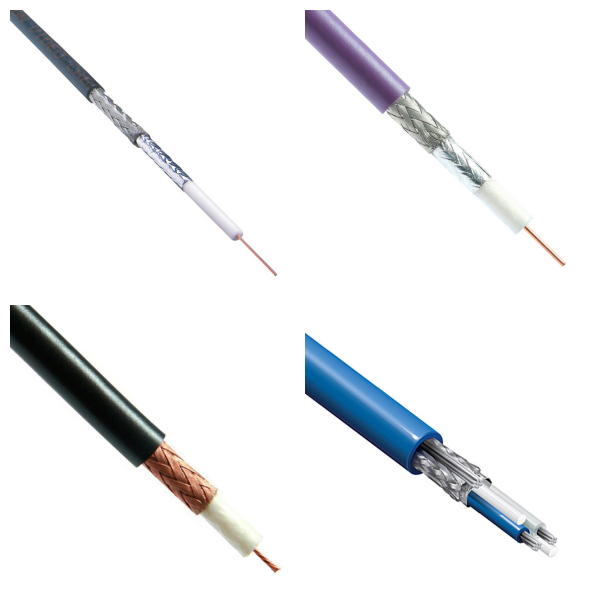
<h1> Coaxial Cables (RF) </h1> <h2> 1. Coaxial Cables Overview </h2> <p> RF coaxial cable (RF) is a cable designed to transmit RF signals. Its structure achieves electromagnetic shielding through the coaxial design of the inner and outer conductors and is suitable for the transmission of high-frequency signals. Due to its low loss and strong anti-interference characteristics, it is widely used in communications, radio and television, and test equipment. </p> <p>   </p> <h2> 2. What are the Structure and Materials of Coaxial Cables? </h2> <p> <strong>RF coaxial cable consists of four layers</strong>: </p> <p> <strong>Inner Conductor</strong>: usually a single-core/multi-strand wire made of copper or silver-plated copper, responsible for signal transmission. </p> <p> <strong>Insulation Layer</strong>: polyethylene (PE), polytetrafluoroethylene (PTFE), and other materials that wrap the inner conductor to provide electrical isolation and fix the structure. </p> <p> <strong>Outer Conductor</strong>: copper mesh braid or aluminum foil, used to shield external electromagnetic interference and protect signal integrity. </p> <p> <strong>Outer Sheath</strong>: PVC or weather-resistant material to prevent environmental factors (such as wear and moisture) from damaging the cable. </p> <p>   </p> <h2> 3. What are the Technical Characteristics of Coaxial Cables? </h2> <p> <strong>1) Impedance Characteristics</strong>: </p> <p> <strong>50Ω</strong>: mainly used for digital signal transmission (such as base stations and test equipment). </p> <p> <strong>‌75Ω‌</strong>: Commonly used in video signal transmission (such as cable TV and satellite communications). </p> <p> <strong>2) ‌Low loss‌</strong>: Reduce signal attenuation through high-purity conductors and optimized insulation materials. </p> <p> <strong>3) ‌Shielding Effectiveness‌</strong>: The outer conductor can provide a single-layer braid (95% coverage) or braid + aluminum foil (100% coverage) shielding solution. </p> <p> <strong>4) ‌Frequency Range‌</strong>: Covering 500 kHz to 18 GHz, suitable for a variety of RF scenarios. </p> <h2> 4. Where are Coaxial Cables Used? </h2> <p> <strong>‌Communication System‌</strong>: wireless communication base station, satellite signal transmission, long-distance telephone network. </p> <p> <strong>‌Broadcasting and Television‌</strong>: cable television networks (CATV) and broadcast signal distribution. </p> <p> <strong>‌Test and Instrument‌</strong>: RF test equipment, laboratory high-frequency signal transmission. </p> <p> <strong>‌Computer Network‌</strong>: early local area network (such as RG-58), short-distance high-speed data transmission. </p> <p>   </p> <h2> 5. What are the Common Types of Coaxial Cables? </h2> <p> <strong>1) ‌Classification by Impedance‌</strong>: </p> <p> <strong>‌RG Series‌</strong>: such as RG-6 (75Ω, video), RG-11 (75Ω, long distance). </p> <p> <strong>‌Semi-rigid Cable‌</strong>: The outer conductor is a copper tube, which is used for high-precision RF connection‌. </p> <p> <strong>2) ‌Classification by Use‌</strong>: </p> <p> <strong>‌Baseband Cable‌</strong>: Transmits digital signals (such as 50Ω coaxial cable)‌. </p> <p> <strong>‌Broadband Cable‌</strong>: Supports multi-channel analog signals (such as 75Ω cable TV cable)‌. </p> <p>   </p> <h2> 6. What are the Key Parameters of Coaxial Cables? </h2> <p> <strong>‌Attenuation (Insertion Loss)</strong>: Measured in dB/unit length, increases with increasing frequency‌. </p> <p> <strong>‌Bending Radius‌</strong>: The minimum bending value that does not affect performance, affecting installation flexibility‌. </p> <p> <strong>‌Propagation Speed‌</strong>: The ratio to the speed of light, affecting signal delay‌. </p> <p> <strong>‌Voltage Standing Wave Ratio (VSWR)</strong>: Characterizes the degree of signal reflection, the lower the value, the better the performance‌. </p> <p>   </p> <h2> 7. Development History of Coaxial Cables </h2> <p> Coaxial cable was invented by Oliver Heaviside in the 19th century and was widely used in telephone and television networks in the 20th century. Later, it gradually turned to the high-frequency RF field in competition with optical fiber‌. </p> <p>
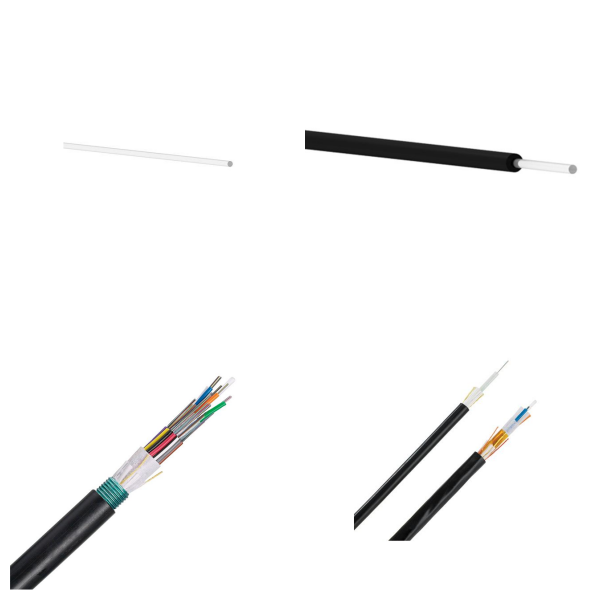
<h1> Fiber Optic Cables </h1> <h2> 1. What are Fiber Optic Cables?‌ </h2> <p> <strong>Fiber optic cables are a type of communication cable assembly consisting of one or more optical fibers (optical fibers) used to transmit data via optical signals. Its core structure includes</strong>: </p> <p> <strong>‌Core‌</strong>: Made of extremely fine glass or plastic fibers with a diameter as small as a few microns‌. </p> <p> <strong>‌Cladding‌</strong>: A layer of optical material that wraps around the core, which confines light to the core through the principle of total internal reflection‌. </p> <p> <strong>‌Coating and Outer Sheath‌</strong>: Made of plastic or metal materials, protecting the core from mechanical damage, moisture, and other environmental influences‌. </p> <p> <strong>‌Strengthening Elements‌</strong>: Such as steel wire or aramid fiber, which enhance the tensile strength of the cable‌. </p> <p>   </p> <h2> 2. How do Fiber Optic Cables Work?‌ </h2> <p> The optical signal is transmitted in the core at a speed of about 200,000 kilometers per second, and the difference in refractive index between the cladding and the core is used to achieve total internal reflection, ensuring efficient and low-loss long-distance transmission of the signal‌. </p> <p>   </p> <h2> 3. What are the ‌Main Types of Fiber Optic Cables?‌ </h2> <p> <strong>‌Single-mode Fiber‌</strong>: The core is extremely thin (close to the diameter of a hair), allowing only single-wavelength light transmission, suitable for long-distance, high-bandwidth scenarios‌. </p> <p> <strong>‌Multimode Fiber‌</strong>: The core is thicker, allowing multiple wavelengths of light transmission, and is often used for short-distance communications‌. </p> <p>   </p> <h2> 4. What are the ‌Technical Advantages of Fiber Optic Cables?‌ </h2> <p> <strong>‌High Speed and Large Capacity‌</strong>: Supports transmission rates of 10Gbps to 100Gbps, far exceeding traditional copper cables‌. </p> <p> <strong>‌Low Attenuation and Anti-interference‌</strong>: The signal attenuation is minimal and is not affected by electromagnetic interference‌. </p> <p> <strong>‌Lightweight and Durable‌</strong>: Lightweight and small size, suitable for deployment in complex environments (such as the seabed and aerospace). </p> <p>   </p> <h2> 5. Where are Fiber Optic Cables Used?‌ </h2> <p> <strong>‌Communication Network‌</strong>: Internet backbone network, telephone system, and local area network‌. </p> <p> <strong>‌Aerospace‌</strong>: Signal transmission inside spacecraft‌. </p> <p> <strong>‌Medical and Industrial‌</strong>: Endoscopic imaging, sensor monitoring, etc.‌. </p> <p>   </p> <h2> 6. What are the Development History of Fiber Optic Cables? </h2> <p> In 1976, the United States built the first fiber-optic communication experimental system. </p> <p>   </p> <p> In 1988, the transatlantic submarine optical cable was successfully laid. </p> <p>   </p> <p> In 1978, China developed the first communication optical cable, which was gradually applied to long-distance trunk lines and urban networks. </p> <p>   </p> <p> Fiber-optic cables have become the core infrastructure of modern communications, supporting the efficiency and stability of global information transmission. </p> <p>   </p> <h2> 7. Fiber Optic Cables FAQs </h2> <h3> (1) What are the advantages of fiber optic cables over traditional copper cables? </h3> <p> <strong>Speed and Bandwidth</strong>: Fiber optic transmission speeds far exceed copper cables, with higher bandwidth and support for real-time HD video and large file transmission; </p> <p> <strong>Anti-interference</strong>: Not affected by electromagnetic interference, with stronger signal stability; </p> <p> <strong>Volume and Weight</strong>: Lighter and suitable for complex wiring environments. </p> <p>   </p> <h2> (2) What should be paid attention to when installing fiber optic cables? </h2> <p> <strong>Environmental Adaptability</strong>: Avoid excessive bending or physical damage; </p> <p> <strong>Compatibility</strong>: Ensure that the device supports fiber optic interfaces (such as optical modules); </p> <p> <strong>Maintenance Cost</strong>: Regularly check the optical attenuation and connection point status, relying on professional tools. </p> <h3> (3) Is fiber optic cable suitable for home networks? </h3> <p> Yes. Fiber optic cables can provide gigabit-class network speeds and have strong future compatibility, especially suitable for high-demand scenarios such as smart homes and 4K/8K streaming media. However, the initial cost and compatibility with existing equipment need to be evaluated. </p> <p>
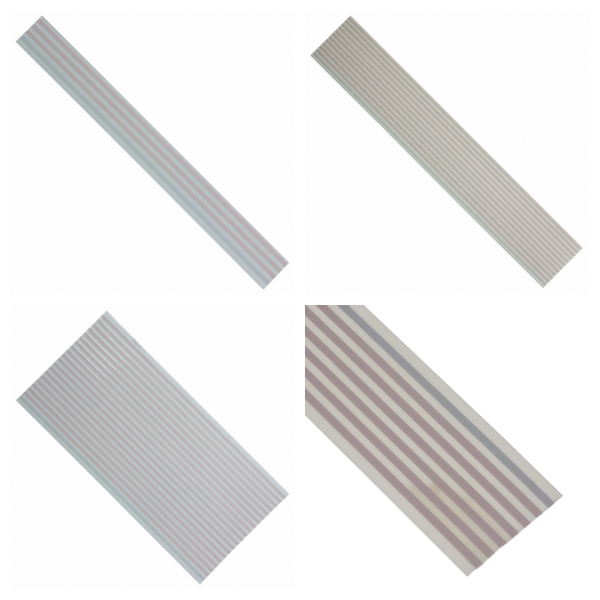
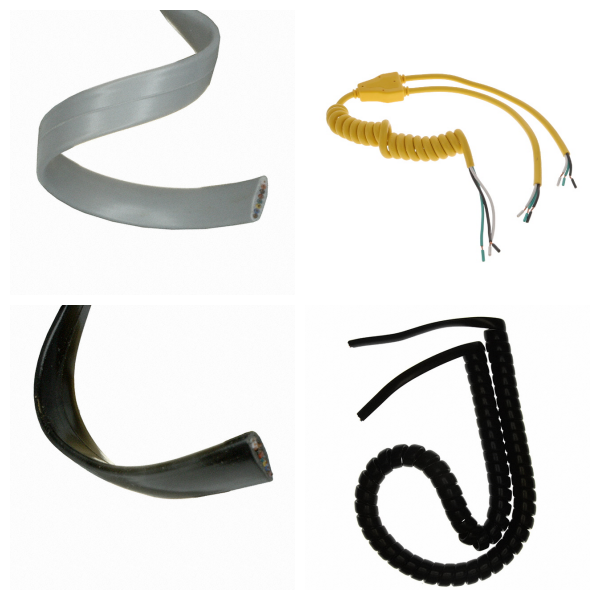
<h1> Flat Flex Cables (FFC, FPC) </h1> <h2> 1. What are Flat Flex Cables (FFC, FPC)? </h2> <p> <strong>‌FFC (Flexible Flat Cable)‌</strong> </p> <p> It is a flat flexible cable made of extremely thin tinned flat copper wire sandwiched between PET insulating materials and pressed together by automated equipment. </p> <p>   </p> <p> It has a simple structure, usually a single-layer conductor arrangement, and the conductor spacing, margins, and other parameters can be customized. </p> <p>   </p> <p> ‌<strong>FPC (Flexible Printed Circuit)‌</strong> </p> <p> It uses a flexible substrate (such as polyimide film) to form a circuit pattern through chemical etching technology and supports single-layer or multi-layer design. </p> <p>   </p> <p> It contains complex structures such as copper foil substrate and cover film, which can achieve high-density wiring. </p> <p>   </p> <h2> 2. Comparison of the Core Differences between FFC and FPC </h2> <table> <tbody> <tr class="firstRow"> <td width="82" valign="top" style="padding: 0px 7px; border-width: 1px; border-color: windowtext; background: rgb(215, 215, 215);"> <p> Dimensions </p> </td> <td width="248" valign="top" style="padding: 0px 7px; border-width: 1px; border-color: windowtext; background: rgb(215, 215, 215);"> <p> FFC </p> </td> <td width="238" valign="top" style="padding: 0px 7px; border-width: 1px; border-color: windowtext; background: rgb(215, 215, 215);"> <p> FPC </p> </td> </tr> <tr> <td width="82" valign="top" style="padding: 0px 7px; border-left-width: 1px; border-left-color: windowtext; border-right-width: 1px; border-right-color: windowtext; border-top: none; border-bottom-width: 1px; border-bottom-color: windowtext;"> <p> Structure </p> </td> <td width="248" valign="top" style="padding: 0px 7px; border-left-width: 1px; border-left-color: windowtext; border-right-width: 1px; border-right-color: windowtext; border-top: none; border-bottom-width: 1px; border-bottom-color: windowtext;"> <p> Single-layer flat conductor + Insulation layer laminated </p> </td> <td width="238" valign="top" style="padding: 0px 7px; border-left-width: 1px; border-left-color: windowtext; border-right-width: 1px; border-right-color: windowtext; border-top: none; border-bottom-width: 1px; border-bottom-color: windowtext;"> <p> Etched flexible circuit board, Supports multiple layers </p> </td> </tr> <tr> <td width="82" valign="top" style="padding: 0px 7px; border-left-width: 1px; border-left-color: windowtext; border-right-width: 1px; border-right-color: windowtext; border-top: none; border-bottom-width: 1px; border-bottom-color: windowtext;"> <p> Flexibility </p> </td> <td width="248" valign="top" style="padding: 0px 7px; border-left-width: 1px; border-left-color: windowtext; border-right-width: 1px; border-right-color: windowtext; border-top: none; border-bottom-width: 1px; border-bottom-color: windowtext;"> <p> Flexible but regular shape, only suitable for simple bending </p> </td> <td width="238" valign="top" style="padding: 0px 7px; border-left-width: 1px; border-left-color: windowtext; border-right-width: 1px; border-right-color: windowtext; border-top: none; border-bottom-width: 1px; border-bottom-color: windowtext;"> <p> Can be customized to any shape, Adapt to complex folding scenarios </p> </td> </tr> <tr style="height:29px"> <td width="82" valign="top" style="padding: 0px 7px; border-left-width: 1px; border-left-color: windowtext; border-right-width: 1px; border-right-color: windowtext; border-top: none; border-bottom-width: 1px; border-bottom-color: windowtext;"> <p> Production Process </p> </td> <td width="248" valign="top" style="padding: 0px 7px; border-left-width: 1px; border-left-color: windowtext; border-right-width: 1px; border-right-color: windowtext; border-top: none; border-bottom-width: 1px; border-bottom-color: windowtext;"> <p> Lamination process, Low cost </p> </td> <td width="238" valign="top" style="padding: 0px 7px; border-left-width: 1px; border-left-color: windowtext; border-right-width: 1px; border-right-color: windowtext; border-top: none; border-bottom-width: 1px; border-bottom-color: windowtext;"> <p> Etching superposition process, High complexity </p> </td> </tr> <tr> <td width="82" valign="top" style="padding: 0px 7px; border-left-width: 1px; border-left-color: windowtext; border-right-width: 1px; border-right-color: windowtext; border-top: none; border-bottom-width: 1px; border-bottom-color: windowtext;"> <p> Connection Method </p> </td> <td width="248" valign="top" style="padding: 0px 7px; border-left-width: 1px; border-left-color: windowtext; border-right-width: 1px; border-right-color: windowtext; border-top: none; border-bottom-width: 1px; border-bottom-color: windowtext;"> <p> Mostly use socket connector </p> </td> <td width="238" valign="top" style="padding: 0px 7px; border-left-width: 1px; border-left-color: windowtext; border-right-width: 1px; border-right-color: windowtext; border-top: none; border-bottom-width: 1px; border-bottom-color: windowtext;"> <p> Support socket or flat cable clip connector </p> </td> </tr> </tbody> </table> <p>   </p> <h2> 3. Where are Flat Flex Cables (FFC, FPC) Used? </h2> <p> <strong>‌FFC‌</strong>: </p> <p> Connection between the printer head and motherboard, signal transmission between boards of home appliances (TV, audio). </p> <p>   </p> <p> Scenarios that are cost-sensitive and do not require complex bending. </p> <p>   </p> <p> <strong>‌FPC‌</strong>: </p> <p> Display drivers and camera modules for precision devices such as smartphones and laptops. </p> <p>   </p> <p> Scenarios that require high-frequency folding or high-density wiring in automotive electronics and medical equipment. </p> <p>   </p> <h2> 4. Performance and Selection Considerations for Flat Flex Cables (FFC, FPC) </h2> <p> <strong>1) ‌Commonality‌</strong>: </p> <p> Lightweight material, small size, and support for high-speed signal transmission. </p> <p>   </p> <p> The temperature resistance range is usually -40℃~105℃, and some special models can be expanded. </p> <p>   </p> <p> <strong>2) ‌Selection Factors‌</strong>: </p> <p> <strong>‌FFC‌</strong>: Suitable for simple connection requirements with regular shapes and low costs. </p> <p> <strong>‌FPC‌</strong>: Preferred when high-density wiring, complex bending, or multi-layer circuits are required. </p> <p>   </p> <h2> 5. What are the Development Trend of Flat Flex Cables (FFC, FPC)? </h2> <p> <strong>‌Lightweight and High-speed‌</strong>: The demand for FFC/FPC in 5G and IoT devices is growing, driving the iteration of thinner and higher-frequency transmission performance. </p> <p> <strong>‌Integrated Design‌</strong>: FPC is developing towards multi-layer and high-precision etching, supporting more complex electronic system integration‌. </p> <p>
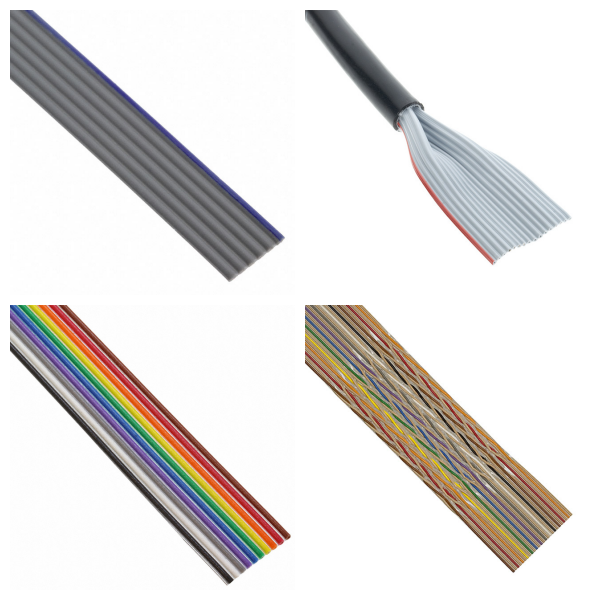
<h1> Flat Ribbon Cables </h1> <p> Flat Ribbon Cables have become a common wiring solution in industrial automation, electronic equipment, and other fields due to their compactness, flexibility, and reliability. </p> <h2> 1. What are the Basic Structure of Flat Ribbon Cables? </h2> <p> <strong>Conductor</strong>: Usually composed of multiple parallel tinned soft copper wires, such as 7-stranded conductors, to improve conductivity and flexibility. </p> <p> <strong>Insulation Layer</strong>: Made of materials such as soft PVC or FEP (fluorinated ethylene propylene), it is heat-resistant and oil-resistant, and can maintain the integrity of the insulation layer when torn. </p> <p> <strong>Band Form</strong>: The conductors are arranged side by side in a flat form to form a "ribbon" structure, and high-density connectors can be connected at both ends to save equipment space. </p> <p>   </p> <h2> 2. What are the Core Features of Flat Ribbon Cables? </h2> <p> <strong>High Flexibility</strong>: It can be easily bent and curled, suitable for scenes that require frequent movement such as robotic arms and robots. </p> <p> <strong>Anti-interference</strong>: Through twisted conductors and shielding design, electromagnetic interference is reduced, suitable for signal transmission. </p> <p>   </p> <p> <strong>Environmental Resistance</strong>: Some models support oil resistance and high-temperature resistance (such as environments below 80 °C). </p> <p>   </p> <h2> 3. Where are Flat Ribbon Cables Used?‌ </h2> <p> <strong>‌Internal Wiring of Electronic Equipment‌</strong>: such as computer wiring, signal, and power connection in industrial control equipment‌. </p> <p> <strong>‌High-speed Motion Equipment‌</strong>: used for power or signal transmission modules that need to be frequently moved in automation equipment‌. </p> <p>   </p> <p> ‌<strong>Oil-resistant Environment‌</strong>: scenarios that need to be exposed to oil in automobiles or industrial machinery‌. </p> <p>   </p> <h2> 4. What are the Differences Compared to FFC (Flexible Flat Cable)?‌ </h2> <p> <strong>‌Structural Difference‌</strong>: Flat Ribbon Cables are usually a flat arrangement of independent wires, and the outer material is mostly PVC or FEP; while FFC is thinner, with integrated conductors on a flexible substrate (such as polyimide), suitable for high-density connections‌. </p> <p> <strong>‌Termination Method‌</strong>: Flat Ribbon Cables are commonly terminated with standard IDC (insulation displacement connector); FFC mostly uses ZIF (zero insertion force) connectors‌. </p> <p> <strong>‌Application Focus‌</strong>: Flat Ribbon Cables are more used for medium and low-speed signal or power transmission; FFC tends to be more high-frequency, high-density scenarios (such as inside mobile devices)‌. </p> <p>   </p> <h2> 5. How to Choose Flat Ribbon Cables?‌ </h2> <p> <strong>‌Conductor Quantity and Spacing‌</strong>: Select the number of conductors (such as 5 to 50 circuits) and spacing (such as 0.5mm and 1.0mm) according to the equipment requirements. </p> <p> <strong>‌Environmental Adaptability‌</strong>: Parameters such as oil resistance and temperature resistance need to be considered‌. </p> <p>
<h1> Modular - Flat Cable </h1> <p> Modular Flat Cable is a high-performance cable that combines flat structure and modular design. It is designed for complex scenarios that require flexible wiring and frequent adjustments. </p> <h2> 1. What are the Structural Characteristics of Modular Flat Cable? </h2> <p> ‌<strong>Flat Flexible Design</strong>‌ </p> <p> Multiple flat wires are arranged in parallel, and the outer layer is wrapped with an insulating film or a tensile-resistant outer skin. The thickness can be as thin as 0.3mm, and the bending radius is as small as 4 times the cable thickness. It is suitable for narrow spaces and frequent bending conditions. </p> <p>   </p> <p> <strong>‌Modular Interface</strong>‌ </p> <p> Supports customized configuration of the number of wires, spacing, and connection methods, allowing rapid expansion or replacement of functional modules (such as signal transmission, power supply, etc.) through standardized interfaces to improve system integration efficiency. </p> <p>   </p> <h2> 2. What are the Performance Advantages of Modular Flat Cable? </h2> <p> <strong>‌High Flexibility</strong>‌ </p> <p> In dynamic environments such as robots and automation equipment, it can be bent repeatedly with the movement of the equipment without breaking easily, reducing maintenance costs. </p> <p>   </p> <p> <strong>‌Anti-interference and Stability</strong>‌ </p> <p> Reducing electromagnetic interference through twisted pair design or shielding technology to ensure the integrity of high-speed signal transmission is suitable for scenarios such as industrial control and high-speed networks. ‌ </p> <p>   </p> <p> <strong>Strong Environmental Resistance</strong>‌ </p> <p> Optional high-temperature-resistant, radiation resistant or waterproof materials are available to adapt to harsh conditions such as high-temperature areas and chemical environments. </p> <p>   </p> <h2> 3. Where is Modular Flat Cable Used? </h2> <p> <strong>‌Electronic Equipment‌</strong>: Connect PCB boards, motherboards, and mobile parts (such as printers and scanners) to save space and simplify wiring. </p> <p> <strong>‌Industrial Automation‌</strong>: Used in robot joints and intelligent warehousing systems to support flexible movement and real-time control of equipment. </p> <p>   </p> <p> ‌<strong>High-end Communications‌</strong>: As an extension of Category 6 modular cables, it meets the needs of high-speed data transmission in data centers. </p> <p>   </p> <p> Modular Flat Cable provides efficient and reliable connection solutions for modern electronic and industrial systems through the combination of modular design and flat flexible structure. </p> <p>
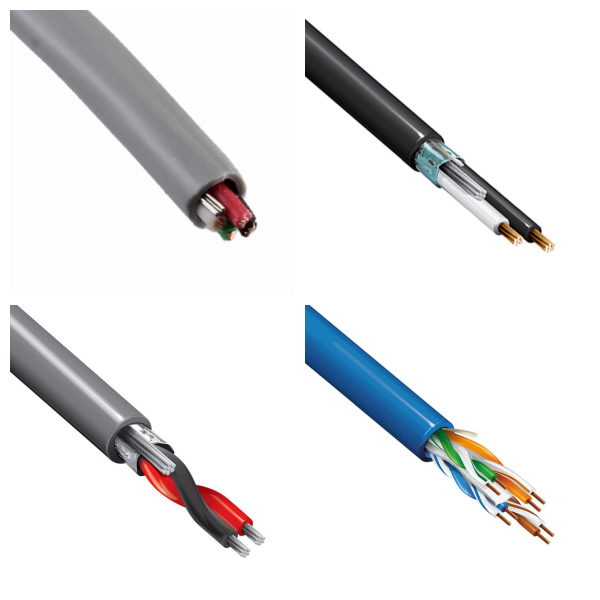
<h1> Multiple Conductor Cables </h1> <h2> 1. What are Multiple Conductor Cables? </h2> <p> Multi-conductor cables consist of multiple independent conductors, each with a separate insulation layer, usually integrated into the same sheath. Some models also include a shielding layer or armor layer to enhance the ability to resist electromagnetic interference. Its structural features include: </p> <p>   </p> <p> <strong>Number of Conductors</strong>: 2-5 cores are common, and some industrial or communication uses can reach dozens of cores; </p> <p> <strong>Conductor Material</strong>: mainly copper, some high-end models use silver-plated aluminum wire or special alloys; </p> <p> <strong>Insulation and Sheath</strong>: PVC, polyurethane, and other oil-resistant and wear-resistant materials are mostly used. </p> <p>   </p> <h2> 2. Where are Multiple Conductor Cables Used? </h2> <p> <strong>Power and Signal Transmission</strong> </p> <p> Applicable to power systems, automation control equipment, and other scenarios, supporting the simultaneous transmission of power and low-power signals, with a voltage range of 300V to 600V. </p> <p>   </p> <p> <strong>Industry and Rail Transit</strong> </p> <p> Specialized models for railway systems must comply with safety standards such as EN45545-2, and support high-bandwidth communications (such as Cat5e/Cat7) and data rates above 10Gbps. </p> <p>   </p> <p> <strong>‌Aviation and Military Equipment</strong>‌ </p> <p> Used in aircraft power systems, high-reliability requirements must be met, and some models have online fault diagnosis functions‌. </p> <p>   </p> <p> <strong>‌High-end Audio Equipment</strong>‌ </p> <p> Using special materials such as single crystal silver and OCC conductors, the twisting technology reduces the skin effect and improves sound quality restoration‌. </p> <p>   </p> <h2> 3. What are the Technical Features of Multiple Conductor Cables? </h2> <p> <strong>‌Electromagnetic Compatibility‌</strong>: Shielded cables can reduce external electromagnetic field interference, and buried cables need to consider the impact of limited length on electromagnetic response‌; </p> <p> <strong>‌Connection Method‌</strong>: Use standardized connectors (such as M12, CLOUDSPLITTER) or customized interfaces, and some designs support quick plug-in and mechanical locking‌; </p> <p> <strong>‌Environmental Adaptability‌</strong>: Some models are resistant to high-temperature and corrosion, and suitable for underground detection or harsh industrial environments‌. </p> <p>   </p> <h2> 4. Industry Standards and Innovations of Multiple Conductor Cables </h2> <p> <strong>‌Standards and Specifications‌</strong>: must comply with international certifications such as IEC and UL, and cables for railway applications must meet the EN45545-2 fire protection standard‌; </p> <p> <strong>‌Technological Innovation‌</strong>: For example, Alpha Wire's Xtra-Guard Flex series improves flexibility through multiple braided sleeves, and Zavfino's H-Wound technology optimizes signal transmission stability‌. </p> <p>
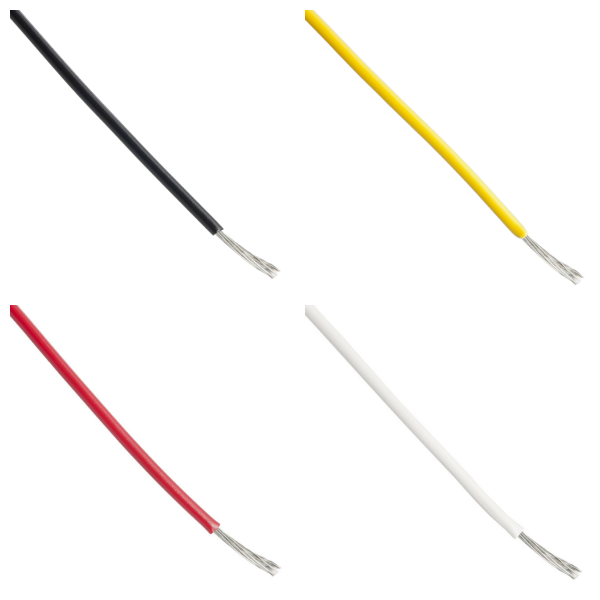
<h1> Single Conductor Cables (Hook-Up Wire) </h1> <h2> 1. What are Single Conductor Cables (Hook-Up Wire)?‌ </h2> <p> ‌Single-core cable‌ consists of a single conductor, which can be designed as solid or stranded, and is used for circuit connection and signal transmission. </p> <p>   </p> <p> The typical structure includes a conductor, insulation layer (such as PTFE, PVC, XLPE, etc.), and outer protective material to ensure stable electrical performance. </p> <p>   </p> <h2> 2. What are the ‌Conductor Types and Specifications of Single Conductor Cables (Hook-Up Wire)?‌ </h2> <p> <strong>‌Conductor Material‌</strong>: Common tinned copper (improves corrosion resistance) or bare copper. </p> <p> <strong>‌Wire Gauge Range‌</strong>: Covers 6AWG (thick wire diameter) to 28AWG (thin wire diameter), to meet different current requirements. </p> <p> <strong>‌Conductor Form‌</strong>: Solid (solid) is suitable for fixed wiring, and stranded (stranded) supports flexible applications. </p> <p>   </p> <h2> 3. What are the Materials of Single Conductor Cables (Hook-Up Wire)?‌ </h2> <p> <strong>1) ‌High-Temperature Resistant Material‌</strong>: </p> <p> <strong>PTFE (Polytetrafluoroethylene)</strong>: Withstands temperature range of -55 °C to 538 °C, suitable for extreme environments. </p> <p> <strong>XLPE (Cross-linked Polyethylene)</strong>: Provides high-temperature stability and mechanical strength. </p> <p> <strong>2) ‌General Materials‌</strong>: PVC (polyvinyl chloride) has a lower cost and an operating temperature range of -55 °C to 105 °C‌. </p> <p>   </p> <h2> 4. ‌Electrical Parameters and Application Scenarios‌ </h2> <p> <strong>1) ‌Voltage Level‌</strong>: Generally supports 300V to 600V, and some models can reach higher‌. </p> <p> <strong>2) ‌Application Areas‌</strong>: </p> <p> <strong>Industrial Equipment</strong>: Electrical connections in high-temperature environments (such as PTFE insulated cables)‌. </p> <p> <strong>Military/Aerospace</strong>: High-reliability cables that meet MIL-W standards (such as the 1852 series)‌. </p> <p> <strong>Electronic Equipment</strong>: Miniaturized cables (such as 22AWG) are used for internal wiring‌. </p> <p>   </p> <h2> 5. ‌Standardization and Certification of Single Conductor Cables (Hook-Up Wire)‌ </h2> <p> Some products comply with international standards such as UL and MIL, such as XLPE insulated cables certified by UL3173‌. </p> <p>   </p> <h2> 6. How to Choose Single Conductor Cables (Hook-Up Wire)?‌ </h2> <p> <strong>‌Environmental Adaptability‌</strong>: Select insulation materials (such as PTFE vs. PVC) based on temperature, chemical corrosion, etc.‌. </p> <p>   </p> <p> ‌<strong>Mechanical Requirements‌</strong>: Stranded conductors are used for flexible scenarios, and solid conductors are used for fixed installations‌. </p> <p>
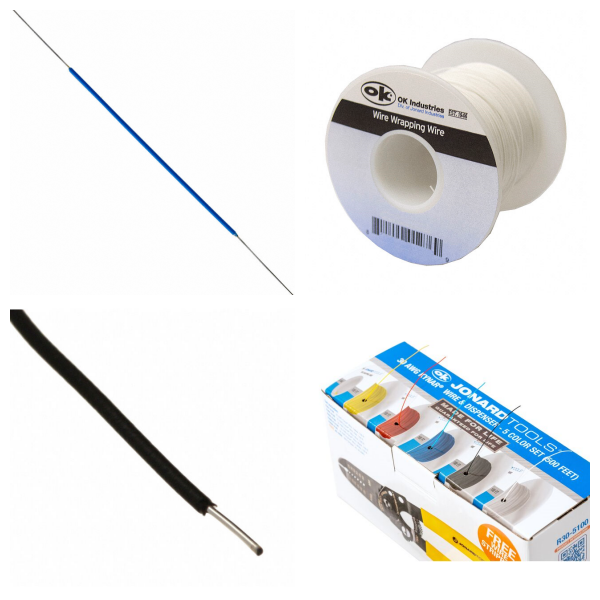
<h1> Wire Wrap </h1> <p> Wire Wrap (wire wrap connection) as a mechanical wire connection technology has unique application scenarios in the field of electronic engineering. </p> <p>   </p> <h2> 1. Prototype Circuit Development and Debugging </h2> <p> <strong>‌Rapid Iteration Verification</strong> ‌: In the early stage of circuit design, the prototype system is quickly built by manual winding, and the connection between components can be achieved without welding, which is convenient for adjusting the circuit layout at any time. </p> <p> <strong>‌Modular Testing</strong>: With DIP packaged chips (such as early 51 single-chip microcomputers) ‌, different functional modules can be quickly replaced for performance testing to avoid repeated welding damage to the PCB ‌. </p> <p>   </p> <h2> 2. High-stability Industrial Control Scenario ‌ </h2> <p> <strong>Anti-vibration Environment</strong> ‌: In industrial automation equipment, the physical winding characteristics of the wire wrap connection can resist mechanical vibration interference and are suitable for scenarios such as motor controllers and sensor interfaces. </p> <p> <strong>‌High Current Transmission</strong> ‌: By winding multiple strands of wire in parallel, it can carry higher currents (such as power distribution in power management modules), which is better than the current density limit of traditional solder joints ‌. </p> <p>   </p> <h2> 3. Reliable Connection in Special Scenarios </h2> <p> <strong>‌High-frequency Signal Debugging‌</strong>: In the development of communication equipment, by adjusting the winding spacing and the number of winding turns, the signal transmission impedance can be temporarily optimized to assist in the parameter adjustment of the RF circuit‌. </p> <p> <strong>‌Application in High-temperature Environment‌</strong>: When high-temperature resistant alloy wires are selected, the winding connection can remain stable in a wide temperature range of -55 °C to 200 °C, which is suitable for circuit maintenance of aerospace equipment‌. </p> <p>   </p> <h2> 4. Education and Maintenance Scenarios </h2> <p> <strong>‌Electronic Technology Teaching‌</strong>: As a visual teaching tool for circuit principles, it helps students intuitively understand the circuit topology and signal flow‌. </p> <p> <strong>‌Antique Equipment Restoration‌</strong>: When repairing electronic equipment from the 1970s and 1980s (such as old computer motherboards), the original winding process can be restored for historical relic-level repair‌. </p> <p>   </p> <h2> 5. Technical Comparison Suggestions </h2> <p> Compared with Wire Bonding, Wire Wrap is more suitable for macro circuit connection (wire diameter is usually 0.25-0.6mm), while Wire Bonding focuses on chip-level micro connections (wire diameter 1-5μm); compared with welding connection, its reversibility advantage is obvious, but the connection density is lower than that of modern SMT process. </p> <p>

Cables, Wires

1. What are Cables and Wires?‌

‌Cables‌: Made up of multiple individually insulated wires, the outer layer usually contains a protective layer, is used for power transmission, communication or signal transmission, and has a multi-conductor transmission function‌.

‌Wires‌: A single conductor (such as copper or silver), covered with an insulating material (such as plastic, rubber) on the outer layer, mainly used for low-power power or signal transmission.

‌2. What is the difference between Cables and Wires? ‌

‌Structural Complexity‌: Cables are made up of multiple wires bundled with an additional protective layer, while wires are usually single conductors‌.

‌Application Scenarios‌: Wires are suitable for simple circuit connections; cables are mostly used in high-traffic scenarios, such as industrial control, fiber optic communications, etc.‌.

‌3. What are the Key Parameters of Cables and Wires?‌

‌Bandwidth‌: Transmission capacity, measured by bit rate (bit rate, the number of bits transmitted per second).

‌Latency‌: The time it takes for data to travel from the sender to the receiver‌.

‌4. What are the Types of Cables and Wires? ‌

1)Classification ‌By Material‌: including PVC, rubber, halogen-free cables, etc.‌

2)Classification ‌By Function‌:

‌Flame-retardant Cable‌: can limit the spread of fire, suitable for scenarios with high safety requirements‌.

‌Fiber-optic Cable‌: used for high-speed data transmission‌.

‌5. What are Cables and Wires Used for?‌

‌Industry‌: factory automation, solar equipment‌. ‌Communication‌: fiber-optic communication, telecommunication network‌.

‌Consumer Electronics‌: medical equipment, automotive electronics, IT infrastructure‌.

‌6. What are the Standards and certification of Cables and Wires?

Must comply with international cable standards such as UL, Japanese standard/Taiwan standard‌.

7. Cables and Wires FAQs

1) What are the Main Types of Cables and Wires? ‌

‌Power/Signal Transmission Cables‌: including power cables, and data cables (such as Cat5e, Cat6, Cat7)‌.

‌Special Cables‌: such as AV cables, optical fibers, and military cables (for defense equipment)‌.

‌Industrial Cables‌: such as cable sleeves, and cables for shrink wrap sealers‌.

2) ‌How to Choose the Right Cable? ‌

‌Network Performance Requirements‌: Cat5e is suitable for Gigabit Ethernet, and Cat6/Cat7 supports higher bandwidth and anti-interference‌.

‌Environmental Adaptability‌: The power cord needs to match the power capacity and connector specifications of the device‌; military scenarios require high-durability materials‌.

‌Cost and Quality‌: Copper-clad aluminum (CCA) conductors are cost-effective, but pure copper has better conductivity‌.

3) What are the ‌Installation Precautions for Cables and Wires? ‌

Make sure the power cord connector is compatible with the device interface to avoid power overload‌.

Use heat shrink tubing or professional sealers to improve cable insulation and protection levels‌.