
New title

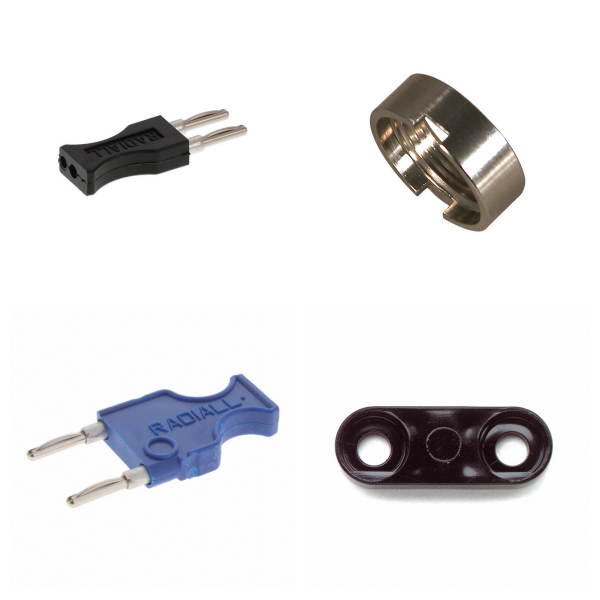
<h1> Banana and Tip Connector Accessories </h1> <p> Banana and Tip Connector Accessories are supportive items used with banana connectors. Accessory types include adapters, mounting bases, nuts, shorting bars, sleeves, standoffs, or terminal rings. They can be used with standard or miniature banana jacks, standard binding posts, or test jacks. </p> <p>
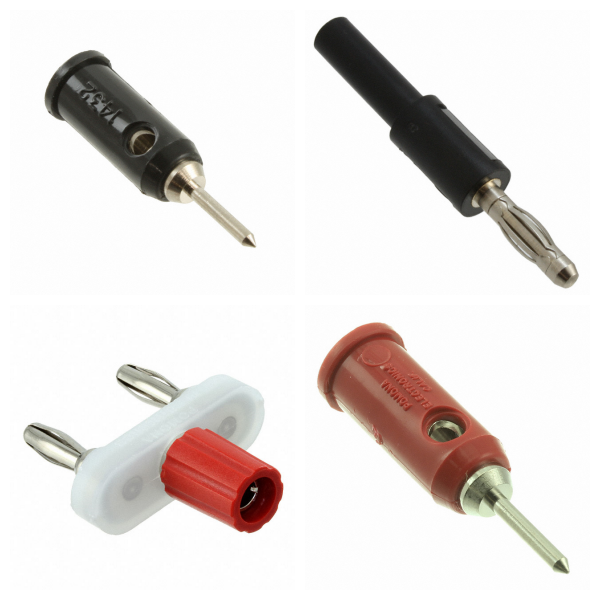
<h1> Banana and Tip Connector Adapters </h1> <p> Banana and tip connector adapters allow conversion from one connector type to another. They include banana jacks and plugs, tip jacks and plugs, binding posts, and splices. Variations include single, dual, and miniature versions with various colors and features. </p> <p>
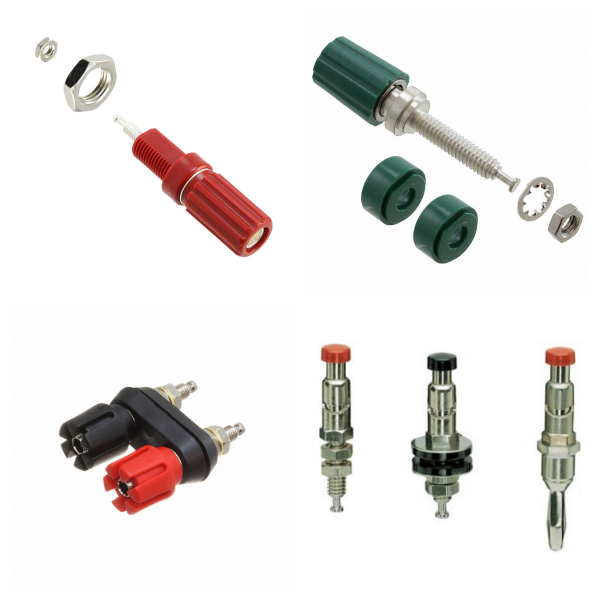
<h1> Binding Posts </h1> <p> The core function of ‌Binding Posts‌ is to provide a reliable and detachable electrical connection interface, which is commonly used in test equipment, power connection, and audio equipment. </p> <p>   </p> <h2> 1. What are the Structural Features of Binding Posts? </h2> <p> <strong>‌Mechanical Connection‌</strong>: Usually composed of a metal conductor (such as brass) and an insulating shell, the wire is fixed by a threaded knob or clamping device to ensure low contact resistance and high stability. </p> <p> <strong>‌Modular Design‌</strong>: Supports multi-cable access, and some models have multi-color identification (red/black to distinguish polarity) for quick identification and wiring. </p> <p>   </p> <h2> 2. What are the Types of Binding Posts? </h2> <p> <strong>‌Plug-in Type (THT)</strong>: Adopts through-hole welding technology, suitable for scenarios requiring high mechanical strength, such as power interface or high current transmission. </p> <p> <strong>‌Surface Mount (SMT)</strong>: Some miniaturized designs use SMT packaging, which is suitable for high-density circuit boards produced by automated production, but the current carrying capacity is relatively low. </p> <p>   </p> <h2> 3. What are Binding Posts Used for? </h2> <p> <strong>‌Test and Measurement‌</strong>: Used as a probe connection point in oscilloscopes, signal generators, and other equipment to facilitate quick replacement of test cables. </p> <p> <strong>‌Power Distribution‌</strong>: used for the output end of the power adapter or power distribution system, supports high current transmission, and is easy to maintain. </p> <p> <strong>‌Audio Equipment‌</strong>: used as speaker terminals in high-end audio equipment to reduce signal loss and improve connection reliability. </p> <p>   </p> <h2> 4. Selection Points for Binding Posts </h2> <p> <strong>‌Current Capacity‌</strong>: select models of different sizes (such as 5A/20A) according to load requirements. </p> <p> <strong>‌Insulation Material‌</strong>: high-temperature resistance and flame retardant properties (such as nylon or ceramic materials) need to be considered. </p> <p>   </p> <p> In summary, Binding Posts, as a basic connection device, are irreplaceable in scenarios that require frequent plugging and unplugging or high-reliability connections. Its selection needs to be combined with actual electrical parameters and environmental conditions. </p> <p>
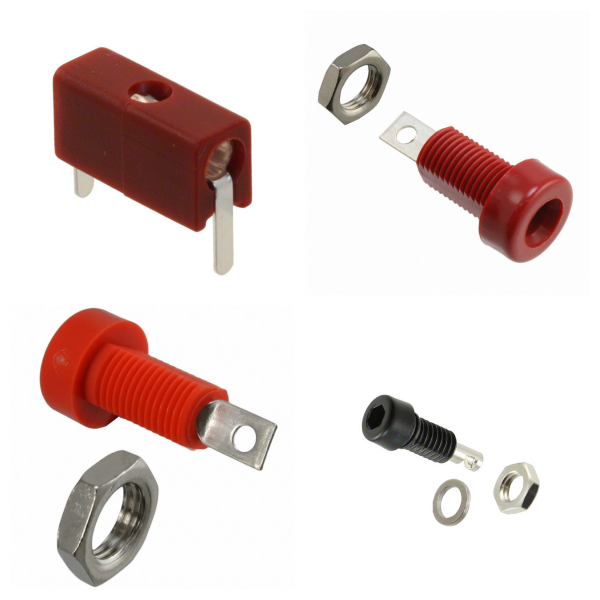
<h1> Jacks, Plugs </h1> <p> Banana and tip connectors are interconnect devices typically encountered in context of general purpose test equipment such as multimeters and variable output power supplies of modest capacity, where flexibility and price are dominant considerations. The more common banana type is characterized by leaf spring elements that run axially along the plug, providing retention when inserted into a simple tubular jack opening. The somewhat smaller tip connectors reverse this concept using a simple cylindrical plug, with no retention agent incorporated into the jack component. </p>

Banana and Tip Connectors

1. What are Banana and Tip Connectors?‌

Banana and Tip Connectors are electronic connectors that are used for quick plugging and unplugging. Its core consists of two parts:


‌Banana Plug‌: A cylindrical metal plug that achieves close contact with the jack through an elastic reed structure. It is often used in high-precision electrical connection scenarios such as audio equipment and test instruments.

‌Tip Connector‌: It adopts a sharp metal contact design and is suitable for low-voltage signal transmission or power connection. It is commonly used in laboratory instruments and industrial control equipment.


2. What are the ‌Core Features of Banana and Tip Connectors?‌

‌Electrical Performance‌: The rated current can reach 30A and the voltage supports 500V, which is suitable for high-power or high-precision signal transmission requirements.

‌Mechanical Performance‌: Long plug-in life, stable contact retention, and supports wire connection with a wire diameter range of 12AWG (about 3.3mm²).

‌Environmental Adaptability‌: The contacts are nickel-plated and have corrosion resistance. They can be used for a long time in industrial environments or high-humidity conditions.


3. What are Banana and Tip Connectors Used for?‌

‌Test and Measurement‌: Probe interface for oscilloscopes, signal generators, and other equipment to achieve fast calibration and signal transmission.

‌Audio System‌: Connect amplifiers and speakers, support oxygen-free copper wire to achieve high-fidelity audio signal transmission.

‌Industrial Control‌: As a quick connection solution for sensors and power modules, simplify the equipment maintenance process.


4. ‌Technical Parameters Example of Banana and Tip Connectors‌

‌Contact Material‌: Brass substrate + nickel plating (improve conductivity and oxidation resistance).

‌Compatible Standards‌: Comply with Binding Post interface specifications, suitable for mainstream test instruments and audio equipment.

‌Installation Method‌: Supports welding, crimping, or screw fixing, suitable for different cable types.


5. ‌Selection Recommendations for Banana and Tip Connectors‌

‌Power Matching‌: Select the corresponding specifications (such as 30A/500V model) according to the current/voltage requirements.

‌Environmental Factors‌: Fully sealed or gold-plated contact models are preferred in highly corrosive environments.

‌Interface compatibility‌: Confirm that the plug diameter (such as a 4mm standard banana plug) matches the target socket.


6. ‌Market Representative Models of Banana and Tip Connectors‌

‌Pomona 6883‌: Nickel-plated brass, suitable for laboratory and industrial scenarios.

‌Cinch 105-1041-001‌: Designed for high-frequency signals, supporting audio equipment, and test instruments.


This type of connector has become a basic component in the fields of electronic testing, audio engineering, and industrial automation due to its reliability and flexibility.


Banana and Tip Connectors FAQs

1) ‌What are the common types of Banana connectors? ‌

‌Insulated Type‌: The metal part is completely wrapped in insulating material (such as high-end multimeter probes).

‌Non-insulated Type‌: The metal part is exposed, suitable for quick connection test scenarios.

‌High-voltage Type‌: Made of Delrin material or metal shielding design, supports up to 15kV voltage.

‌Compatible Type‌: Some models can be adapted to 6mm diameter cables, supporting the expansion of multiple devices.


2) What is the difference between Banana Connectors and Tip Connectors?

Tip Connectors usually refer to tip or coaxial connectors (such as BNC and LEMO), while Banana Connectors are mainly single-lead designs. The two are significantly different in shielding performance, voltage carrying capacity, and application areas.