
New title

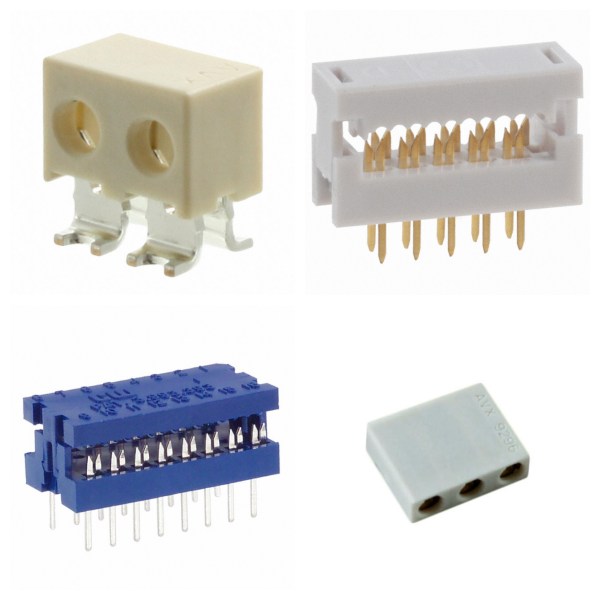
<h1> Arrays, Edge Type, Mezzanine (Board to Board) </h1> <p> Connectors of this type have contacts arranged in linear rows and an outline which is generally rectangular, rather than circular. They are used for creating pluggable connections directly between printed circuit boards without use of wire or cable, and can provide a large number of electrical connections in a relatively small space. For this reason they are commonly used to connect components of space-constrained systems. </p> <p>
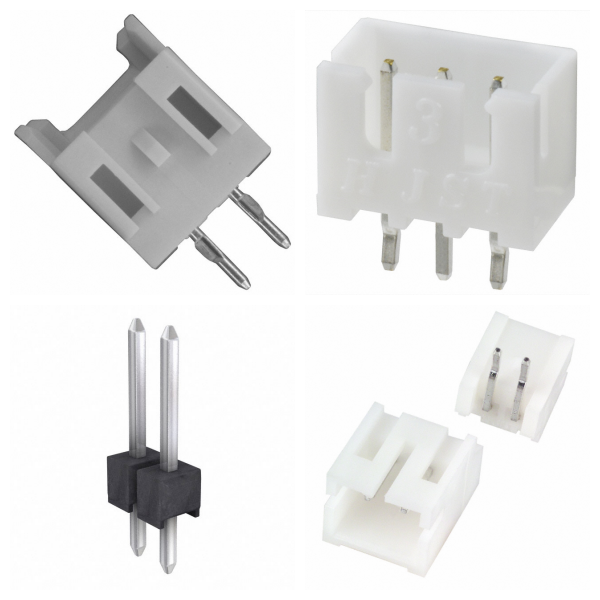
<h1> Board In, Direct Wire to Board </h1> <p> Board in connectors, or direct wire-to-board connectors, are rectangular-shaped devices used to make a connection from a conductor directly to a board without the use of a mating connector. These are offered as surface mount or through-hole. Positions are anywhere from 1 to 100 and a variety of wire gauges are available. Connector types include contacts, headers, housings, individual wires, receptacles, ribbon cables, or DIP headers. </p> <p>
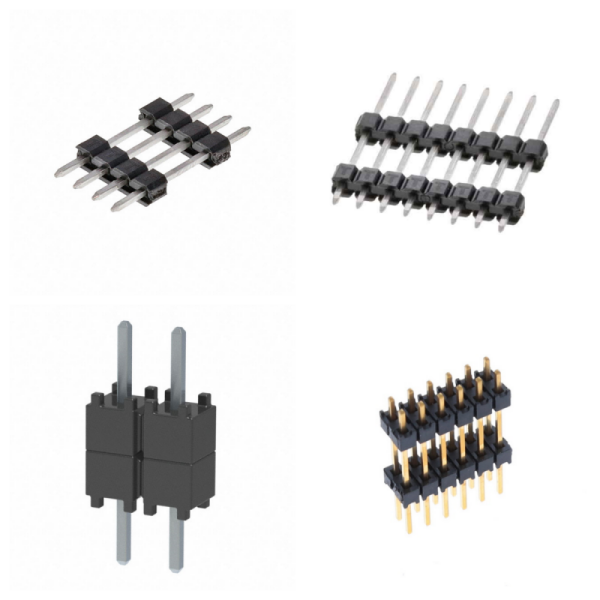
<h1> Board Spacers, Stackers (Board to Board) </h1> <p> Rectangular header type connectors are designed to connect circuits on one PCB to circuits on another providing insulation and board spacing. They are selected by pitch (distance between pin centers), stack height, and the number of positions and rows. They are typically soldered in place, with surface mount and through-hole versions available in gold, tin and tin-lead options. </p> <p>
<h1> Free Hanging, Panel Mount </h1> <p> Free hanging or panel mount rectangular connectors are rectangular-shaped interconnects used to connect cable or wire together using a mating connector. These connectors are made for coaxial, discrete, ribbon, or flat flex cables. Major parameters needed to select these are pitch, number of positions and rows, and wire gauge. </p> <p>
<h1> Headers, Male Pins </h1> <p> This type of header contains male pins within a plastic base and is meant to be mated with a rectangular cable connector or a female socket header for board-to-board connection. These come in a variety of position and pitch options, with some having a breakaway option to manually change position count with ease. Some are shrouded with 1 to 4 walls or unshrouded. Mounting types include panel mount, board edge, stacking, surface mount, and through-hole. </p> <p>
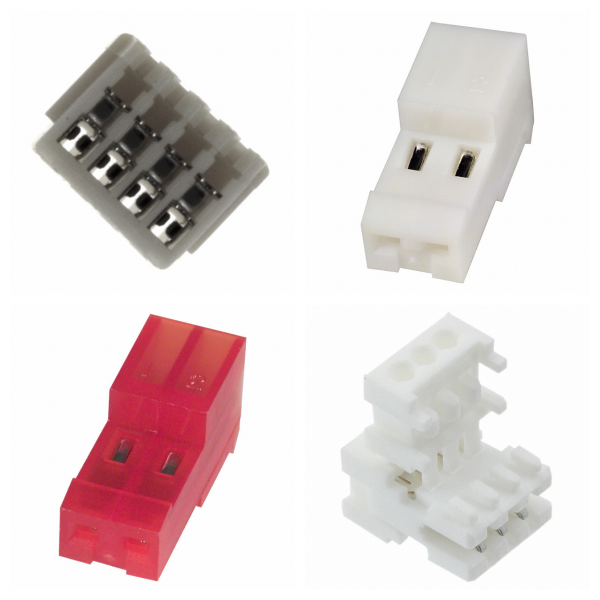
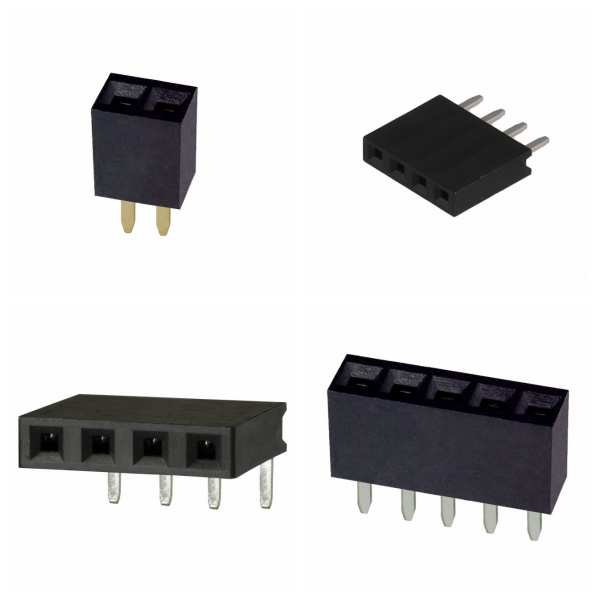
<h1> Headers, Receptacles, Female Sockets </h1> <p> This type of header (receptacle) contains female sockets within a plastic housing and is meant to be mated with a rectangular cable connector or a male pin header for board-to-board connection. These come in a variety of position and pitch options, with some having a breakaway option to manually change position count with ease. Mounting types include panel mount, board edge, stacking, surface mount, and through-hole. </p> <p>
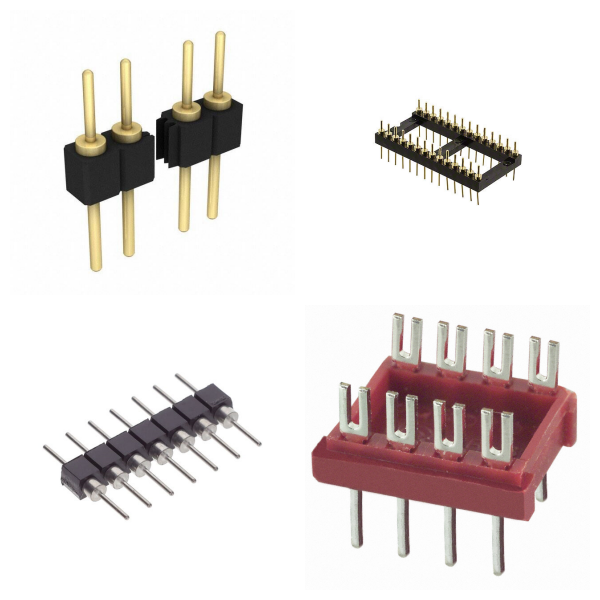
<h1> Headers, Specialty Pin </h1> <p> This type of header contains a variety of special pin types within a plastic base to be connected to a board. Connector types include: DIP, DIL, header, plug, SIP, and SIL. Contact types include: forked, male, post, slotted, solder cup, and turret. These are available in a variety of position and pitch options. Mounting types are surface mount and through-hole. </p> <p>
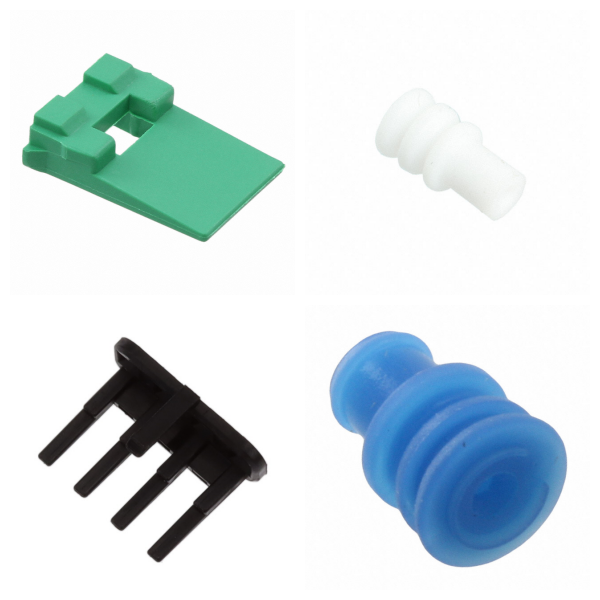
<h1> Rectangular Connector Accessories </h1> <p> Rectangular connector accessories are items used with rectangular connector systems, which serve ancillary functions such as sealing of a connector assembly, mechanical fixation, avoidance of accidental un-mating, protection of un-mated connectors, cable strain relief, keying of connectors to discourage improper connections, facilitating system diagnostics, and others. </p> <p>
<h1> Rectangular Connector Adapters </h1> <p> Rectangular Connectors Adapters are used to convert from one Rectangular connector style to another style whether it is Free Hanging, Panel mount, or Screw mount. Examples include Plugs-Male pins, Receptacle-Female sockets, rectangular connector, or SAE connector with 1 or 2 rows with pitch dimensions of 0.049”, 0.050”, 0.059”, 0.079”, 0.098”, 0.100”, 0.118”, or 0.156”. </p> <p>
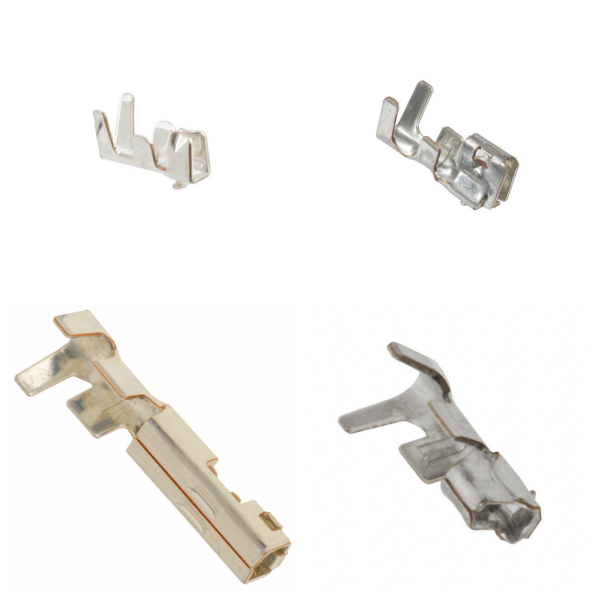
<h1> Rectangular Connector Contacts </h1> <p> Rectangular Connector Contacts are male, female, or non-gendered terminals that are used in connectors. These terminals are specifically used in connectors that will have a rectangular look to the mating end of the device. The pin or socket will be a blade, board-in, female blade sockets, non-gendered, pin, socket, split pin, or tab in wire gauges ranging from 1/0 AWG to 36 AWG. </p> <p>
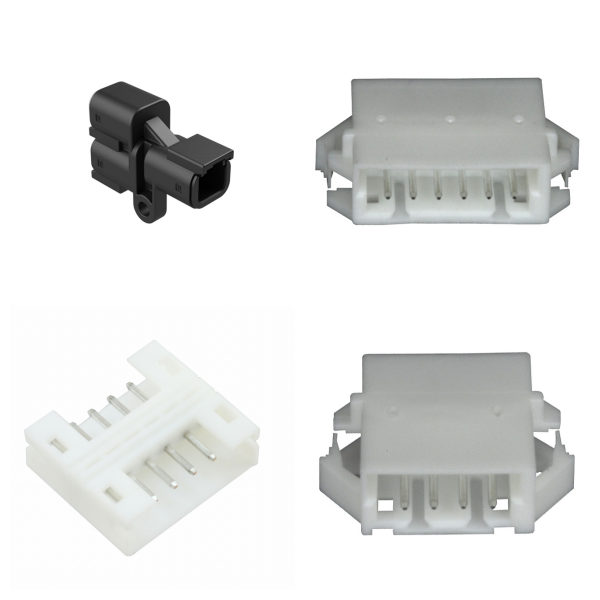
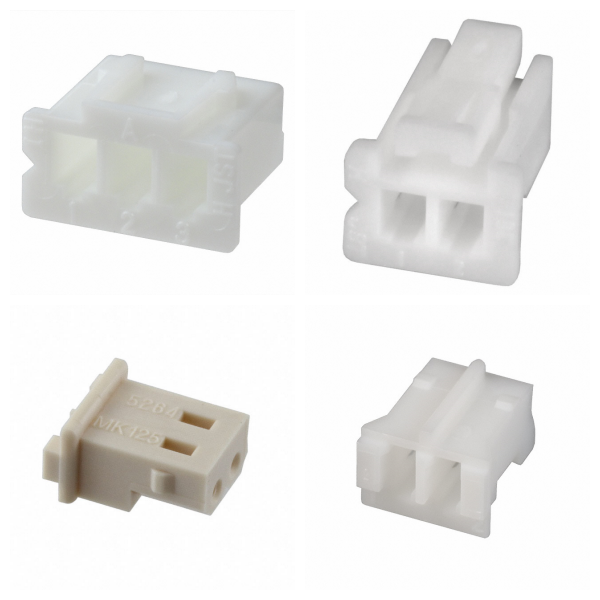
<h1> Rectangular Connector Housings </h1> <p> Rectangular connector housings are plastic connector shells that do not contain any contacts. These are available in multiple mounting types including board mount, bracket mount, DIN rail, free hanging (in-line), panel mount, screw mount, stacking, surface mount, and through-hole. These are available in many different position and pitch options for male or female contacts. </p> <p>
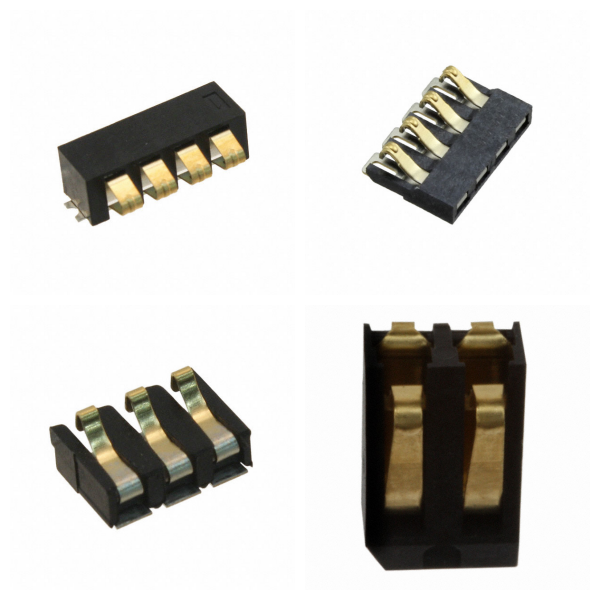
<h1> Spring Loaded </h1> <p> Products in the spring-loaded connector family are interconnect products supporting two or more independent circuits, and which incorporate a spring-action mechanism of some form in order to enable contact to be established despite modest variations in relative positioning, while minimizing insertion and extraction forces and their related wear mechanisms. They are commonly used in charging cradles for mobile equipment such as barcode scanners or handheld portable radios. </p> <p>

Rectangular Connectors

Rectangular connectors are standardized interface devices used to transmit power, signals, or data. Their shells are rectangular or square in design and have multiple regularly arranged contact terminals. They are commonly used in industrial equipment, aerospace, energy, and electronic equipment.


1. Rectangular Connectors Overview‌

‌Appearance Features‌: Different from circular connectors, rectangular connectors are designed based on rectangular geometry and are suitable for scenarios that require multiple pins or compact arrangements.


‌Sub-types‌: According to international standards (such as IEC TR 62380), rectangular connectors can be classified in parallel with other types (such as circular and coaxial connectors), and their failure calculation methods are consistent.


2. What are the Technical Characteristics of Rectangular Connectors?‌

1)‌Combination Design‌: The typical structure includes a plug (male end) and a socket (female end), and keyed alignment is used to ensure the correct plugging direction, such as by fixing with locking screws to improve connection stability.


2) ‌Performance Parameters‌:

‌Electrical Characteristics‌: The operating voltage can reach 954 VDC, the terminal rated current is up to 5A, and the contacts are gold-plated to improve conductivity and corrosion resistance.


‌Mechanical Properties‌: Supports vertical PCB installation, and the shell material is mostly nickel-plated to meet the durability requirements in industrial environments.


3. What are Rectangular Connectors Used for?‌

‌Industrial Scenarios‌: Widely used in industrial automation, communication equipment, and power systems, such as connecting sensors, controllers, and actuators.


‌Electronic Equipment‌: As a board-to-board connector (Board-to-Board or Wire-to-Board), it serves the internal circuit interconnection in the fields of computers, medical equipment, etc.


4. ‌Typical Product Examples for Rectangular Connectors‌

‌Standardized Products‌: Such as TE Connectivity's CY8561 series, which includes a female end housing kit and a keyed alignment interface, supports wire-to-wire connection, and is suitable for EME installation environments.


‌Industrial-grade Components‌: Lear Corporation's 18280.050.000 model demonstrates the adaptability of rectangular connectors in automotive electronics and complex electrical systems.


5. Customization and Compatibility of Rectangular Connectors

Some manufacturers (such as TXGA) provide customization services, which can adjust the contact termination form (such as crimping, welding) or protection level according to specific application conditions (such as high temperature, sealing requirements), shortening the development cycle.


6. Rectangular Connectors FAQs

1) What are the basic structures of rectangular connectors? ‌

‌Contacts: Made of conductive metal materials (such as copper and gold) to achieve electrical connection;

‌Insulator: Isolates contacts to prevent short circuits, mostly made of plastic or ceramic;

‌Housing: Protects the internal structure and provides an installation interface, made of metal or high-strength plastic;

‌Accessories: Such as locking and sealing mechanisms to enhance connection stability.


2) What are the main types of rectangular connectors? ‌

‌D-Sub Connector‌: classic type, suitable for multi-signal transmission scenarios;

‌ARINC Connector‌: specially designed for the aerospace field to meet high reliability requirements;

‌Shielded Connector‌: supports cable shield grounding, in line with IEC 60807-8 and other standards;

‌High Current/High Density Connector‌: used for industrial power supply or high-density circuit board interconnection.


3) What are the relevant industry standards for Rectangular Connectors? ‌

‌IEC 60807-8‌: standardizes the design of four signal contacts and ground contacts of shielded connectors;

‌UL/CE Certification‌: ensures electrical safety and environmental durability.


4)‌ How to choose a suitable rectangular connector? ‌

‌Current/Voltage Requirements‌: select withstand voltage and current carrying capacity according to AC or DC scenarios;

‌Environmental Adaptability‌: consider temperature, humidity, vibration, and a corrosive environment;

‌Connection Density‌: compact structure is required for high-density applications;

‌Shielding Requirements‌: shielded models are required for electromagnetic sensitive scenarios.