New title

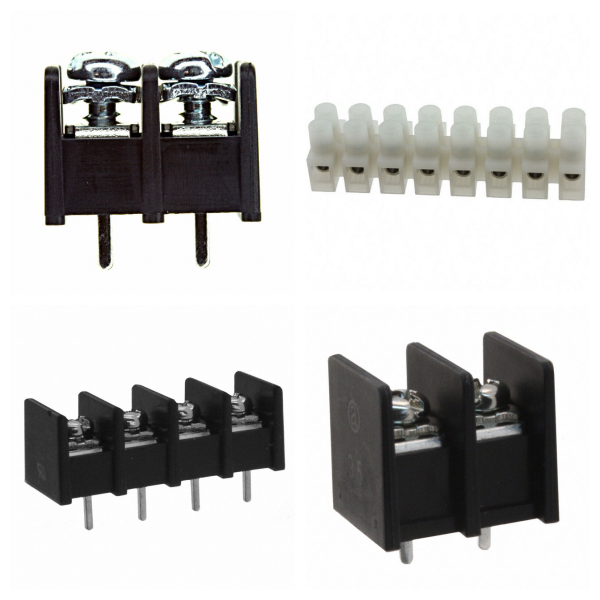
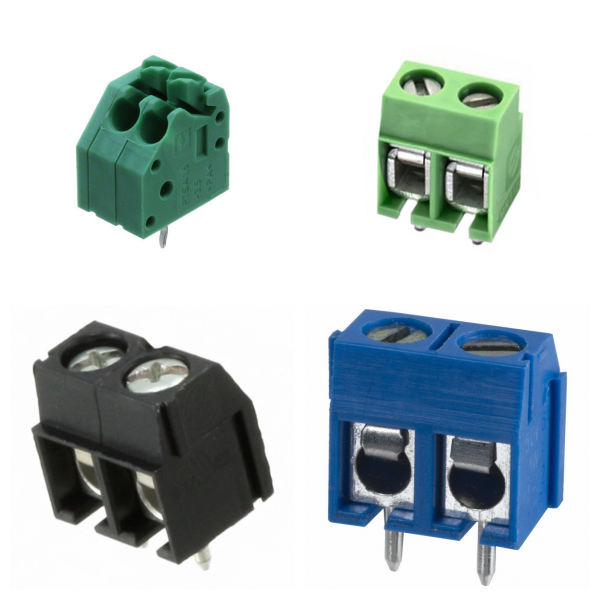
<h1> Barrier Blocks </h1> <p> Barrier terminal blocks are PCB or chassis mount connection points for securing two or more wires to a circuit or power bus. They consist of screw, quick connect, solder tab, turret, wire wrap or threaded stud positions arranged in a continuous strip. Each position is fully insulated from the other positions. Blocks are differentiated by number of circuits, number of wire entries, pitch, number of rows, current and voltage ratings, wire gauge, and top or bottom termination. </p> <p>
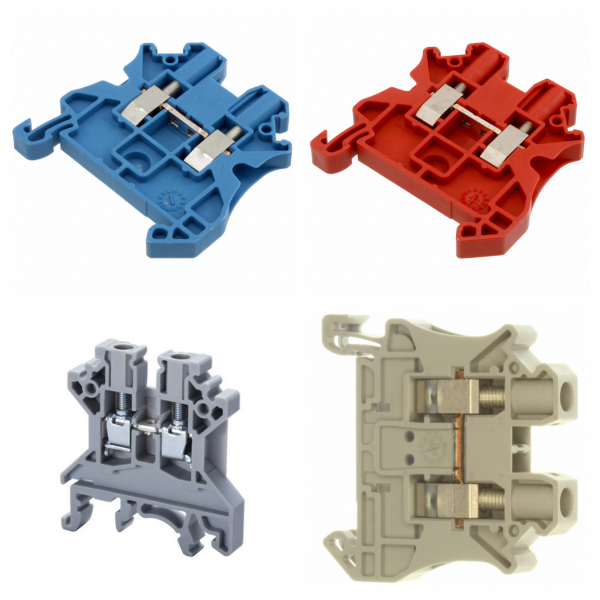
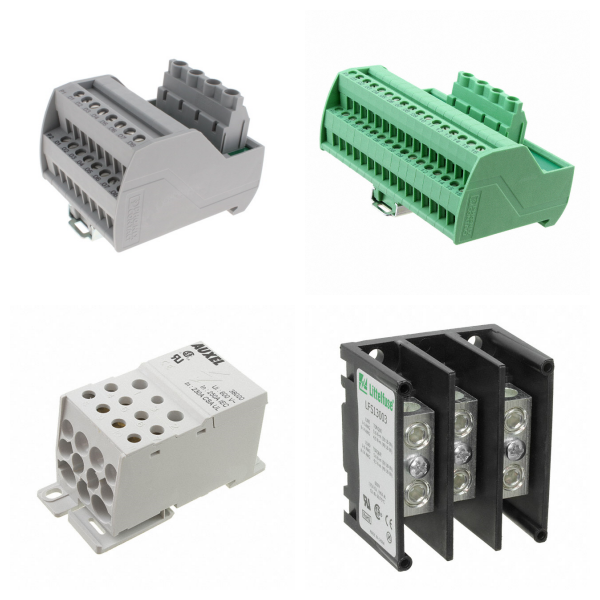
<h1> Din Rail, Channel </h1> <p> DIN rail and channel terminal blocks are rack or box mount connection points for securing two or more wires to a circuit or power bus. Certain types may include a single or dual disconnect fuse or switch feature, feed-through capability, grounding, built-in indicators and resistors, isolation and circuit protection. UL certified and IEC rated terminal blocks are selectable by current and voltage parameters as well as wire gauge, body color, and termination style. </p> <p>
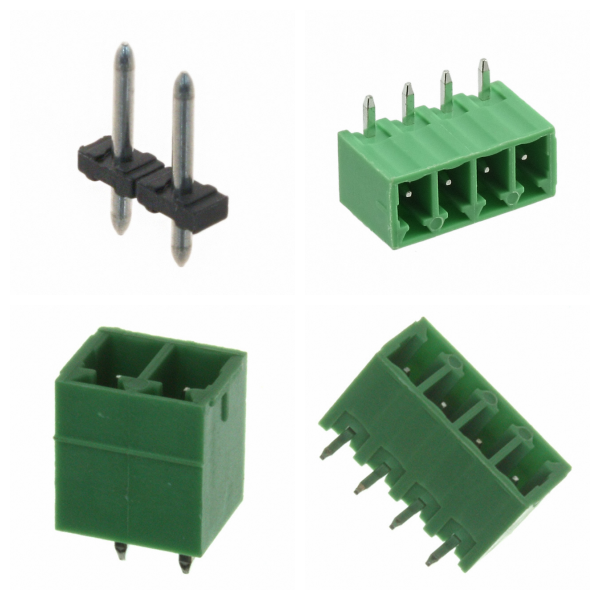
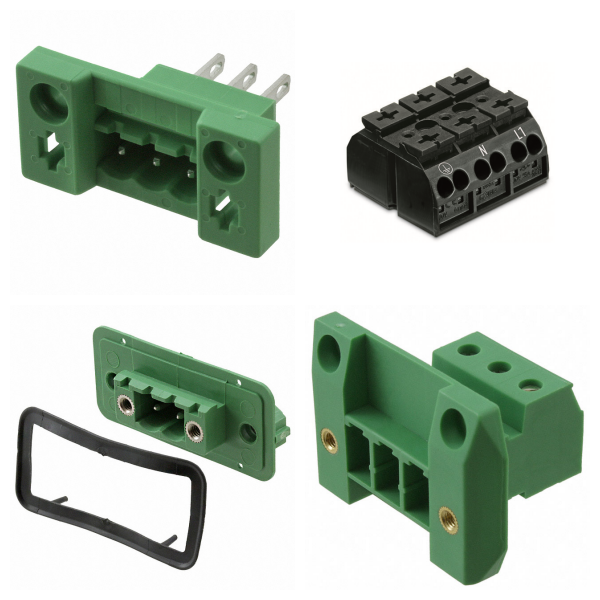
<h1> Headers, Plugs and Sockets </h1> <p> Plug or receptacle header terminal blocks are PCB, DIN rail, channel, free-hanging, solder or panel mount connection points for securing two or more wires to a circuit, cable or power bus. Mounting features may include board guides, flanges, latches, ejectors, levers, strain reliefs and locks. UL certified and IEC rated terminal blocks are selectable by current and voltage parameters as well as wire gauge, body color, and termination style. </p> <p>
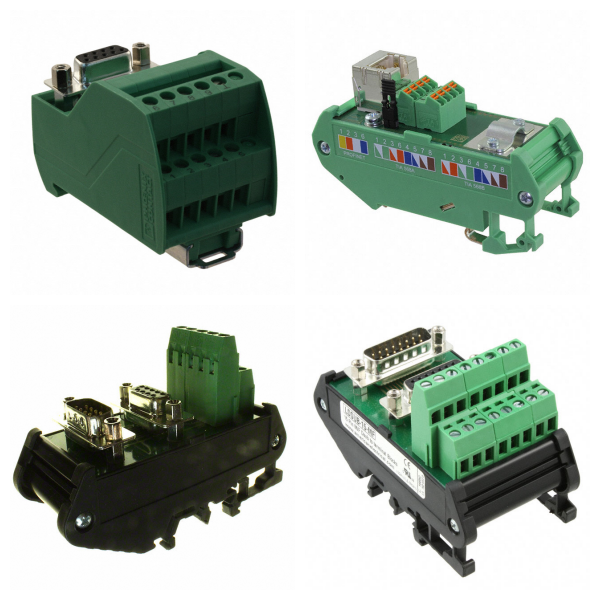
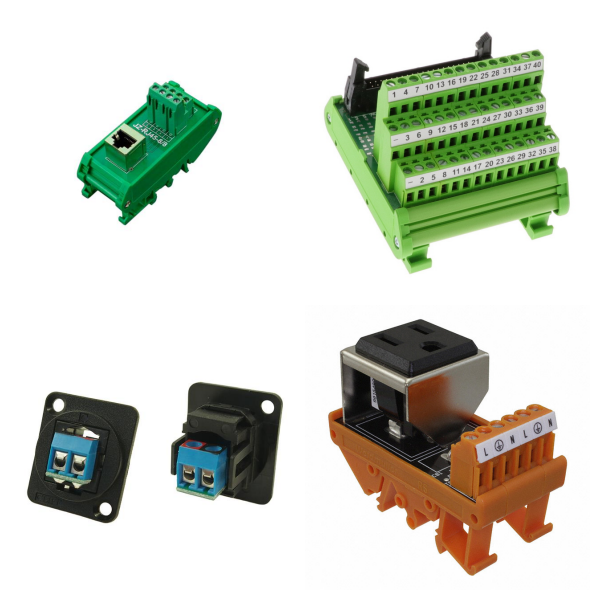
<h1> Interface Modules </h1> <p> Terminal block interface modules are devices used to connect I/O cards and equipment together. They are typically found in industrial applications. The modules consist of a control and process connector or terminal block and typically another device such as a circuit breaker, fuse, led, etc. on a single rail mounted circuit board. Connection types include: D-sub, RJ45, rectangular, card edge, and more. </p> <p>
<h1> Panel Mount </h1> <p> Panel Mount Terminal Blocks are used as a main connection point with one or more terminals separated by a plastic barrier. The device is meant to be mounted on a panel and allows connections between circuits on both sides of the panel. The panel wire connections are bolt/screw clamp, header/male/female, circular clamp, PCB pins, push in clamp, quick connect, screw terminal, solder eyelet, solder tabs, and wire wrap terminals. </p> <p>
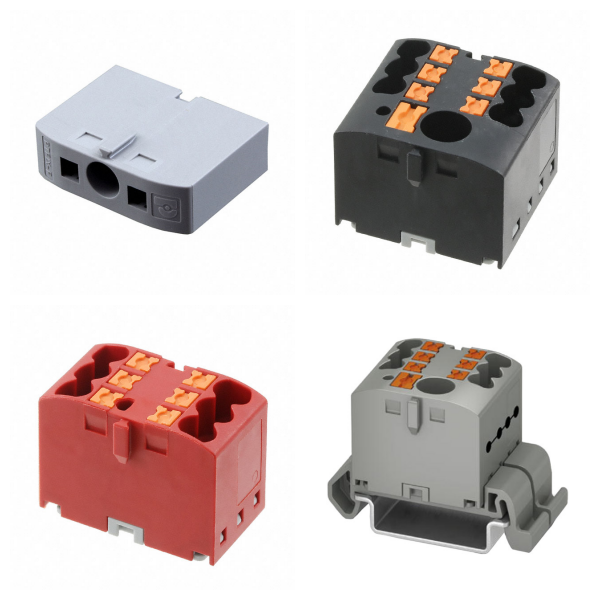
<h1> Power Distribution </h1> <p> Power distribution terminal blocks are used for branching a single source of power to multiple circuits via push-in, screw connection, threaded stud or quick connect poles. Power distribution terminal blocks are differentiated by the number of poles, connections per pole, stud size, and voltage and current ratings. </p> <p>
<h1> Specialized </h1> <p> Specialized Terminal Blocks are devices used to join conductors to each other and are attached to a metal rail or channel. The characteristics are mounting type, number of positions, number of levels, terminal width, termination style, current IEC, voltage IEC, current UL, voltage UL, and wire gauge. The number of positions range from 1 to 960 and the number of levels range from 1 to 16. </p> <p>
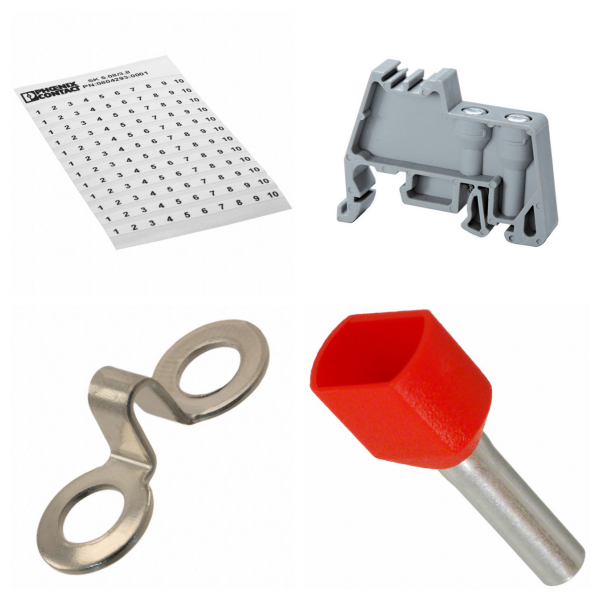
<h1> Terminal Block Accessories </h1> <p> Terminal Block Accessories are supplementary items such as end caps, base strip, brackets, busbar, coding key, connecting link, dummy plug, lighting indicator, terminals, and a retaining clip plus many others used with terminal block connectors. </p> <p>
<h1> Terminal Block Adapters </h1> <p> Terminal block adapters are used to convert to or from a terminal block connector. The terminal block side comes in a selection of different position and row combinations. The type of connectors being adapted to include: card edge, D-sub, quick connects, rectangular, solder tabs, and other terminal blocks. They are available in a variety of wire gauges from 30 AWG to 8 AWG. </p> <p>
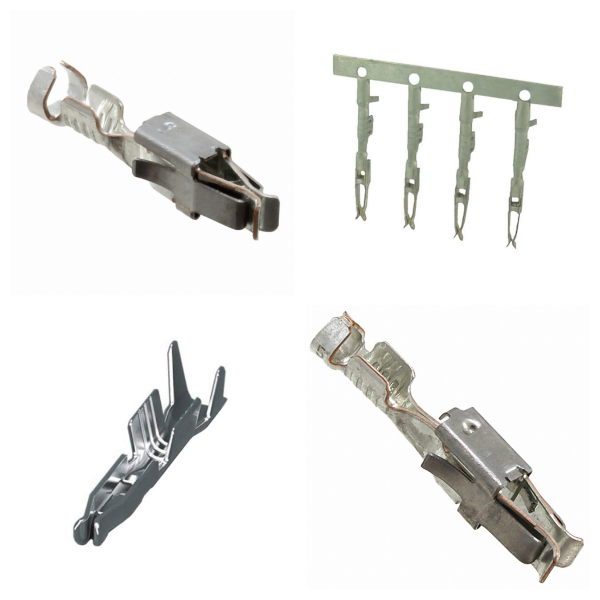
<h1> Terminal Block Contacts </h1> <p> Terminal block contacts are a component of an electrical interconnect system, which are applied to a conductor by crimping, soldering, or other method and inserted into a housing which provides electrical insulation and retention features for multiple sets of contacts. Similar to the contacts used in standard rectangular connector systems, they are differentiated on the basis of being designed for use with terminal block products that provide a pluggable wire-to-board interconnect function. </p> <p>
<h1> Wire to Board </h1> <p> Wire-to-board terminal blocks are surface or through-hole board mount, press fit or panel mount connection points for securing two or more wires to a circuit or power bus. Mounting features may include board guides, flanges, latches, ejectors, levers, strain reliefs and locks. They are selected by current and voltage parameters as well as wire gauge, pitch, numbers of levels and positions, and termination style. </p> <p>

Terminal Blocks

1. What are Terminal Blocks?

Terminal Blocks (TB for short), also known as terminal blocks, terminal blocks, terminal strips, etc. in Chinese, are standardized components used for circuit connection in electronic components. Its main functions include:


Wire Connection: reliably connect multiple wires or circuit board pins to facilitate circuit wiring and management;

Signal Transmission: ensure stable transmission of electrical signals while preventing wires from falling off or loosening;

Modular Expansion: supports flexible system expansion through modular design, commonly used in industrial automation equipment and electrical control cabinets.


2. What are the Core Components of Terminal Blocks?

Terminal Blocks are usually composed of the following core components:


Shell: mostly made of plastic or metal, used to protect internal components and fix the overall structure;

Insulator: isolate conductive parts to ensure electrical safety, commonly used materials are high-temperature-resistant engineering plastics;

Contact Body: metal conductive sheet or pin, responsible for crimping or welding of wires, mostly made of copper alloy to reduce resistance.


3. What are the Types of Terminal Blocks?

Based on design features and application scenarios, Terminal Blocks can be divided into the following categories:


1) ‌By Connection Method‌:

‌Screw-fixed Type‌: The wire is fastened by screws, which is highly reliable and suitable for high current scenarios;


Push-In‌: Quick installation using springs or separation rods, easy maintenance, such as Push-In Plus terminal blocks;


‌Welding Type‌: Directly welded to the PCB board, commonly found inside electronic devices.


2) ‌By Electrical Parameters‌:

‌Rated Current‌: Covers different levels from 10A to 400A, adapting to a variety of needs from weak current to strong current;

‌Rated Voltage‌: Supports 150V to 600V+, meeting the requirements of low-voltage control and high-voltage power distribution.

3) ‌By Appearance Structure‌: Circular terminal blocks, rectangular terminal blocks, and sealed and high-temperature types for specific scenarios.


4. What are Terminal Blocks Used for?

Terminal Blocks are widely used in:

Industrial Automation: Signal and power connection of PLC, sensors, actuators, and other equipment;

Power System: Wire collection and branching management of distribution cabinets and circuit breakers;

Transportation and Communication: Rail transit signal system, communication base station equipment wiring.


5. Technology Development Trends of Terminal Blocks

High-density Design: Compact terminal blocks support more poles (such as 40P models) to meet the needs of miniaturized equipment;

Safety Improvement: Through UL 1059 and other certification standards, the insulation performance and fire protection level are enhanced;

Intelligent Integration: Integrate functions such as fuses and signal indicators to reduce dependence on peripheral components.


6. Terminal Blocks FAQs

1) What is the difference between terminal blocks and busbars?

Busbars focus on distributing multiple branch circuits from a single power source, while terminal blocks focus on routing multiple independent circuits and support modular circuit design.


2) What are the main application scenarios of terminal blocks? ‌

Commonly used in vehicle power systems, industrial equipment power distribution, and printed circuit board (PCB) signal transmission, especially in scenarios that require high-density connections (such as SMD PCB terminal blocks).


3)‌What are the characteristics of the materials and performance of the terminal block? ‌

Non-magnetic metal materials are used to reduce electromagnetic interference, corrosion-resistant design is suitable for harsh environments, and high contact pressure ensures low temperature rise and stable operation.


4) ‌How to choose a terminal block suitable for a PCB? ‌

PCB terminals need to match signal transmission requirements, such as compact design to adapt to high-density layout, and specific models (such as SMD packaging) can optimize space utilization.