
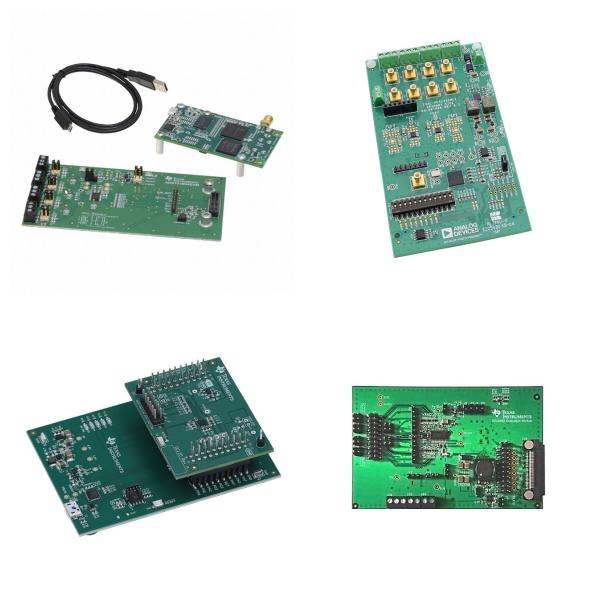
<h1> Analog to Digital Converters (ADCs) Evaluation Boards </h1> <p> Analog-to-Digital Converter (ADCs) Evaluation Boards are populated circuit boards used to provide a working example of a specific ADC or device. The number of A/D converters on a given board ranges from 3 to 32, with sampling rates per second from 2.5 kHz to 26 GHz and input voltages ranging from 0 to 8 Vp-p. </p> <p>
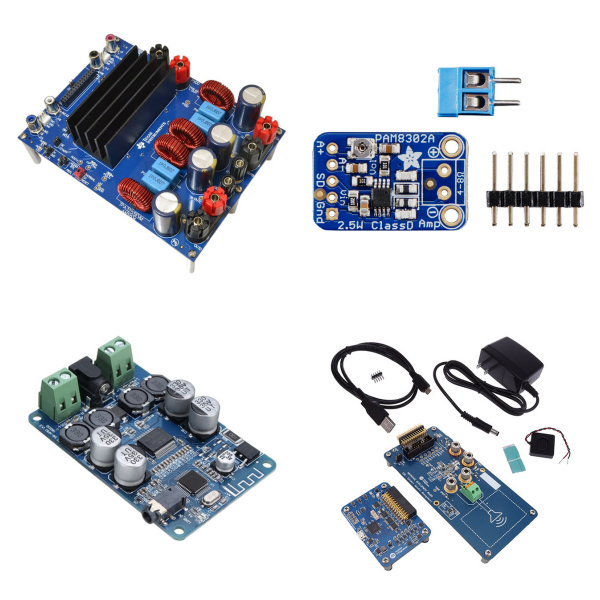
<h1> Audio Amplifier Evaluation Boards </h1> <p> Audio Amplifier Evaluation boards are populated boards used to provide a working example of a specific analog amplifier or device. The amplifier types are Class AB, Class D, Class G, Class H, and Class K, with output types of headphone, 1 channel (mono), 2 channel (stereo), 3 channel, 4 channel, 6 channel, and 8 channel. </p> <p>
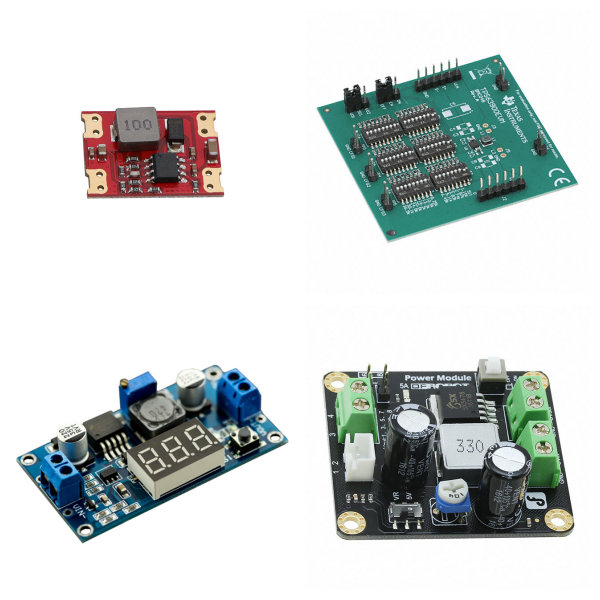
<h1> DC/DC & AC/DC (Off-Line) SMPS Evaluation Boards </h1> <p> Products within this family provide a convenient means of evaluating the performance or behavior of devices used for switch-mode power conversion, including both DC-DC and AC-DC types. Devices described as "regulators" (those containing an internal power switching device) and "controllers" (those designed to control an external power switch) are both included. </p> <p>
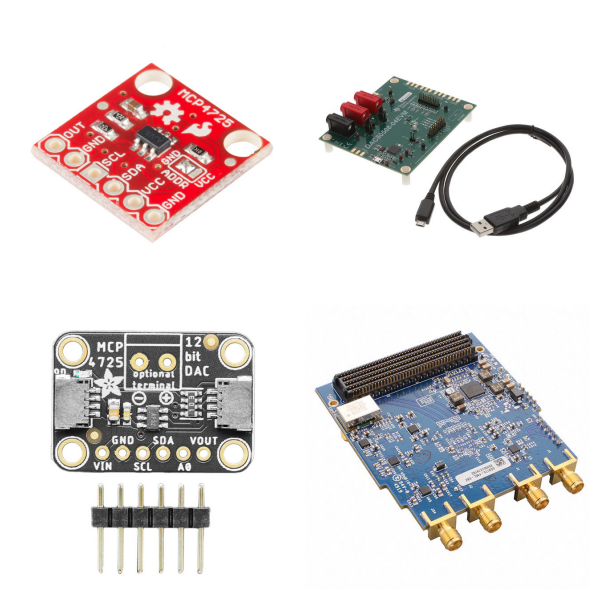
<h1> Digital to Analog Converters (DACs) Evaluation Boards </h1> <p> Products within this family provide a convenient means of evaluating the performance or behavior of devices used to convert digital data to analog format, in the context of a proven design. Focus devices covered range from devices of modest capability implemented in a manner suitable for student or hobby use, to advanced devices suitable for telecommunications infrastructure applications. </p> <p>
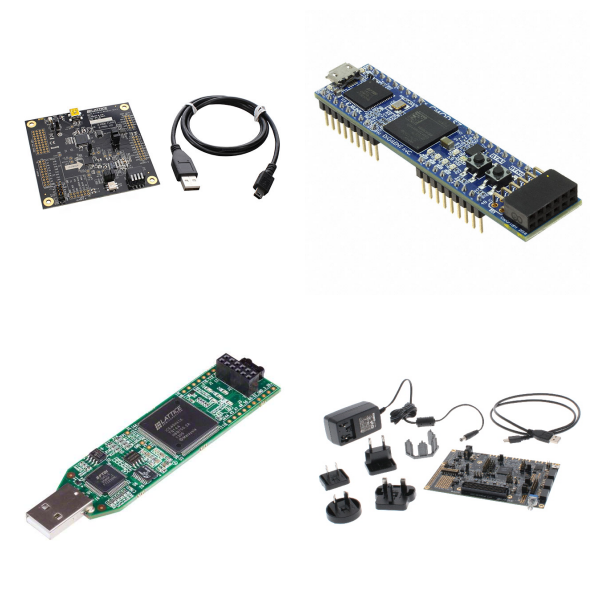
<h1> Embedded Complex Logic (FPGA, CPLD) Evaluation Boards </h1> <p> Evaluation Boards for Embedded Complex Logic (FPGA, CPLD) are a programmable boards comprised of an array of logic blocks, input/output blocks, and macro cells. Both FPGAs and CPLDs have a large number of gates available for the implementation of moderately complicated data processing devices. </p> <p>

<h1> Embedded MCU, DSP Evaluation Boards </h1> <p> Products within this family provide a convenient means of evaluating the performance or behavior of microcontroller, microprocessor, and digital signal processor components in the context of a proven hardware implementation. Included products vary in their intended use case, and may range from unpopulated PCBs intended to facilitate evaluation to a range of microcontroller families, to single board computers with extensive peripheral support. </p> <p>
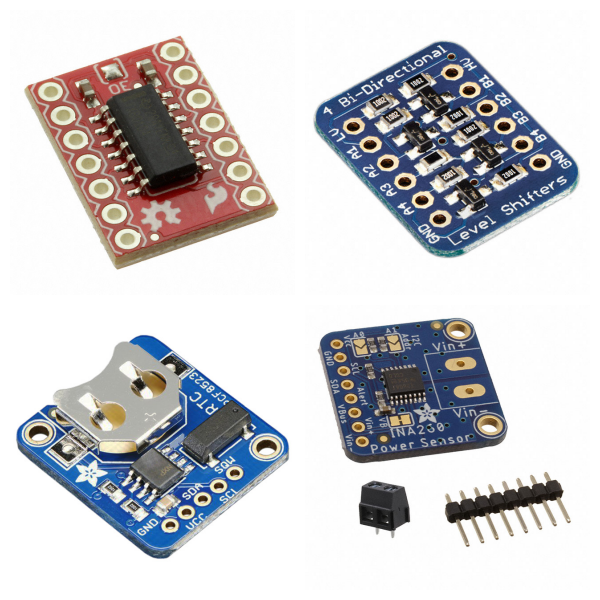
<h1> Evaluation and Demonstration Boards and Kits </h1> <p> Products within this family provide a convenient means of evaluating the performance or behavior of some focus device, in the context of a proven implementation that is generally well-documented and supported by evaluation software, as appropriate. Typically consisting of a printed circuit board on which the focus device has been populated along with necessary or helpful support components, additional components such as cabling or power supplies may also be included. Evaluation platforms for device classes that are particularly numerous or distinctive in their classification such as ADCs, DACs, and switch-mode power supplies may be grouped together as a separate product family. </p> <p>
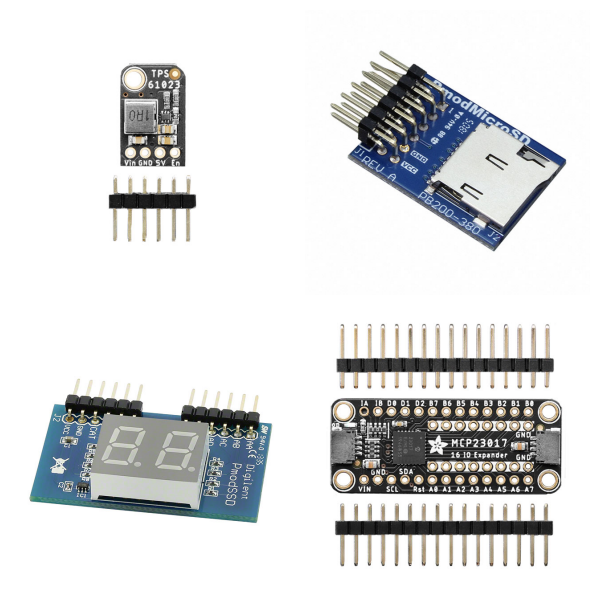
<h1> Expansion Boards, Daughter Cards </h1> <p> Evaluation and expansion boards and daughter cards are used to add functionality to microcontroller platforms and are designed to stack onto existing pin headers or preconfigured attachment ports. Common function types include, amplifiers, atomizers, audio, clock timing, interface connectivity, data acquisition/logging, display, human interface, memory, motor drivers, optoelectronics, power management, prototyping, relay and transistors, RF and sensor arrays. </p> <p>
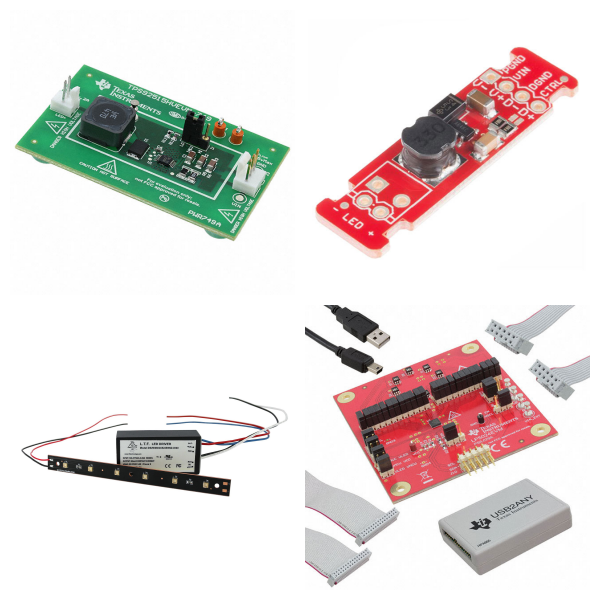
<h1> LED Driver Evaluation Boards </h1> <p> LED Driver Evaluation Boards are a circuit board(s) that are populated with components and used to provide a working example of a specific power circuit or device. The boards in this family provide an example of an LED driver for adjustable blinking, analog brightness, backlight, bipolar switch, boost converter, brightness control, camera flash, dimmable, constant current, and RGB control, plus many more. </p> <p>

<h1> Linear Voltage Regulator Evaluation Boards </h1> <p> Linear Voltage Regulator evaluation boards are circuit boards populated with components and used to provide a working example of a specific linear voltage regulator or device. The channels per IC can be single, dual, triple, or quad, with regulator types of negative adjustable, negative fixed, positive adjustable, positive fixed, positive and negative adjustable, and positive fixed and adjustable. The voltage outputs range from -15 to 56 volts with current output ranges from 10 mA to 5 A. </p> <p>
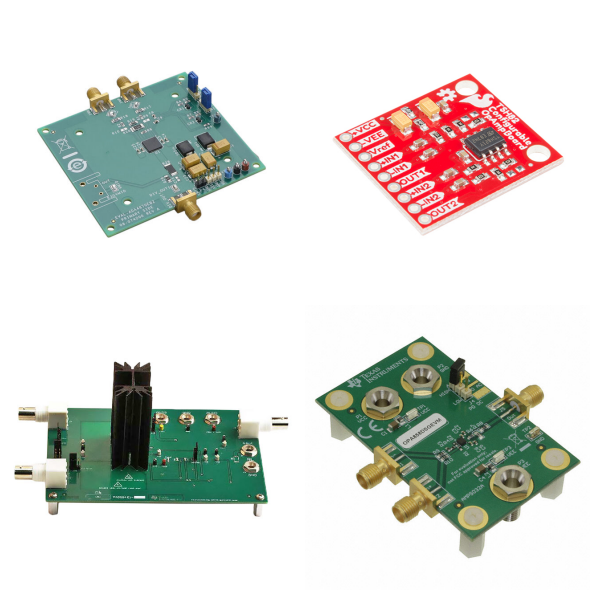
<h1> Op Amp Evaluation Boards </h1> <p> Op Amp Evaluation boards are circuit boards populated with components and used to provide a working example of a specific op amp or device. The channels per IC can be single, dual, triple, quad, or octal, with amplifier types of audio, buffer, differential, instrumentation, and power to name a few. </p> <p>
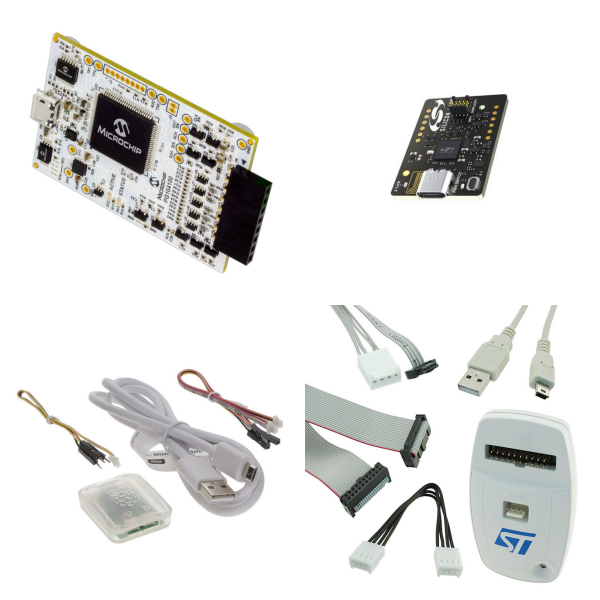
<h1> Programmers, Emulators, and Debuggers </h1> <p> Programmers, Emulators, and Debuggers are devices used to write/load/test the software in an embedded system. For use with/related products AEAT, Altera, Arduino, ARM, ATiny, AVR, Basic Stamp, Blackfin, ChromeOS, Code Warrior, ColdFire, Cortex, DaVinci Boards, Digilent, EEPROM, Encoders, FPGA, Freescale, Intel, JTAG Devices, Kinetis, Lapis, Lattice, Magnetic Position Sensors, MSP430, PIC, Zilog, and ZON to name a few. </p> <p>
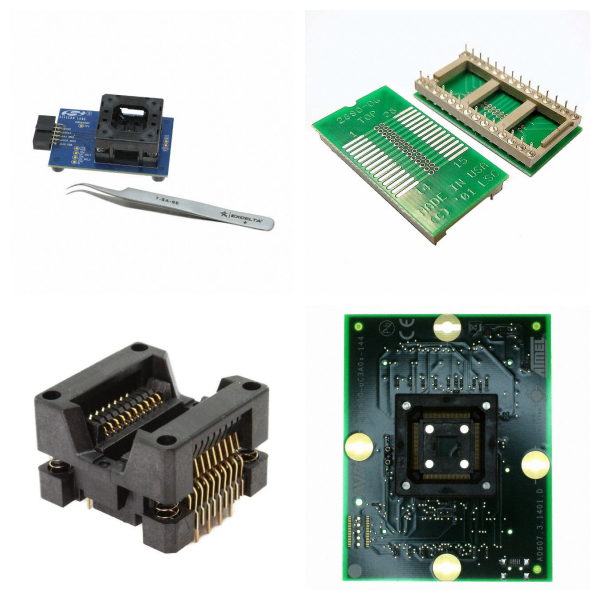
<h1> Programming Adapters, Sockets </h1> <p> Products in this family are designed to facilitate making electrical connections to devices such as microcontrollers and programmable oscillators that must be electronically configured prior to use. Commonly used during product development efforts or to allow use of a common configuration tool with programmable devices in a variety of physical packages, they are typically designed to allow damage-free insertion and removal of the devices to be programmed. </p> <p>
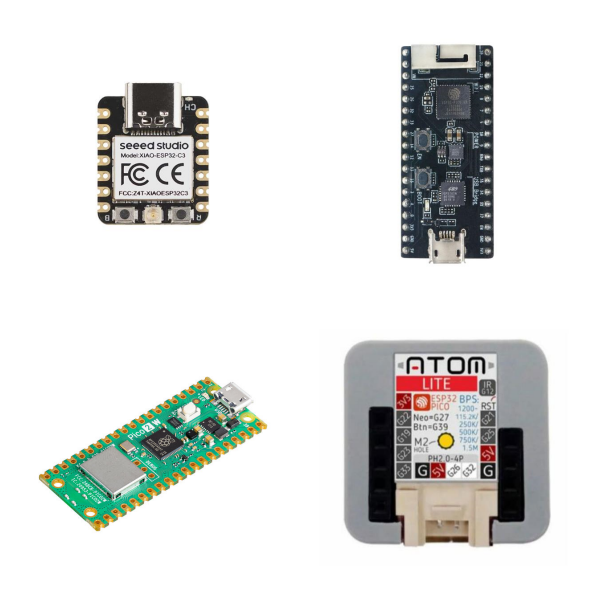
<h1> RF, RFID, Wireless Evaluation Boards </h1> <p> Products in this family are intended to provide or facilitate access to the functionality of a radio frequency related device, in the context of a known implementation. Included focus products range from RF signal chain components such as amplifiers and detectors to modular transceivers, as well as adapter hardware that do not directly incorporate a focus product, but which provide convenient access to a particular RF product or series supplied separately by the user. </p> <p>
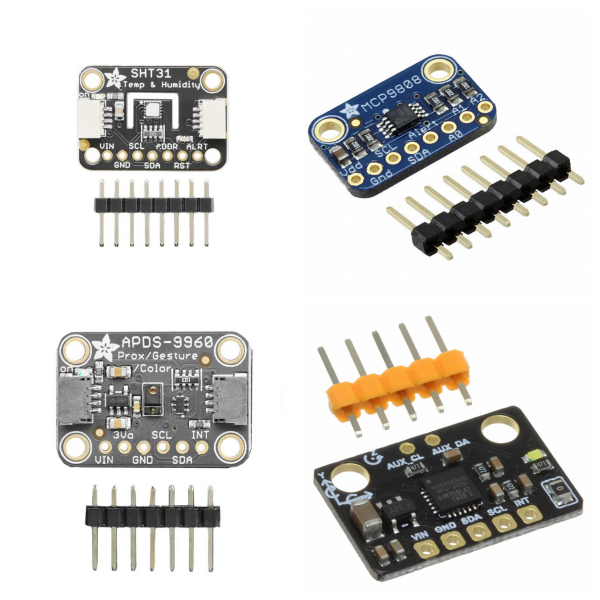
<h1> Sensor Evaluation Boards </h1> <p> Sensor Evaluation Boards are a circuit board(s) that are populated with components and used to provide a working example of a specific integrated circuit or device. The boards in this family provide examples of a variety of sensors such as accelerometers, barometric pressure, gyroscope, temperature, humidity, optical, light, air quality, capacitive, carbon dioxide, fingerprint, encoders, fluid, gas, infrared, joystick, and magnetic, plus many more. </p> <p>
<h1> Software, Services </h1> <p> Software and services are made to be used with or for specific development boards or other devices. These have many different applications, editions, and types. There are multiple licensing lengths along with various operating system choices. Media delivery types include: card, CD/DVD, USB flash drive, electronically delivered, and SD/microSD. </p> <p>
Evaluation Boards
Evaluation boards are produced by a manufacturer to allow prospective users a convenient way to characterize device behavior in context of a known-good implementation. Types of evaluation boards include analog to digital converters (ADCs), audio amplifiers, digital to analog converters (DACs), complex logic (FPGA, CPLD), MCU, DSP, expansion boards, daughter cards, LED drivers, linear voltage regulators, op amps, sensors, RF, RFID, DC/DC & AC/DC (Off-Line) SMPS, and more.