
New title

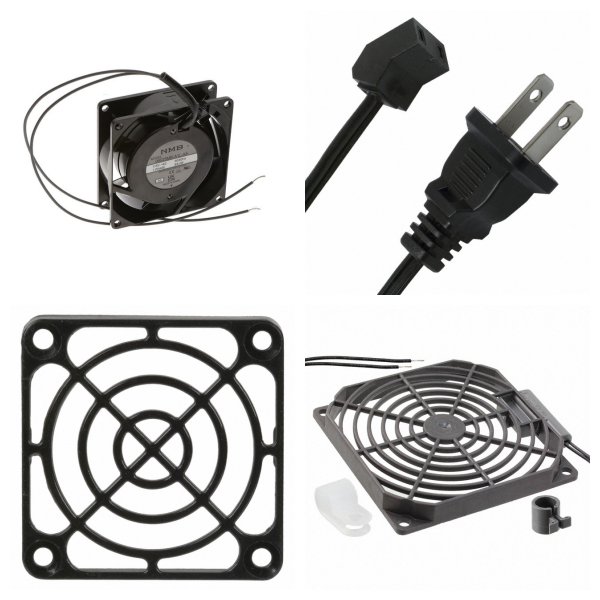
<h1> Fans </h1> <h2> 1. Fans Overview </h2> <h3> 1) ‌Function Positioning‌ </h3> <p> Fans usually refer to ‌cooling fans‌, which are key components for auxiliary heat dissipation management in electronic devices. Its core function is to reduce the operating temperature of high-power components (such as CPU, GPU, power module, etc.) through forced convection to ensure system stability. </p> <p>   </p> <h3> 2) ‌Technical Classification‌ </h3> <p> <strong>‌By Driving Mode‌</strong>: It can be divided into DC fans and AC fans. DC fans are more suitable for consumer electronics due to their small size and low power consumption. </p> <p> <strong>‌By Control Mode‌</strong>: It includes constant speed fans, PWM speed control fans and intelligent temperature control fans. The latter adjusts the speed in real-time through sensors to balance heat dissipation efficiency and noise. </p> <p>   </p> <h2> 2. What are the Core Parameters of Fans?‌ </h2> <h3> 1) Key Performance Indicators‌ </h3> <p> <strong>‌Air Volume (CFM)</strong>: directly affects the heat dissipation capacity and needs to be matched according to the heat generation of the equipment; </p> <p> <strong>‌Noise (dB)</strong>: positively correlated with the speed, and low noise design is preferred for precision equipment; </p> <p> <strong>‌Power Consumption and Life‌</strong>: The bearing type (oil/ball bearing) significantly affects durability. </p> <p>   </p> <h3> 2) ‌Application Adaptation Principle‌ </h3> <p> Industrial scenarios focus on high air volume and high-temperature resistance, such as server rooms; </p> <p>   </p> <p> Consumer electronics (such as laptops) prioritize compact design and silent performance. </p> <p>   </p> <h3> 3. What are Fans Used for? </h3> <p> ‌<strong>Electronic System</strong>‌ </p> <p> In smartphones, micro fans are used in heat dissipation modules, and graphene heat conductive sheets are used to achieve efficient thermal management; </p> <p>   </p> <p> In the automotive electronics field, high-power fans are used for battery cooling systems and car charger heat dissipation. </p> <p>   </p> <p> <strong>‌Maintenance and Optimization</strong>‌ </p> <p> Regular cleaning of fan blade dust can avoid performance degradation caused by increased wind resistance; </p> <p>   </p> <p> Combined with temperature monitoring circuit design, dynamic optimization of fan start and stop logic is achieved. </p> <p>   </p> <h2> 4. Technology Development Trends of Fans </h2> <p> The integration of IoT and AI technologies promotes the development of fans towards ‌intelligent‌ and ‌integrated‌, for example: </p> <p>   </p> <p> Smart fans achieve fault pre-diagnosis through embedded sensors; </p> <p>   </p> <p> Brushless motor technology improves energy efficiency and adapts to the needs of green energy equipment. </p> <p>   </p> <h2> 5. Fans FAQs </h2> <h3> 1) ‌What is the main function of the cooling fan in the circuit? ‌ </h3> <p> It is used to reduce the temperature of electronic equipment and prevent performance degradation or damage to components due to overheating. It is commonly used in power modules, CPU cooling, and other scenarios. Its control circuit is often linked with a temperature sensor (such as a thermistor) to achieve dynamic speed regulation. </p> <p>   </p> <h3> 2) ‌What key components are needed to drive the fan? ‌ </h3> <p> <strong>‌Switching Elements‌</strong>: such as MOSFET or triode, used to control the start,stop and speed of the fan. </p> <p> <strong>‌Protection Elements‌</strong>: fuse (overcurrent protection), TVS diode (voltage surge protection), etc. </p> <p>   </p> <h3> 3) ‌How to choose a suitable cooling fan? ‌ </h3> <p> <strong>‌Electrical Parameters‌</strong>: match the rated voltage and current of the equipment, and consider the driving ability of the power amplifier element. </p> <p> <strong>‌Environmental Factors‌</strong>: the size and bearing type (such as ball bearings have a longer life) should be selected in combination with the cooling requirements (air volume, noise). </p> <p>   </p> <h3> 4) ‌How to optimize the energy consumption of the fan? ‌ </h3> <p> Dynamically adjust the speed through the PWM control algorithm to reduce the standby power consumption; or use a low-power switching power supply module for power supply. </p> <p>   </p> <h3> 5) ‌Possible reasons why the cooling fan does not rotate? ‌ </h3> <p> <strong>‌Circuit Failure‌</strong>: the driving triode is damaged and the fuse is blown. </p> <p> <strong>‌Mechanical Problem‌</strong>: Bearings are stuck or have too much dust, so they need to be cleaned and lubricated regularly. </p> <p>   </p> <h3> 6) ‌How to reduce fan noise? ‌ </h3> <p> <strong>‌Hardware Optimization‌</strong>: Choose silent bearings or add rubber shock-absorbing pads; </p> <p> <strong>‌Software Control‌</strong>: Optimize the frequency of PWM signals to reduce resonance. </p> <p>   </p> <h3> 7) ‌How to implement fan control in a typical circuit? ‌ </h3> <p> <strong>Take CPU cooling as an example</strong>: A temperature sensor (such as a thermistor) detects temperature → signal is processed by an operational amplifier → PWM signal output is controlled → field effect tube is driven to adjust fan speed. </p> <p>
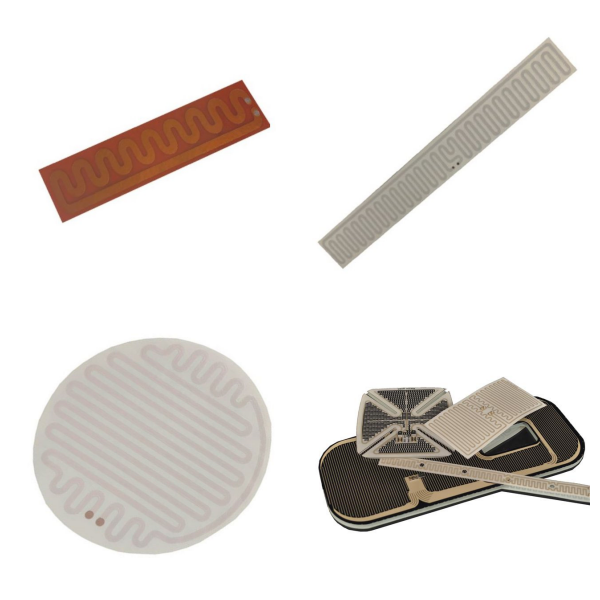
<h1> Heat Tape, Heat Blankets and Heaters </h1> <h2> 1. What are Heat Tape and Heat Blankets and Heaters? </h2> <h3> 1) ‌Heat Tape‌ </h3> <p> Flexible heating elements in the form of strips are usually used for local heating of pipes, tanks, or equipment, and use the principle of resistance heating to achieve temperature maintenance or antifreeze protection. Its core materials include an insulating layer, a resistance wire, and a protective sleeve, and have uniform heating characteristics. </p> <p>   </p> <h3> 2) ‌Heat Blankets‌ </h3> <p> Flexible heating devices that cover the surface are suitable for uniform heating of containers, barrels, or equipment with large surface areas. Patented heat diffusion technology is used to achieve low-energy and high-efficiency heating, which can replace traditional heating tapes or ovens. </p> <p>   </p> <h3> 3) ‌Heaters‌ </h3> <p> <strong>Generally refers to various active heating devices, including</strong>: </p> <p> <strong>‌Industrial Heaters‌</strong>: such as liquid-cooled radiators, heat pipe radiators, etc., used for heat dissipation of power semiconductor devices; </p> <p> <strong>‌Temperature Control Devices‌</strong>: such as thermal relays, which use electromagnets and thermistors to achieve circuit overload protection. </p> <p>   </p> <h2> 2. What are the Core Parameters of Heat Tape and Heat Blankets and Heaters? </h2> <p> <strong>‌Rated Power‌</strong>: Select the appropriate power density according to the application scenario, such as the high heat flux density heat dissipation needs to match the forced cooling solution; </p> <p> <strong>‌Temperature Range‌</strong>: The maximum temperature limit of the long-term operation of the equipment must be met (such as electronic devices generally do not exceed the upper limit of the stable operating temperature); </p> <p>   </p> <p> ‌<strong>Material Weather Resistance‌</strong>: It must be corrosion-resistant, salt spray-resistant, and mold-resistant in humid tropical environments; </p> <p>   </p> <p> <strong>‌Installation Compatibility‌</strong>: The heating belt/blanket must fit tightly with the container surface to reduce contact thermal resistance. </p> <p>   </p> <h2> 3. What are Heat Tape and Heat Blankets and Heaters Used for? </h2> <p> <strong>‌Insulation of Industrial Equipment‌</strong>: such as antifreeze of chemical storage tanks and heat dissipation of power semiconductor devices; </p> <p> <strong>‌Thermal Management of Electronic Products‌</strong>: used for PCB board-level heat dissipation or chip packaging temperature control to avoid thermal failure; </p> <p> <strong>‌Special Environment Heating‌</strong>: Equipment startup heating in low-temperature environments, or constant temperature storage of temperature-sensitive materials. </p> <p>   </p> <h2> 4. Selection and Installation Points for Heat Tape and Heat Blankets and Heaters </h2> <p> <strong>Structural Matching</strong>: When selecting a finger-shaped, profiled, or cast heat sink, consider the spatial layout; </p> <p> <strong>Thermal Design Closed Loop</strong>: Optimize thermal performance by combining hardware layout, material selection, and software control; </p> <p> <strong>Safety Specifications</strong>: Follow the standards for insulators and fasteners (such as GBB446.3) to ensure that the pressure/torque between the heat sink and the component meets the requirements. </p> <p>
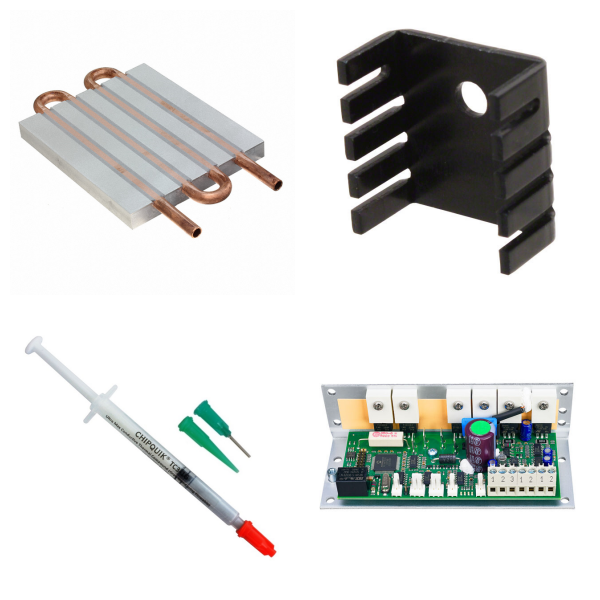
<h1> Thermal </h1> <p> Thermal products are used for various methods of heat transfer. Items in this category include thermal adhesives, thermal epoxies, thermal greases, thermal pastes, heat pipes, vapor chambers, heat sinks, liquid cooling and heating, thermal pads, thermal sheets, thermoelectric products, peltier assemblies, peltier modules, and more. </p> <p>

Fans, Blowers, Thermal Management

1.What are Fans, Blowers and Thermal Management?‌

‌Fans and blowers‌: They are active heat dissipation devices that remove heat generated by components through forced air flow (thermal convection) to reduce local or system temperature‌.

‌Thermal management‌: Comprehensive use of heat dissipation design, material selection, and cooling technology to ensure that the temperature of components is within the safe threshold and ensure the stability and life of the equipment‌.

2. What is the working principle of Fans, Blowers and Thermal Management?‌

‌Active heat dissipation technology‌

√‌Fans‌: Drive airflow through blade rotation, commonly used in general electronic devices (such as computers and servers)‌.

√‌Blowers‌: Provide higher wind pressure and directional airflow, suitable for scenarios with limited space or centralized heat dissipation (such as avionics packaging)‌.

‌Heat transfer mechanism‌: Heat is dissipated through three paths: thermal conduction (heat sink, thermal pad), thermal convection (forced airflow), and thermal radiation (high emissivity material).

3. Where are Fans, Blowers and Thermal Management Used for?‌

‌Consumer electronics‌: In mobile phones, computers, and other devices, fans are used to dissipate CPU/GPU heat and prevent performance throttling‌.

‌High-power devices‌: such as high-power chips and LED modules, require blowers or liquid cooling systems to cope with high heat flux density‌.

‌Harsh environments‌: In scenarios such as avionics, microblowers are preferred due to their low noise and low electromagnetic interference characteristics‌.

4. What are the Challenges of Fans, Blowers and Thermal Management?‌

‌Efficiency improvement‌: The heat dissipation effect can be enhanced by increasing the heat dissipation area, optimizing the air duct design, or increasing the fan speed, but the noise and energy consumption need to be balanced‌.

‌Reliability issues‌: Traditional fans may have a shortened life due to mechanical vibration and accumulation of pollutants, and need to be combined with a temperature control system to achieve dynamic adjustment‌.

5. What are the ‌Development Trends of Fans, Blowers and Thermal Management?‌

‌Miniaturization and integration‌: The combination of micro blowers, heat pipes, and other technologies meets the efficient heat dissipation needs of small devices‌.

‌Intelligent temperature control‌: Combine temperature sensors with adaptive algorithms to achieve dynamic optimization of heat dissipation strategies‌.