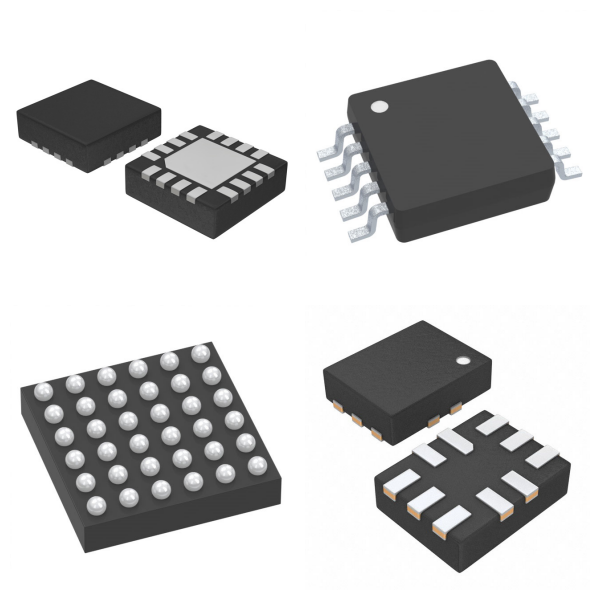
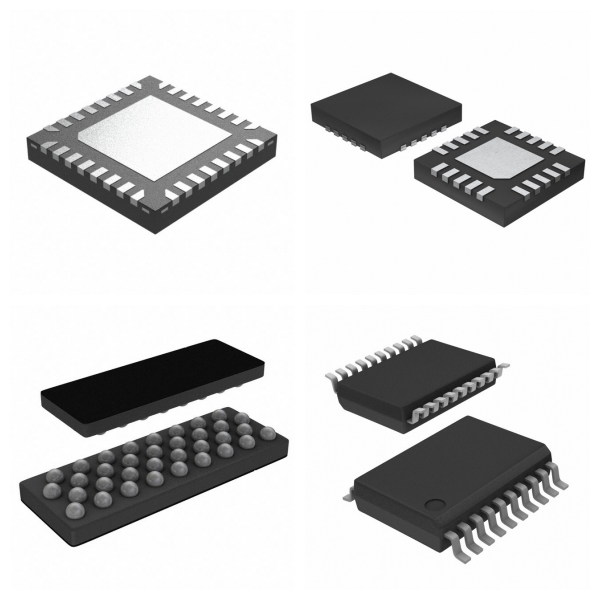
<h1> Analog Switches - Special Purpose </h1> <p> Special Purpose Analog Switches route analog signals via a solid state device. The differentiator in this family is that these Analog switches target a specific application, and as such have distinguishing features not typically found in general purpose Analog switches. </p> <p>
<h1> Analog Switches, Multiplexers, Demultiplexers </h1> <p> Products in this family are used for interconnecting or routing analog signals between multiple available signal paths. Functioning similar to a traditional electromechanical switch, their solid-state character facilitates electronic control, longer service life, and reduced switching noise compared to electromechanical switching, in trade for added constraints on the amplitude and bias of the signals being switched. </p> <p>

<h1> CODECS </h1> <p> Coder-Decoder interface ICs are an important class of digital integrated circuits that are mainly used for data encoding, decoding, and signal conversion and are widely used in the fields of communication, storage control, and system interface design. These ICs achieve efficient data transmission and error control by converting input data into a specific encoding format or recovering the original information from the encoded data. </p> <p> </p> <h2> 1. How do CODECS Work? </h2> <p> <strong>Encoder</strong>: Converts the input digital signal (such as binary data) into a compressed or specific rule encoding format (such as a run-length limited code) to reduce the transmission bandwidth or enhance the anti-interference ability. For example, a ternary encoder uses a ROM as a code lookup table to map the binary input to an output sequence containing three symbols (0, 1, 2). </p> <p> <strong>Decoder</strong>: Performs the inverse process to restore the encoded signal to the original data. Common types include variable decoders (such as n-line-2^n-line decoders) and display decoders, which can convert binary codes into seven-segment display codes for driving LEDs or LCD devices. Decoders usually contain logic circuits (such as gate circuits and triggers) to handle encoding ambiguities. </p> <p> </p> <h2> 2. What are the Typical Types of CODECS? </h2> <p> Binary and Ternary Encoder/Decoders: Binary decoders (such as 74LS138) use combinational logic to convert 3-bit inputs into an activation signal in 8-bit outputs, which is suitable for address decoding and control signal generation. Ternary encoders (such as designs based on ECL technology) support higher data density, achieve microvolt-level signal processing through Sigma-Delta ADC or SAR ADC, and improve recording density and detection window width. </p> <p> </p> <p> <strong>Integrated Interface IC</strong>: This type of IC is often integrated into mixed signal systems, for example, combining ADC modules and communication interfaces (such as SPI and I²C) to achieve multi-device cascade signal interaction. In chip examples such as CMS8H1215, the encoding/decoding function is embedded in the RISC core, supporting wide voltage input (2.4V-4.5V) and real-time data processing. </p> <p> </p> <h2> 3. What are CODECS Used for? </h2> <p> <strong>Communication System</strong>: In serial bus protocols (such as IIC), encoder-decoder ICs are used to manage bidirectional data transmission between master and slave devices, ensuring signal integrity through clock synchronization (SCL line) and data line (SDA), which is suitable for sensor networks, memory control, and display driving. </p> <p> <strong>Storage and Data Processing</strong>: Used for Run Length Limited Coding (RLL) to increase storage density, for example, in hard disk drives, the ternary 3 PM encoder can increase the data rate to 25 Mb/s while maintaining a stable Tmax/Tmin ratio. </p> <p> <strong>Embedded Systems</strong>: In microcontrollers (such as STM32 or GD32), these ICs act as interface modules to connect processors and peripherals, supporting logic level conversion (such as 3.3V to 1.8V) to ensure smooth communication across voltage domains. </p> <p> </p> <p> In short, encoder-decoder interface ICs support the high-performance and low-power design of modern electronic devices through efficient data conversion mechanisms and are one of the core components of digital circuits. </p> <p> </p> <h2> 4. CODECS FAQs </h2> <h3> 1) What are the common interface protocols of CODECS? What are the key differences? </h3> <p> <strong>Codec ICs communicate with the main control chip (such as SoC) through a digital interface. The mainstream protocols include</strong>: </p> <p> <strong>I²S (Inter-IC Sound)</strong>: Designed specifically for audio, it supports dual-channel, high-fidelity transmission and is widely used in consumer electronics (such as smart speakers). </p> <p> <strong>PCM/TDM</strong>: Suitable for multi-channel scenarios (such as conference systems), supporting multiple audio streams through time division multiplexing. </p> <p> <strong>PDM (Pulse Density Modulation)</strong>: Used to directly connect digital microphones to simplify circuit design. </p> <p> <strong>Difference</strong>: I²S focuses on sound quality, PDM is suitable for low-power microphones, and PCM/TDM has strong scalability. </p> <h3> </h3> <h3> 2) How to solve the logic level mismatch between the CODECS and the main control chip? </h3> <p> <strong>Level mismatch may cause communication failure or signal distortion. Solutions include</strong>: </p> <p> <strong>Level Conversion Chip</strong>: Use dedicated logic devices (such as LVCMOS-LVTTL converters) to ensure compatibility between different voltage devices (such as 3.3V CODEC and 1.8V processors). </p> <p> <strong>Series Resistor</strong>: Match impedance and reduce signal reflection, enhancing driving capability. </p> <p> <strong>Check Vih/Vil Parameters</strong>: Ensure that the input high/low-level threshold meets the interface specifications. </p> <p> </p> <h3> 3) What key parameters should be paid attention to when selecting CODECS? </h3> <p> <strong>Signal-to-noise Ratio (SNR)</strong>: ≥90dB can meet high-fidelity requirements (such as Hi-Fi equipment), and low SNR makes it easy to introduce noise. </p> <p> <strong>Sampling Rate and Bit Depth</strong>: 16bit/48kHz is the basic configuration for voice, and 24bit/192kHz supports lossless audio. </p> <p> <strong>Power Consumption</strong>: Portable devices need to choose models with standby power consumption <1mW. </p> <p> <strong>Integrated Functions</strong>: Some ICs have built-in amplifiers and noise reduction algorithms to reduce peripheral circuits. </p> <p> </p> <h3> 4) The interface IC is not recognized by the system. How to troubleshoot? </h3> <p> <strong>Typical troubleshooting steps</strong>: </p> <p> <strong>Hardware Check</strong>: Confirm that the power supply voltage is stable and the clock signal (such as MCLK) has no jitter. </p> <p> <strong>Driver Configuration</strong>: Check whether the register settings (such as I²C address and sampling rate configuration) match the data manual. </p> <p> <strong>Signal Integrity</strong>: Use an oscilloscope to detect whether the data line (such as SDIN) is attenuated or interfered. </p> <p> <strong>Compatibility Verification</strong>: Confirm that the host interface protocol (such as I²S mode) is consistent with the CODEC. </p>
<h1> Controllers </h1> <p> Controller Interface ICs mainly cover dedicated chips for efficient communication and data conversion between different controllers or functional modules. </p> <p> </p> <h2> 1. What is the Core Function of Controller Interface ICs? </h2> <p> <strong>Signal Conversion and Protocol Bridging</strong> </p> <p> As a bridge connecting logic level signals with external transmission lines, buses or power supplies, it realizes voltage/current matching and communication protocol conversion between different electrical standards (such as UART to USB, I²C to SPI, etc.). This type of IC ensures that the controller is compatible with various peripherals and transmission media. </p> <p> </p> <p> <strong>Enhanced System Compatibility</strong> </p> <p> Simplifies the complexity of hardware design, allowing embedded controllers to expand functions through standard interfaces (such as USB, I²S, OpenLDI), and supports high-speed data transmission (for example, USB bridge chips can reach 3Mbps). </p> <p> </p> <h2> 2. What are the Key Types of Controller Interface ICs? </h2> <p> <strong>Communication Bridge IC</strong> </p> <p> For example, USB to serial chips (such as CP2102N) can seamlessly convert the UART signal of the microcontroller to the USB protocol, which is widely used in POS terminals, diagnostic equipment, and other scenarios. </p> <p> </p> <p> <strong>Display Control IC</strong> </p> <p> Contains a display driver, scaling controller, and distortion correction chip (such as S2D13V42), dedicated to automotive dashboard, and head-up display (HUD), to achieve real-time processing and fault monitoring of high-resolution video signals. </p> <p> </p> <p> <strong>Industrial Control Interface IC</strong> </p> <p> In industrial control systems (ICS), as the core component of a remote terminal unit (RTU) or human-machine interface (HMI), it is responsible for data interaction between field equipment and the monitoring layer. </p> <p> </p> <h2> 3. What are Controller Interface ICs Used for? </h2> <table> <tbody> <tr class="firstRow"> <td width="110" valign="top" style="padding: 0px 7px; border-width: 1px; border-color: windowtext; background: rgb(190, 190, 190);"> <p> Field </p> </td> <td width="212" valign="top" style="padding: 0px 7px; border-width: 1px; border-color: windowtext; background: rgb(190, 190, 190);"> <p> Application </p> </td> <td width="246" valign="top" style="padding: 0px 7px; border-width: 1px; border-color: windowtext; background: rgb(190, 190, 190);"> <p> Representative Technology </p> </td> </tr> <tr> <td width="110" valign="top" style="padding: 0px 7px; border-left-width: 1px; border-left-color: windowtext; border-right-width: 1px; border-right-color: windowtext; border-top: none; border-bottom-width: 1px; border-bottom-color: windowtext;"> <p> Consumer Electronics </p> </td> <td width="212" valign="top" style="padding: 0px 7px; border-left-width: 1px; border-left-color: windowtext; border-right-width: 1px; border-right-color: windowtext; border-top: none; border-bottom-width: 1px; border-bottom-color: windowtext;"> <p> USB Peripherals (Keyboards, Dongles) </p> </td> <td width="246" valign="top" style="padding: 0px 7px; border-left-width: 1px; border-left-color: windowtext; border-right-width: 1px; border-right-color: windowtext; border-top: none; border-bottom-width: 1px; border-bottom-color: windowtext;"> <p> USB Audio/Data Bridge IC </p> </td> </tr> <tr> <td width="110" valign="top" style="padding: 0px 7px; border-left-width: 1px; border-left-color: windowtext; border-right-width: 1px; border-right-color: windowtext; border-top: none; border-bottom-width: 1px; border-bottom-color: windowtext;"> <p> Automotive Electronics </p> </td> <td width="212" valign="top" style="padding: 0px 7px; border-left-width: 1px; border-left-color: windowtext; border-right-width: 1px; border-right-color: windowtext; border-top: none; border-bottom-width: 1px; border-bottom-color: windowtext;"> <p> Integrated Instrument Panel, Central Control Display System </p> </td> <td width="246" valign="top" style="padding: 0px 7px; border-left-width: 1px; border-left-color: windowtext; border-right-width: 1px; border-right-color: windowtext; border-top: none; border-bottom-width: 1px; border-bottom-color: windowtext;"> <p> Bridge IC Supporting eDP/OpenLDI </p> </td> </tr> <tr> <td width="110" valign="top" style="padding: 0px 7px; border-left-width: 1px; border-left-color: windowtext; border-right-width: 1px; border-right-color: windowtext; border-top: none; border-bottom-width: 1px; border-bottom-color: windowtext;"> <p> Industrial Automation </p> </td> <td width="212" valign="top" style="padding: 0px 7px; border-left-width: 1px; border-left-color: windowtext; border-right-width: 1px; border-right-color: windowtext; border-top: none; border-bottom-width: 1px; border-bottom-color: windowtext;"> <p> SCADA System Equipment Communication </p> </td> <td width="246" valign="top" style="padding: 0px 7px; border-left-width: 1px; border-left-color: windowtext; border-right-width: 1px; border-right-color: windowtext; border-top: none; border-bottom-width: 1px; border-bottom-color: windowtext;"> <p> Interface IC supporting Modbus/PROFIBUS </p> </td> </tr> <tr> <td width="110" valign="top" style="padding: 0px 7px; border-left-width: 1px; border-left-color: windowtext; border-right-width: 1px; border-right-color: windowtext; border-top: none; border-bottom-width: 1px; border-bottom-color: windowtext;"> <p> Communication System </p> </td> <td width="212" valign="top" style="padding: 0px 7px; border-left-width: 1px; border-left-color: windowtext; border-right-width: 1px; border-right-color: windowtext; border-top: none; border-bottom-width: 1px; border-bottom-color: windowtext;"> <p> ISDN User-side Digital Telephone Interface </p> </td> <td width="246" valign="top" style="padding: 0px 7px; border-left-width: 1px; border-left-color: windowtext; border-right-width: 1px; border-right-color: windowtext; border-top: none; border-bottom-width: 1px; border-bottom-color: windowtext;"> <p> Dual Controller Power Management IC </p> </td> </tr> </tbody> </table> <p> </p> <h2> 4. Design Trend of Controller Interface ICs </h2> <p> <strong>Modern Controller Interface ICs are developing towards high integration and intelligent safety, for example</strong>: </p> <p> </p> <p> Complex functions such as built-in capacitive touch detection and Ethernet physical layer; </p> <p> </p> <p> Automotive-grade chips integrate safety mechanisms such as signal integrity monitoring and fault diagnosis. </p> <p> </p> <p> Such chips are the key hardware foundation for embedded systems to achieve modular expansion and cross-platform interaction. </p> <p>
<h1> Direct Digital Synthesis (DDS) </h1> <p> Direct Digital Synthesis (DDS) Interface ICs are a class of key chips that are mainly used to generate and control analog signal waveforms with high precision and flexibility. </p> <p> </p> <h2> 1. What are the Core Technology Principles of DDS Interface ICs? </h2> <p> <strong>Direct Digital Waveform Synthesis</strong>: Generate a time-varying signal sequence (such as a sine wave) digitally, and then output an analog waveform through a digital-to-analog converter (DAC). </p> <p> <strong>Phase Accumulation Control</strong>: Synthesize frequency based on the phase concept, and dynamically adjust the output frequency and phase through a digital phase accumulator, frequency control word, and clock reference source. </p> <p> <strong>High-speed Switching Capability</strong>: Changing the frequency control word can instantly adjust the output frequency, and maintain phase continuity during the switching process. </p> <p> </p> <h2> 2. What are the Core Modules of DDS Interface ICs? </h2> <p> <strong>A typical DDS chip contains the following functional units</strong>: </p> <p> <strong>Phase Accumulator</strong>: Accumulate the phase according to the frequency control word to generate a phase sequence. </p> <p> <strong>Waveform Lookup Table (RAM)</strong>: Stores the amplitude-phase mapping data of a waveform (such as a sine wave). </p> <p> <strong>Digital-to-Analog Converter (DAC)</strong>: Converts the digital amplitude value to an analog signal. </p> <p> <strong>Reference Clock Source</strong>: Provides a high-stability clock reference. </p> <p> <strong>Control Interface (such as SPI)</strong>: supports external programming of frequency/phase/amplitude parameters. </p> <p> </p> <h2> 3. What are the Technical Advantages and Features of DDS Interface ICs? </h2> <p> <strong>Ultra-high Frequency Resolution</strong>: The output frequency step can reach the microhertz (μHz) level, and the resolution is determined by the number of bits of the phase accumulator (formula: Δf = f_clk / 2^N). </p> <p> <strong>Wideband and Fast Response</strong>: supports millisecond-level frequency switching and covers the broadband output range. </p> <p> <strong>Low Power Consumption and High Integration</strong>: The all-digital architecture reduces power consumption, and the single-chip IC integrates core functions to simplify system design. </p> <p> </p> <p> <strong>Flexible Modulation Capability</strong>: can directly generate frequency modulation (FM), phase modulation (PM), amplitude modulation (AM), and complex modulation waveforms. </p> <p> </p> <h2> 4. What are DDS Interface ICs Used for? </h2> <p> <strong>Communication System</strong>: used for carrier generation, local oscillator signal synthesis, and digital modulation and demodulation. </p> <p> <strong>Test Instrument</strong>: core components of high-precision signal generators and spectrum analyzers. </p> <p> <strong>Radar and Navigation</strong>: Generate programmable radar pulses and frequency agile signals. </p> <p> <strong>Audio Processing</strong>: realize digital synthesizer and sound effect generation. </p> <p> </p> <p> DDS Interface ICs have become key components in modern RF, communication, and high-precision measurement systems due to their digital controllability, high-frequency accuracy, and fast response characteristics. </p> <p>
<h1> Drivers, Receivers, Transceivers </h1> <p> Products in this family function chiefly to provide the hardware resources necessary for communication over extended cable or trace lengths. Exact functionality varies with the communications protocol employed, and may include things such as transient suppression which may not be strictly necessary for communications purposes but are highly advisable in likely use contexts. </p> <p>

<h1> Encoders, Decoders, Converters </h1> <h2> 1. What are Encoders? </h2> <p> <strong>1) Function</strong>: Compress multiple input signals (such as physical displacement, and switch status) into a smaller number of binary output codes to achieve efficient information representation. </p> <p> <strong>2) Typical Types and Principles</strong>: </p> <p> Digital Encoder: Such as priority encoder (8-3 encoder), convert valid signals in multiple inputs (such as keys) into binary codes, and support interrupt request processing. </p> <p> </p> <p> <strong>Displacement Sensor</strong>: </p> <p> <strong>Incremental</strong>: Converts rotational or linear displacement into a periodic pulse sequence (A/B phase) through photoelectric/magnetoelectric principles to calculate the displacement. </p> <p> <strong>Absolute</strong>: Directly outputs a unique position code (such as Gray code), without the need for a reference zero point, suitable for high-precision positioning (such as semiconductor equipment). </p> <p> <strong>3) Application Scenarios</strong>: Keyboard scanning, motor position feedback, industrial robot motion control. </p> <p> </p> <h2> 2. What are Decoders? </h2> <p> <strong>1) Function</strong>: "Translate" binary input codes into specific output signals to achieve information expansion or device driving. </p> <p> <strong>2) Core Type</strong>: </p> <p> <strong>Binary Decoder</strong>: Such as 3-8 decoder, input n-bit binary code, activate one of 2ⁿ output lines (single line valid), used for address decoding or instruction parsing. </p> <p> <strong>Display Decoder</strong>: Convert BCD code to seven-segment digital tube signal, drive LED/LCD to display numbers (such as calculator, instrument panel). </p> <p> <strong>3) Key Features</strong>: Some decoders have enabled the terminal (EN) to control decoding start and stop. </p> <p> <strong>4) Application Scenarios</strong>: Memory address selection, digital display terminal, control system signal distribution. </p> <p> </p> <h2> 3. What are Converters? </h2> <p> <strong>1) Function</strong>: Realize conversion between different signal forms or protocols </p> <p> <strong>2) Main Types</strong>: </p> <p> <strong>Level Converter</strong>: Compatible with different logic levels (such as TTL and CMOS). </p> <p> <strong>Data Format Converter</strong>: Such as parallel-to-serial/serial-to-parallel converter (UART interface). </p> <p> </p> <p> Analog-to-digital/Digital-to-analog Converter (ADC/DAC): connects analog and digital domains (such as sensor signal digitization) </p> <p> </p> <h2> 4. Interface Characteristics and Industry Applications </h2> <p> <strong>Signal Compatibility</strong>: output supports push-pull, open collector, long-line drive, and other formats, and is compatible with various controllers. </p> <p> <strong>Core Indicators</strong>: resolution (number of pulses/turn), accuracy, anti-interference ability (such as the vacuum environment resistance of magnetoelectric encoders). </p> <p> <strong>System Integration</strong>: </p> <p> Encoder + decoder builds a two-way communication link (such as the Encoder-Decoder structure in the NLP model). </p> <p> </p> <p> The converter solves the problem of heterogeneous signal interconnection and improves system compatibility. </p> <p> </p> <p> <strong>Typical Scenarios</strong>: </p> <p> Industrial automation (servo motor control, CNC machine tools). </p> <p> </p> <p> Consumer electronics (remote controls, display devices). </p> <p> </p> <p> High-precision equipment (wafer processing, medical instruments). </p> <p> </p> <h2> 5. Summary </h2> <p> The encoder compresses information, the decoder expands instructions, and the converter solves protocol differences. The three work together to meet the full chain requirements of complex electronic systems for signal processing. </p> <p>
<h1> Filters - Active </h1> <p> Active Filter ICs are key components used for signal processing in electronic systems. They combine built-in active components (such as operational amplifiers, transistors, etc.) with passive components (resistors, capacitors, etc.) to achieve selective amplification or suppression of specific frequency signals. Compared with passive filters (such as LC filters), they have higher design flexibility and performance controllability. </p> <p> </p> <h2> 1. What are the Core Features and Advantages of Active Filter ICs? </h2> <p> <strong>Active Signal Processing Capability</strong> </p> <p> Using active components to actively compensate for signal energy loss, it can provide gain and accurately control the passband and stopband characteristics, and achieve high-order filtering without relying on bulky components such as inductors. </p> <p> </p> <p> <strong>Miniaturization and High Integration</strong> </p> <p> Modern Active Filter ICs are integrated using semiconductor processes and are extremely small (such as ADRF5720B), meeting the stringent requirements of miniaturization for the Internet of Things and wearable devices. </p> <p> <strong>Low Power Consumption and High Energy Efficiency</strong> </p> <p> Optimized for battery-powered scenarios, some models have dynamic power consumption as low as 12mA and static power consumption of only 3mA (such as ADI products), significantly extending the battery life of the device. </p> <p> </p> <p> <strong>Tunability and Fast Response </strong> </p> <p> Supports dynamic frequency adjustment (tuning speed can reach 0.5μs), adapts to multi-band communication needs, and optimizes signal quality in real-time. </p> <p> </p> <p> <strong>High Selectivity (High Q Value) </strong> </p> <p> The Q value can reach more than 600, accurately separate adjacent frequency band signals, and effectively suppress interference (such as 5G/Wi-Fi coexistence scenarios). </p> <p> </p> <h2> 2. What are Active Filter ICs Mainly Used for? </h2> <h3> <strong>1) Communication System </strong> </h3> <p> <strong>RF Front End</strong>: As a key form of RF filter, it is used in mobile phones and base station equipment to separate useful signals and filter out-of-band interference (such as adjacent frequency interference). </p> <p> <strong>Spectrum Management</strong>: In crowded wireless spectrum (such as 5G, satellite communication), ensure that signals in different frequency bands do not interfere with each other. </p> <p> </p> <h3> 2) Internet of Things and Portable Devices </h3> <p> Integrated in sensor nodes and smart hardware, it processes low-power wireless signals (such as Bluetooth and ZigBee) to improve anti-interference capabilities and data transmission reliability. </p> <p> </p> <h3> 3) Audio and Image Processing </h3> <p> <strong>Audio Equipment</strong>: Realize tone adjustment (such as a high-pass filter to remove low-frequency hum). </p> <p> <strong>Image Sensor</strong>: used for digital noise reduction algorithms to smooth high-frequency noise and retain details. </p> <p> <strong>High-precision Industrial Control</strong> </p> <p> Filter out sensor signal noise in industrial control systems (such as PLC and DCS) to improve measurement accuracy and system stability. </p> <p> </p> <h2> 3. Technology Development Trend of Active Filter ICs </h2> <p> <strong>Multi-band Compatibility</strong>: Covering 2.4GHz to 6GHz wide-band design (such as ADRF5720B), adapting to global heterogeneous communication networks. </p> <p> <strong>Intelligent Integration</strong>: Integrate with ADC, DSP, and other modules to form a "perception-filtering-processing" single-chip solution to reduce system complexity. </p> <p> <strong>Accelerated Domestic Substitution</strong>: Under the trend of independent and controllable filters, domestic companies are breaking through the design and process barriers of high-performance Active Filter ICs. </p> <p> </p> <h2> 4. Summary </h2> <p> Active Filter ICs have become the core components of the signal chain of modern electronic devices due to their active regulation, miniaturization, and low power consumption. Driven by the continuous development of 5G communications, the Internet of Things, smart hardware, and other fields, its technology is rapidly evolving towards wider bandwidth, higher integration, and intelligence. </p> <p>
<h1> I/O Expanders </h1> <p> I/O expander interface integrated circuits are key components used to expand the number of input/output ports of a microcontroller or processor. </p> <p> </p> <h2> 1. What are the Core Functions of I/O Expanders Interface ICs? </h2> <p> <strong>Port Expansion</strong>: Through bus interfaces such as I²C and SPI, additional GPIO (general input/output) ports are added to the main control chip (such as MCU) to solve the problem of insufficient native I/O resources. </p> <p> <strong>Signal Conversion and Isolation</strong>: Provide level conversion (such as 1.8V↔5V) and data buffering to adapt to peripherals with different voltages; achieve bus isolation through tri-state buffering to avoid signal conflicts. </p> <p> <strong>Flexible Configuration</strong>: Support the dynamic setting of port direction (input/output), output level, and interrupt trigger mode to enhance system control flexibility. </p> <p> </p> <h2> 2. What are I/O Expanders Interface ICs Mainly Used for? </h2> <p> <strong>IoT Devices</strong>: Connect multiple sensors (temperature, humidity, light, etc.) or actuators to meet complex data acquisition and control needs. </p> <p> <strong>Industrial Automation</strong>: Expand the I/O interface of PLC to control field devices such as relays and motor drivers; support industrial Ethernet communication. </p> <p> <strong>Consumer Electronics</strong>: used for interface expansion of smart home, robots, and other equipment, simplifying the complexity of PCB wiring. </p> <p> </p> <h2> 3. What are the Technical Features of I/O Expanders Interface ICs? </h2> <p> <strong>Communication Protocol</strong>: mainstream support I²C (pin saving), SPI (high-speed transmission), compatible with SMBus and other standards. </p> <p> <strong>Electrical Performance</strong>: wide voltage operating range (1.65V–5.5V), high drive current (directly drive LED), low power mode. </p> <p> <strong>Enhanced Function</strong>: built-in polarity reversal register (support high/low level valid), interrupt output pin, hardware address pin (multi-device cascade). </p> <p> </p> <h2> 4. System Integration Method of I/O Expanders Interface ICs </h2> <p> <strong>1) Addressing and Expansion</strong>: unified addressing or independent addressing is adopted, and the system bus is connected through the line selection method and full address decoding method. </p> <p> <strong>2) Expansion Scheme</strong>: </p> <p> <strong>Parallel Expansion</strong>: simple I/O expansion is realized by a latch (such as 74LS373), which is low cost but occupies wiring resources. </p> <p> <strong>Serial Expansion</strong>: efficient expansion through I²C/SPI interface chip (such as TCA9535) to reduce pin occupation. </p> <p> </p> <h2> 5. Typical Model Examples of I/O Expanders Interface ICs </h2> <p> <strong>TCA9535</strong>: 16-bit I²C expander, supports 1.65V–5.5V wide voltage, provides interrupt output and address pin configuration. </p> <p> <strong>Other Common Solutions</strong>: PCA9555 (built-in pull-up resistor), MAX7313 (SPI interface), etc. </p> <p> </p> <h2> 6. What are the Design Advantages of I/O Expanders Interface ICs? </h2> <p> <strong>Simplified wiring</strong>: Only 2 wires (I²C) are required to achieve multi-channel I/O control, reducing PCB complexity. </p> <p> <strong>Cost and power optimization</strong>: Reduce the pin requirements of the main control chip, and support low-power mode to extend battery life. </p> <p> </p> <p> I/O expander interface IC has become a core component for solving I/O resource bottlenecks in embedded systems and industrial control through flexible interface expansion capabilities, especially suitable for multi-peripheral and high-integration application scenarios. </p> <p>
<h1> Modems - ICs and Modules </h1> <h2> 1. What is the Core Function of Interface Modem ICs? </h2> <p> Interface modem ICs are dedicated communication chips. Their core function is to realize the mutual conversion between data signals and analog signals, and transmit data in the communication channel through modulation/demodulation technology (such as frequency shift keying and phase shift keying). This type of chip is mainly used to support serial communication (such as RS-232, RS-485) and remote data transmission of dial-up modems (Modem). </p> <p> </p> <h2> 2. What is the Technical Positioning of Interface Modem ICs? </h2> <p> It is a subclass of interface integrated circuits (Interface IC) and is responsible for the physical layer communication protocol adaptation between devices. </p> <p> </p> <p> It often integrates serial communication controllers (UART/USART) and modulation and demodulation modules, and is compatible with traditional telephone lines, dedicated lines, and other analog channels. </p> <p> </p> <h2> 3. What are Interface Modem ICs Used for? </h2> <p> It is mainly used in embedded management systems: </p> <p> </p> <p> In servers/industrial equipment, it cooperates with baseboard management controllers (BMC) to achieve remote monitoring, fault diagnosis, and firmware updates. </p> <p> </p> <p> It is suitable for scenarios with low bandwidth and high-reliability requirements, such as industrial control and maintenance of old communication equipment. </p> <p> </p> <h2> 4. Development Trend of Interface Modem ICs </h2> <p> With the popularization of high-speed digital interfaces (such as Ethernet and 5G), traditional modem ICs are gradually turning to low-power wide area network scenarios such as Narrowband Internet of Things (NB-IoT), but they are still irreplaceable in specific fields (such as industrial backup links). </p> <p> </p> <h2> 5. Summary </h2> <p> Interface modem ICs are essentially communication protocol conversion chips. Their core value lies in the compatibility of data transmission requirements between analog channels and digital systems, especially in industrial control and remote equipment management (such as BMC systems). </p> <p>
<h1> Modules </h1> <h2> 1. What are Interface Modules? </h2> <p> Interface Modules are standardized hardware units used in electronic systems to achieve signal conversion and communication connections between different devices, components, or protocols. Its core value lies in simplifying system integration, improving compatibility and reducing design complexity, and ensuring efficient and reliable data interaction between devices through standardized packaging and interface protocols. </p> <p> </p> <h2> 2. What is the Hardware Composition of Interface Modules? </h2> <p> <strong>Interface modules are usually integrated with the following electronic components</strong>: </p> <p> <strong>Core Chip</strong>: such as microcontroller, application-specific integrated circuit (ASIC), or programmable logic device (FPGA). </p> <p> <strong>Communication Interface Components</strong>: including physical layer transceiver (PHY), signal conditioning circuit (such as level converter), and isolation device (optical coupler/magnetic isolation). </p> <p> <strong>Auxiliary Components</strong>: passive components such as resistors, capacitors, inductors, etc., used for signal stabilization and power management. </p> <p> </p> <h2> 3. What are the Main Types and Application Scenarios of Interface Modules? </h2> <table> <tbody> <tr style="height:31px" class="firstRow"> <td width="122" valign="top" style="padding: 0px 7px; border-width: 1px; border-color: windowtext; background: rgb(215, 215, 215);"> <p> Type </p> </td> <td width="256" valign="top" style="padding: 0px 7px; border-width: 1px; border-color: windowtext; background: rgb(215, 215, 215);"> <p> Functional Features </p> </td> <td width="189" valign="top" style="padding: 0px 7px; border-width: 1px; border-color: windowtext; background: rgb(215, 215, 215);"> <p> Typical Application Areas </p> </td> </tr> <tr style="height:73px"> <td width="122" valign="top" style="padding: 0px 7px; border-left-width: 1px; border-left-color: windowtext; border-right-width: 1px; border-right-color: windowtext; border-top: none; border-bottom-width: 1px; border-bottom-color: windowtext;"> <p> Communication Interface Module </p> </td> <td width="256" valign="top" style="padding: 0px 7px; border-left-width: 1px; border-left-color: windowtext; border-right-width: 1px; border-right-color: windowtext; border-top: none; border-bottom-width: 1px; border-bottom-color: windowtext;"> <p> Supports Wireless (Wi-Fi, Bluetooth, LoRa) or Wired (RS485, Ethernet, CAN) Protocol Conversion </p> </td> <td width="189" valign="top" style="padding: 0px 7px; border-left-width: 1px; border-left-color: windowtext; border-right-width: 1px; border-right-color: windowtext; border-top: none; border-bottom-width: 1px; border-bottom-color: windowtext;"> <p> Internet of Things Devices, Industrial Control Systems </p> </td> </tr> <tr style="height:74px"> <td width="122" valign="top" style="padding: 0px 7px; border-left-width: 1px; border-left-color: windowtext; border-right-width: 1px; border-right-color: windowtext; border-top: none; border-bottom-width: 1px; border-bottom-color: windowtext;"> <p> Photoelectric Conversion Module </p> </td> <td width="256" valign="top" style="padding: 0px 7px; border-left-width: 1px; border-left-color: windowtext; border-right-width: 1px; border-right-color: windowtext; border-top: none; border-bottom-width: 1px; border-bottom-color: windowtext;"> <p> Realizes the mutual conversion of electrical signals and optical signals (such as Optical Modules) </p> </td> <td width="189" valign="top" style="padding: 0px 7px; border-left-width: 1px; border-left-color: windowtext; border-right-width: 1px; border-right-color: windowtext; border-top: none; border-bottom-width: 1px; border-bottom-color: windowtext;"> <p> Data Centers, Fiber-optic Communication Networks </p> </td> </tr> <tr> <td width="122" valign="top" style="padding: 0px 7px; border-left-width: 1px; border-left-color: windowtext; border-right-width: 1px; border-right-color: windowtext; border-top: none; border-bottom-width: 1px; border-bottom-color: windowtext;"> <p> Industrial Control Module </p> </td> <td width="256" valign="top" style="padding: 0px 7px; border-left-width: 1px; border-left-color: windowtext; border-right-width: 1px; border-right-color: windowtext; border-top: none; border-bottom-width: 1px; border-bottom-color: windowtext;"> <p> Integrates drive logic and isolation protection for motor control, sensor interface (such as Siemens Active Interface Modules) </p> </td> <td width="189" valign="top" style="padding: 0px 7px; border-left-width: 1px; border-left-color: windowtext; border-right-width: 1px; border-right-color: windowtext; border-top: none; border-bottom-width: 1px; border-bottom-color: windowtext;"> <p> Automated production lines, power electronic equipment </p> </td> </tr> <tr> <td width="122" valign="top" style="padding: 0px 7px; border-left-width: 1px; border-left-color: windowtext; border-right-width: 1px; border-right-color: windowtext; border-top: none; border-bottom-width: 1px; border-bottom-color: windowtext;"> <p> Display/touch Interface </p> </td> <td width="256" valign="top" style="padding: 0px 7px; border-left-width: 1px; border-left-color: windowtext; border-right-width: 1px; border-right-color: windowtext; border-top: none; border-bottom-width: 1px; border-bottom-color: windowtext;"> <p> Drives display screens (LCD/OLED) or processes touch signals </p> </td> <td width="189" valign="top" style="padding: 0px 7px; border-left-width: 1px; border-left-color: windowtext; border-right-width: 1px; border-right-color: windowtext; border-top: none; border-bottom-width: 1px; border-bottom-color: windowtext;"> <p> Smart Home Panels, Medical Equipment </p> </td> </tr> </tbody> </table> <p> </p> <h2> 4. What is the Working Principle of Interface Modules? </h2> <p> <strong>Interface modules implement functions through layered protocol processing and signal conditioning</strong>: </p> <p> <strong>Protocol Conversion Layer</strong>: parse the communication protocols of different devices (such as Modbus to TCP/IP); </p> <p> <strong>Physical Layer Adaptation</strong>: adjust voltage/current, signal shaping (such as differential signal to single-ended); </p> <p> <strong>Isolation Protection</strong>: suppress noise and electrical interference through optocoupler or magnetic isolation to improve system reliability. </p> <p> </p> <h2> 5. Summary </h2> <p> Interface Modules, as the "bridge" of electronic systems, significantly improve development efficiency and system stability with modular design, and are widely used in communications, industrial automation, and consumer electronics. Its standardized characteristics accelerate the interconnection of cross-platform devices and are the key supporting units of the intelligent hardware ecosystem. </p> <p> </p> <h2> 6. Interface Modules FAQs </h2> <h3> 1) Why do we need specific resistors or other components in interface module design? </h3> <p> In circuit design, resistors are often used for impedance matching, current limiting, or pull-up/pull-down operations to ensure signal stability and reduce noise interference; for example, resistors in serial interfaces can prevent signal reflection and improve data reliability. </p> <p> </p> <h3> 2) What are the common compatibility issues when using optical modules? </h3> <p> The compatibility issues of optical modules mainly include: compatibility code import errors, device software updates that cause old versions to become invalid, or coding errors. These problems may cause transmission interruptions or functional limitations; in addition, version mismatches (such as DP 1.1 in DP interface conversion and DP higher versions of new devices) can also cause similar failures. </p> <p> </p> <h3> 3) What are the possible causes of optical module packet loss? </h3> <p> Packet loss usually stems from electronic function mismatch between optical modules and device circuits, main chip compatibility issues, physical line failures (such as optical fiber damage), or device failures; in addition, incorrect routing information or poor cable quality (such as signal loss in DP interfaces) can also aggravate this problem. </p> <p> </p> <h3> 4) Common causes of optical link failure and how to solve them? </h3> <p> The optical link failure is mostly caused by contamination and damage to the end face of the optical fiber connector or low-quality connectors that increase link loss; the solution is to clean the end face, use high-quality connectors, and cover the dust cap when not in use to prevent dust from entering; if there is a short circuit between the PCB ground and the shell during assembly (such as EMI tape problems), the solder joints need to be checked and repaired. </p> <p> </p> <h3> 5) How to prevent ESD (electrostatic discharge) damage to the interface module? </h3> <p> ESD damage is mainly caused by a dry environment, hot-swap operation, or unprotected direct contact with the module; preventive measures include ensuring that the equipment is well grounded, wearing anti-static equipment during operation, and storing the module in anti-static packaging; pay attention to avoid design defects such as Vcc and GND short circuit during assembly. </p> <p> </p> <h3> 6) What is the impact of cable quality and connection problems in DP interface conversion? </h3> <p> Low-quality DP cables can cause signal loss and image distortion (such as color deviation), while loose interfaces or poor contact (due to dust or oxidation) may cause unstable connections; it is recommended to use certified cables and clean the interfaces regularly to ensure that the resolution and refresh rate settings are compatible. </p> <p> </p> <h3> 7) What are the common faults when assembling interface modules? </h3> <p> <strong>Assembly problems include</strong>: module PCB ground short circuit to shell (due to poor spring buckle or abnormal EMI tape), program cannot be written (due to EEPROM chip or MCU failure), and abnormally large current during testing (such as Vcc and GND short circuit); repair methods involve re-soldering cold solder joints or replacing PCBA. </p> <p> </p> <h3> 8) What role does the optocoupler play in the interface module? </h3> <p> The optocoupler is used for electrical isolation, transmitting data through optical signals rather than level contact to prevent interference between interfaces; in the communication interface, it ensures safe isolation between different circuits and improves system reliability. </p> <p> </p> <h3> 9) What are the key points of the EMC (electromagnetic compatibility) design of the interface module? </h3> <p> EMC design includes circuit shielding, filtering, and grounding optimization to reduce interference; for example, the shielding structure needs to use magnetic conductive materials to deal with magnetic field radiation, and avoid holes or gaps close to the radiation source; at the same time, signal line filtering can suppress noise to ensure that the module works stably in complex environments. </p> <p>
<h1> Sensor and Detector Interfaces </h1> <p> Sensor and detector interface ICs are a class of key integrated circuits specifically used to connect physical world sensors/detectors with digital processing systems. Their core role is to process the raw signals generated by sensors so that they can be reliably interpreted and used by microcontrollers, processors, or other digital systems. </p> <p> </p> <h2> 1. What is the Core Function of Sensor and Detector Interface ICs? </h2> <p> <strong>Signal Conditioning</strong>: Amplify, filter, linearize, and process the weak, nonlinear, or interference-prone raw signals (such as voltage, current, resistance, and capacitance changes) generated by sensors to improve signal quality and signal-to-noise ratio. </p> <p> <strong>Data Conversion</strong>: Convert the analog signal output by the sensor into a digital signal (ADC - analog-to-digital conversion), or vice versa (DAC - digital-to-analog conversion) to meet the needs of digital system processing and control. </p> <p> <strong>Excitation Generation</strong>: Provide accurate and stable working voltage or current excitation source for certain types of sensors (such as resistive bridge sensors, RTDs, etc.) to ensure their normal operation. </p> <p> <strong>Interface Adaptation</strong>: Provides a digital interface that complies with standard communication protocols (such as I2C, SPI, UART, 1-Wire, etc.) to simplify the connection and data transmission between the sensor and the main control system (such as MCU). </p> <p> </p> <h2> 2. What are the Specific Signal Types Processed By Sensor and Detector Interface ICs? (Input/Output) </h2> <p> <strong>1) Input Type</strong>: Designed to process electrical signals converted from physical quantities detected by various sensors, such as: </p> <p> <strong>Analog Signal</strong>: voltage, current (such as 4-20mA current loop), resistance change (Wheatstone bridge). </p> <p> <strong>Digital Signal</strong>: pulse, switch quantity, specific digital protocol signal. </p> <p> <strong>Special Signal</strong>: such as CCD image sensor output signal, ultrasonic transducer signal, etc. </p> <p> <strong>2) Output Type</strong>: Usually provides processed and converted: </p> <p> <strong>Standard Digital Signal</strong>: Outputs digital measurement results through interfaces such as I2C, SPI, etc. </p> <p> <strong>Standard Analog Signal</strong>: such as 0-10V, 4-20mA, etc. </p> <p> <strong>Control Signal</strong>: used to directly drive the actuator. </p> <p> </p> <h2> 3. Common Application Scenarios and Technology Types of Sensor and Detector Interface ICs </h2> <p> <strong>Front-end Processing</strong>: such as ultrasonic transducer front-end circuit, photodiode amplifier (trans-impedance amplifier). </p> <p> </p> <p> <strong>Bridge Sensor Interface</strong>: dedicated interface IC for strain gauges or MEMS sensors (Wheatstone bridge) such as pressure, force, acceleration, etc., usually including instrumentation amplifier, filter, ADC, and even excitation source. </p> <p> </p> <p> <strong>Current Loop Interface</strong>: transmitter and receiver IC that handles industrial standard current signals such as 4-20mA. </p> <p> <strong>Temperature Sensor Interface</strong>: Although the DS18B20 is a highly integrated digital sensor, it contains the functions of temperature sensing, signal conditioning, and 1-Wire interface IC. Dedicated interface ICs can also be used to connect analog temperature sensors (such as thermocouples and RTDs). </p> <p> <strong>Image Sensor Interface</strong>: such as CCD or CMOS image sensor controller, processing timing and control signals. </p> <p> <strong>Proximity/Position Sensor Interface</strong>: handles signal conditioning and level conversion for magnetic or capacitive position/proximity switches. </p> <p> </p> <h2> 4. Key Performance Parameters and Selection Considerations For Sensor and Detector Interface ICs </h2> <p> <strong>Accuracy and Resolution</strong>: conversion accuracy (ADC/DAC bit count), measurement accuracy. </p> <p> <strong>Speed/Bandwidth</strong>: sampling rate, signal response speed. </p> <p> <strong>Interface Type</strong>: I2C, SPI, UART, PWM, 1-Wire, etc. </p> <p> <strong>Input/Output Range</strong>: supported voltage and current range. </p> <p> <strong>Power Consumption and Power Supply</strong>: operating voltage, quiescent current, power management characteristics. </p> <p> <strong>Integration</strong>: whether ADC/DAC, amplifier, excitation source, reference voltage source, etc. are integrated. </p> <p> <strong>Operating Temperature Range</strong>: ability to adapt to harsh environments such as industrial or automotive. </p> <p> <strong>Packaging</strong>: size, number of pins, mounting form (SMD, THT). </p> <p> </p> <p> <strong>Reliability</strong>: ESD protection level, surge immunity (such as IEC 61000-4-2, IEC 61000-4-5). </p> <p> </p> <h2> 5. Summary </h2> <p> Sensor and detector interface ICs are the "bridge" and "translator" connecting the sensing elements (sensors/detectors) of the physical world with the digital world. Through signal conditioning, conversion, stimulus generation, and standardized interface functions, they convert various non-electrical or raw electrical signals into digital or standard analog signals that can be directly, reliably, and accurately understood and used by microprocessors or control systems. They are indispensable core components for realizing intelligent perception and control. </p> <p>
<h1> Sensor, Capacitive Touch </h1> <p> Products in this family provide the analog stimulus and measurement resources needed to operate a capacitance-based touch sensing transducer, and communicate information generated thereby in a format convenient for use with a microcontroller or similar device, such as an I2C or SPI serial interface, UART, or a simple logic signal. They are commonly used for human interface applications. </p> <p>
<h1> Serializers, Deserializers </h1> <p> Serializers reduce the number of conductors required to transmit digital information, by converting information provided to them in parallel format into a serial data stream operated at a higher symbol rate; deserializers perform the inverse function. Commonly used for transmitting video data between image sensors, image processors, and displays, devices tailored for other applications such as industrial I/O equipment are also available. </p> <p>
<h1> Signal Buffers, Repeaters, Splitters </h1> <p> Interface signal buffers, repeaters, and splitters are key components used for signal conditioning, enhancement, and distribution. They play an important role in modern electronic systems, especially in ensuring signal integrity, reducing noise interference, and extending signal transmission distance. </p> <p> </p> <h2> 1. What are Signal Buffers? </h2> <p> Signal buffers are mainly used to isolate signal sources and loads, prevent load changes (such as impedance mismatch) from affecting the stability of source signals, and provide signal amplification or level conversion functions. </p> <p> </p> <p> For example, in digital circuits, buffers are often used for level conversion (such as 3.3V to 5V) to ensure device compatibility in different voltage domains. </p> <p> </p> <p> In high-speed interfaces (such as LVDS or differential signals), buffers are integrated into the receiver architecture, combined with phase-locked loops (PLLs) and synchronizers to compensate for phase offsets and maintain signal quality. </p> <p> </p> <h2> 2. What are Signal Repeaters? </h2> <p> Signal repeaters are used to amplify and regenerate signals to extend transmission distances or compensate for transmission losses. They are commonly found in communication systems and high-speed data links, reducing jitter and attenuation by retiming signals. </p> <p> </p> <p> For example, in wireless control systems, repeaters can enhance signal strength and support stable data transmission. </p> <p> </p> <p> In complex electromagnetic environments (such as automotive electronics), repeaters can improve signal anti-interference capabilities and avoid signal distortion caused by vibration or temperature changes. </p> <p> </p> <h2> 3. What are Signal Splitters? </h2> <p> Signal splitters distribute an input signal to multiple output paths and are common in multi-channel systems or signal distribution networks. They ensure that the signal remains consistent in multi-path transmission and reduce the loss caused by signal splitting. In radio frequency (RF) applications, such as mobile network coverage enhancement, splitters are used to optimize signal distribution. </p> <p> </p> <h2> 4. What are the Core Functions and Application Scenarios of Interface signal buffers, repeaters, and splitters? </h2> <p> <strong>Noise Suppression and Integrity</strong>: These components effectively reduce electromagnetic interference (EMI) and signal reflections by optimizing impedance matching (such as 50Ω standard) and insertion loss control, and are suitable for noise-sensitive environments (such as consumer electronics or industrial control). </p> <p> <strong>High-Speed and Digital Systems</strong>: In digital IC design, they support glitch-free clock switching and high-speed serial communication, such as stable timing in FPGAs or microcontrollers. </p> <p> <strong>Adaptability and Reliability</strong>: The design emphasizes material temperature resistance (-65°C to 165°C) and mechanical reinforcement to cope with harsh environmental challenges such as automotive electronics. </p> <p> </p> <p> In short, these components are the cornerstones of the signal link of the electronic system. Through buffering, relaying, and distribution mechanisms, they ensure efficient transmission and reliability of signals in complex environments. </p> <p> </p> <h2> 5. Signal Buffers, Repeaters, Splitters FAQs </h2> <h3> 1) How to avoid signal reflection? </h3> <p> <strong>Impedance Control</strong>: Ensure that the transmission line impedance is continuous, and the terminal matching resistor must be consistent with the characteristic impedance of the routing. </p> <p> <strong>Wiring Optimization</strong>: Reduce the number of right-angle routing and vias to avoid impedance mutation; high-speed signals give priority to refer to the complete ground plane. </p> <p> </p> <h3> 2) How to suppress crosstalk and noise? </h3> <p> <strong>Spacing Rules</strong>: Parallel routing spacing ≥ 3 times the line width, and sensitive signals (such as clocks) are wrapped with ground. </p> <p> <strong>Power Supply Filtering</strong>: Decoupling capacitors (such as 0.1μF+10μF combination) are placed near the power pins of the device to reduce switching noise (ground bounce/power bounce). </p> <p> </p> <h3> 3) Return path design in layout? </h3> <p> Shorten the return path of high-speed signals to ensure that the reference plane is intact and unbroken; avoid wiring across the partition area in multilayer boards to reduce loop inductance. </p> <p> </p> <h3> 4) How to troubleshoot the increase in interface BER (bit error rate)? </h3> <p> Check whether there is ringing or step hook on the signal edge (impedance mismatch causes reflection); </p> <p> Verify the accuracy and layout of the terminal matching resistor (need to be close to the receiving end). </p> <p> </p> <h3> 5) Possible reasons for abnormal heating of the device? </h3> <p> The driving load exceeds the rated value (such as the separator is overloaded); </p> <p> <strong>Insufficient heat dissipation</strong>: add heat dissipation copper foil or air convection design. </p> <p> </p> <h3> 6) Source of output waveform burrs? </h3> <p> <strong>Coupled Interference</strong>: Stay away from high-frequency noise sources (such as switching power supplies) and optimize grounding; </p> <p> <strong>Power Supply Noise</strong>: Strengthen power supply filtering or use low-dropout regulators (LDO) for isolation. </p>
<h1> Signal Terminators </h1> <h2> 1. What is the Core Function of Signal Terminators ICs? </h2> <p> <strong>Impedance Matching</strong>: Eliminate signal reflection through termination resistors to ensure that the signal is absorbed at the end of the transmission line, avoid waveform oscillation, overshoot, or undershoot caused by impedance mutation, and ensure signal transmission integrity. </p> <p> <strong>Signal Integrity Optimization</strong>: In high-speed digital circuits (such as clock frequency >100 MHz or rise time <1 ns), suppress signal distortion (such as ringing, non-monotonicity), reduce timing error and bit error risk. </p> <h2> </h2> <h2> 2. What are Signal Terminators ICs Used for? </h2> <p> <strong>Communication System and Bus Protocol</strong> </p> <p> Used in differential signal transmission systems such as CAN, RS-485, and LVDS, match characteristic impedance (such as 120Ω, 100Ω) to suppress reflection noise. </p> <p> </p> <p> In high-speed serial interfaces (such as PCIe and USB), reduce the impact of signal edge degradation on timing budget. </p> <p> </p> <p> <strong>High-speed Digital Circuit</strong> </p> <p> Connect the data/address bus of processors, memory, and other devices to prevent signal attenuation and reflection interference caused by long routing. </p> <p> </p> <p> Reduce the impact of power noise and ground bounce on signal quality. </p> <p> </p> <h2> 3. Implementation Form of Signal Terminators ICs </h2> <p> <strong>Discrete Components</strong>: such as SMD resistor arrays, need to be accurately selected according to the characteristic impedance of the transmission line (such as 50Ω, 75Ω). </p> <p> <strong>Integrated Terminal IC</strong>: Some dedicated chips integrate terminal resistors, matching circuits, and driving functions to simplify PCB design and improve consistency. </p> <p> </p> <h2> 4. Design Points for Signal Terminators ICs </h2> <p> <strong>Terminal Type Selection</strong>: Use parallel termination (Parallel), Thevenin termination (Thevenin), or active termination (Active) according to the scenario. </p> <p> <strong>Layout Optimization</strong>: The terminal resistor needs to be placed close to the receiving end or the end of the signal to shorten the reflection path. </p>
<h1> Specialized </h1> <p> Products in this family provide functions needed to interconnect an information source/sink to a sensor, transducer, actuator, transfer medium, or other such endpoint in a wide variety of esoteric or narrowly focused applications. Examples include automotive airbag drivers, body control and infotainment busses, adaptive cable equalizers, smart cards, and many others. </p> <p>
<h1> Telecom </h1> <p> Telecom Interface ICs are an important category of electronic components, designed for data transmission and signal processing in telecommunication networks. </p> <p> </p> <h2> 1. What are the Core Functions of Telecom Interface ICs? </h2> <p> <strong>1) Line Interface Unit (LIU)</strong>: As a bridge between telecommunication equipment and physical lines (such as twisted pair, coaxial cable), it is responsible for signal transmission (TX) and reception (RX), and completes the level conversion, waveform shaping and impedance matching. </p> <p> <strong>2) Protocol Processing</strong>: Supports multiple telecommunication standards, including: </p> <p> <strong>E1/T1/J1</strong>: For digital trunk lines (such as DS26324GN+ supports 16 channels of short-distance transmission). </p> <p> <strong>DS3/E3/STS-1</strong>: For network backbones with higher bandwidth (such as XRT73LC03AIV-F supports 3 channels). </p> <p> <strong>PCM Frame Processing</strong>: Completes framing/deframing of time-division multiplexed signals (such as MT9075BL integrated PCM 30 frame processor). </p> <p> <strong>3) Data Link Control</strong>: Some chips integrate HDLC controllers to manage data link layer protocols (e.g. MT9075BL supports Sa bit access and Channel 16 HDLC). </p> <p> </p> <h2> 2. What are the Technical Features of Telecom Interface ICs? </h2> <p> <strong>High Integration</strong>: A single chip can integrate multi-channel transceivers, frame processors, and control units (e.g. MT9075BL integrates LIU, frame processor, and link controller). </p> <p> <strong>Low Power Consumption and High Performance</strong>: Using CMOS technology, it supports dynamic range adjustment (e.g. MT9075BL's LIU dynamic range reaches 20dB), low jitter phase-locked loop (DPLL), and programmable error insertion function. </p> <p> <strong>Reliability Design</strong>: </p> <p> The operating temperature covers industrial grade (-40°C to 85°C). </p> <p> Built-in elastic buffer prevents code slippage, and optional jitter suppressor optimizes signal quality. </p> <p> </p> <p> <strong>Packaging Style</strong>: High-density surface mount packaging is mostly used, such as BGA (ball grid array) and TQFP (thin quad flat package), which supports miniaturized device design. </p> <p> </p> <h2> 3. What are Telecom Interface ICs Used for? </h2> <p> Network Transmission Equipment: such as multi-port E1/T1 access cards (DS26528GA4 supports 8-port transceiver), and optical transmission equipment (STS-1 interface unit). </p> <p> </p> <p> <strong>Telecom Infrastructure</strong>: base station controller, digital cross-connect system (DACS), and programmable switches. </p> <p> <strong>Monitoring and Diagnosis</strong>: support performance monitoring (such as bit error rate statistics) and diagnostic functions to facilitate network operation and maintenance. </p> <p> </p> <h2> 4. Manufacturers and Standards of Telecom Interface ICs </h2> <p> <strong>Major Manufacturers</strong>: Maxim Integrated, Exar, etc. provide multiple product lines. </p> <p> <strong>Compliance</strong>: must comply with RoHS environmental certification and industry protocols (such as implementing consistency declaration ICS). </p> <p> </p> <p> In summary, Telecom Interface ICs are the core chips of the physical layer of telecommunications equipment. They solve signal conversion, protocol adaptation, and transmission stability problems through highly integrated design and are widely used in modern communication networks. </p> <p>
<h1> UARTs (Universal Asynchronous Receiver Transmitter) </h1> <h2> 1. What are UART ICs? </h2> <h3> 1) Basic Concepts </h3> <p> UART ICs (Universal Asynchronous Receiver Transmitter Integrated Circuits) are independent chips or integrated modules dedicated to asynchronous serial communication. Its core function is to perform bidirectional conversion between parallel data (such as from a CPU or microcontroller) and serial data streams. </p> <p> </p> <h3> 2) Communication Characteristics </h3> <p> <strong>Asynchronous Protocol</strong>: No need to share a clock signal, relying on a predefined baud rate (Baud Rate) and data frame format (start bit, data bit, check bit, stop bit) to achieve synchronization. </p> <p> <strong>Full-duplex Transmission</strong>: Data is sent and received simultaneously through independent channels of the transmit line (TXD) and the receive line (RXD). </p> <p> <strong>Point-to-point Connection</strong>: Usually used for direct communication between two devices, cross connection (TXD→RXD, RXD→TXD) is required. </p> <p> </p> <h2> 2. What are the Key Technical Characteristics of UART ICs? </h2> <h3> 1) Configurable Parameters </h3> <p> <strong>Data Bit Length</strong>: Supports 5, 6, 7, 8, or 9-bit data frames. </p> <p> <strong>Parity Mechanism</strong>: Optional odd parity, even parity, or no parity. </p> <p> <strong>Stop Bit</strong>: 1, 1.5, or 2 stop bits are supported to mark the end of the frame. </p> <p> <strong>Baud Rate</strong>: Flexible adaptation to different communication rate requirements through clock division (baud rate = UART clock source / (division coefficient × parameter)). </p> <p> <strong>2) Hardware Buffer</strong>: Integrated FIFO buffer (such as 16-byte THR transmit holding register) to improve data transmission efficiency and reduce interrupt frequency. </p> <p> <strong>3) Interrupt Support</strong>: Provides interrupt signals such as send completion and receive ready (such as THR empty interrupt) to enhance the real-time response capability of the system. </p> <p> </p> <h2> 3. What are UART ICs Used for? </h2> <p> <strong>Embedded System Debugging</strong>: As a debugging interface between a microcontroller (such as STM32) and a PC or other peripherals, it transmits logs or control instructions. </p> <p> <strong>Industrial Control and Communication</strong>: Connects sensors, modems, RS-232/485 converters, and other devices to achieve reliable low-speed data exchange. </p> <p> <strong>Peripheral Expansion</strong>: As a bridge chip, it assists the main control processor to communicate with components such as serial memory and display. </p> <p> </p> <h2> 4. Comparison with Other Serial Protocols </h2> <table> <tbody> <tr class="firstRow"> <td width="142" valign="top" style="padding: 0px 7px; border-width: 1px; border-color: windowtext; background: rgb(190, 190, 190);"> <p> Features </p> </td> <td width="142" valign="top" style="padding: 0px 7px; border-width: 1px; border-color: windowtext; background: rgb(190, 190, 190);"> <p> UART </p> </td> <td width="142" valign="top" style="padding: 0px 7px; border-width: 1px; border-color: windowtext; background: rgb(190, 190, 190);"> <p> I²C </p> </td> <td width="142" valign="top" style="padding: 0px 7px; border-width: 1px; border-color: windowtext; background: rgb(190, 190, 190);"> <p> SPI </p> </td> </tr> <tr> <td width="142" valign="top" style="padding: 0px 7px; border-left-width: 1px; border-left-color: windowtext; border-right-width: 1px; border-right-color: windowtext; border-top: none; border-bottom-width: 1px; border-bottom-color: windowtext;"> <p> Communication Mode </p> </td> <td width="142" valign="top" style="padding: 0px 7px; border-left-width: 1px; border-left-color: windowtext; border-right-width: 1px; border-right-color: windowtext; border-top: none; border-bottom-width: 1px; border-bottom-color: windowtext;"> <p> Asynchronous </p> </td> <td width="142" valign="top" style="padding: 0px 7px; border-left-width: 1px; border-left-color: windowtext; border-right-width: 1px; border-right-color: windowtext; border-top: none; border-bottom-width: 1px; border-bottom-color: windowtext;"> <p> Synchronous </p> </td> <td width="142" valign="top" style="padding: 0px 7px; border-left-width: 1px; border-left-color: windowtext; border-right-width: 1px; border-right-color: windowtext; border-top: none; border-bottom-width: 1px; border-bottom-color: windowtext;"> <p> Synchronous </p> </td> </tr> <tr style="height:47px"> <td width="142" valign="top" style="padding: 0px 7px; border-left-width: 1px; border-left-color: windowtext; border-right-width: 1px; border-right-color: windowtext; border-top: none; border-bottom-width: 1px; border-bottom-color: windowtext;"> <p> Number of Signal Lines </p> </td> <td width="142" valign="top" style="padding: 0px 7px; border-left-width: 1px; border-left-color: windowtext; border-right-width: 1px; border-right-color: windowtext; border-top: none; border-bottom-width: 1px; border-bottom-color: windowtext;"> <p> 2(TXD, RXD) </p> </td> <td width="142" valign="top" style="padding: 0px 7px; border-left-width: 1px; border-left-color: windowtext; border-right-width: 1px; border-right-color: windowtext; border-top: none; border-bottom-width: 1px; border-bottom-color: windowtext;"> <p> 2(SCL, SDA) </p> </td> <td width="142" valign="top" style="padding: 0px 7px; border-left-width: 1px; border-left-color: windowtext; border-right-width: 1px; border-right-color: windowtext; border-top: none; border-bottom-width: 1px; border-bottom-color: windowtext;"> <p> 4(SCK, MOSI, MISO, CS) </p> <p> </p> </td> </tr> <tr> <td width="142" valign="top" style="padding: 0px 7px; border-left-width: 1px; border-left-color: windowtext; border-right-width: 1px; border-right-color: windowtext; border-top: none; border-bottom-width: 1px; border-bottom-color: windowtext;"> <p> Topology </p> </td> <td width="142" valign="top" style="padding: 0px 7px; border-left-width: 1px; border-left-color: windowtext; border-right-width: 1px; border-right-color: windowtext; border-top: none; border-bottom-width: 1px; border-bottom-color: windowtext;"> <p> Point-to-point </p> </td> <td width="142" valign="top" style="padding: 0px 7px; border-left-width: 1px; border-left-color: windowtext; border-right-width: 1px; border-right-color: windowtext; border-top: none; border-bottom-width: 1px; border-bottom-color: windowtext;"> <p> Multiple masters and slaves </p> </td> <td width="142" valign="top" style="padding: 0px 7px; border-left-width: 1px; border-left-color: windowtext; border-right-width: 1px; border-right-color: windowtext; border-top: none; border-bottom-width: 1px; border-bottom-color: windowtext;"> <p> One master and multiple slaves </p> </td> </tr> <tr> <td width="142" valign="top" style="padding: 0px 7px; border-left-width: 1px; border-left-color: windowtext; border-right-width: 1px; border-right-color: windowtext; border-top: none; border-bottom-width: 1px; border-bottom-color: windowtext;"> <p> Verification Support </p> </td> <td width="142" valign="top" style="padding: 0px 7px; border-left-width: 1px; border-left-color: windowtext; border-right-width: 1px; border-right-color: windowtext; border-top: none; border-bottom-width: 1px; border-bottom-color: windowtext;"> <p> Yes (Optional Parity) </p> </td> <td width="142" valign="top" style="padding: 0px 7px; border-left-width: 1px; border-left-color: windowtext; border-right-width: 1px; border-right-color: windowtext; border-top: none; border-bottom-width: 1px; border-bottom-color: windowtext;"> <p> Address/Data Verification </p> </td> <td width="142" valign="top" style="padding: 0px 7px; border-left-width: 1px; border-left-color: windowtext; border-right-width: 1px; border-right-color: windowtext; border-top: none; border-bottom-width: 1px; border-bottom-color: windowtext;"> <p> No Built-in Verification </p> </td> </tr> <tr> <td width="142" valign="top" style="padding: 0px 7px; border-left-width: 1px; border-left-color: windowtext; border-right-width: 1px; border-right-color: windowtext; border-top: none; border-bottom-width: 1px; border-bottom-color: windowtext;"> <p> Applicable Scenarios </p> </td> <td width="142" valign="top" style="padding: 0px 7px; border-left-width: 1px; border-left-color: windowtext; border-right-width: 1px; border-right-color: windowtext; border-top: none; border-bottom-width: 1px; border-bottom-color: windowtext;"> <p> Long-distance, Simple Equipment </p> </td> <td width="142" valign="top" style="padding: 0px 7px; border-left-width: 1px; border-left-color: windowtext; border-right-width: 1px; border-right-color: windowtext; border-top: none; border-bottom-width: 1px; border-bottom-color: windowtext;"> <p> In-board Multi-device Control </p> </td> <td width="142" valign="top" style="padding: 0px 7px; border-left-width: 1px; border-left-color: windowtext; border-right-width: 1px; border-right-color: windowtext; border-top: none; border-bottom-width: 1px; border-bottom-color: windowtext;"> <p> High-speed Data Stream Transmission </p> </td> </tr> </tbody> </table> <p> </p> <h2> 5. What is the Core Value of UART ICs? </h2> <p> UART ICs have become the basic solution for solving serial interconnection between devices in embedded design and industrial communication with the advantages of low cost, low power consumption, and high compatibility, especially for application scenarios with low clock synchronization requirements and simple wiring. </p> <p>
<h1> Voice Record and Playback </h1> <p> Voice Record and Playback Interface ICs are a type of dedicated chip that focuses on realizing the recording, storage, and playback functions of audio signals and are widely used in embedded systems and smart devices. </p> <p> </p> <h2> 1. What are Voice Record and Playback Interface ICs? </h2> <p> <strong>Definition</strong>: This type of IC is a subclass of voice IC. By integrating audio codecs, storage units, and control logic, it independently completes the tasks of sound acquisition, analysis, compression, storage, and playback without relying on external complex components. </p> <p> <strong>Core Functions</strong>: Based on the trigger mechanism (such as REC key recording and PLAY key playback), the analog-to-digital conversion (ADC) and digital-to-analog conversion (DAC) of voice signals are realized to ensure clear sound quality and reusability. </p> <p> </p> <h2> 2. What is the Working Principle of Voice Record and Playback Interface ICs? </h2> <p> <strong>The working principle involves the quantization processing of voice signals</strong>: first, the analog sound is converted into digital data through ADC and compressed and stored; when playing, the digital data is restored to analog signal output using DAC. The whole process is completed autonomously by the internal module of the chip, supporting high-precision voice editing and playback. </p> <p> </p> <h2> 3. What are the Types and Characteristics of Voice Record and Playback Interface ICs? </h2> <h3> 1) Main Classification: </h3> <p> <strong>Recording and Playback IC</strong>: Focus on recording and playing sounds, with built-in memory to save preset clips, suitable for basic voice interaction needs. </p> <p> <strong>Speech Recognition IC</strong>: Integrated recognition algorithm, supports voice control commands, but needs to be combined with external processing units. </p> <p> <strong>Audio Processing IC</strong>: Enhances processing functions such as noise reduction and echo cancellation to improve output sound quality. </p> <p> </p> <h3> 2) Key Features: </h3> <p> Highly integrated (small size, low power consumption, easy to embed in devices). </p> <p> High-performance audio processing (high-fidelity sound quality, strong anti-interference ability). </p> <p> </p> <p> Rich interface support (such as SPI, USB, etc., easy to connect to microcontrollers or PCs). </p> <p> </p> <p> Programmability (users can customize recording time, sound effect parameters, etc.). </p> <p> </p> <h2> 4. What are Voice Record and Playback Interface ICs Used for? </h2> <p> <strong>Widely used in multiple industries</strong>: </p> <p> <strong>Communication Equipment</strong>: such as voice prompts and mailbox functions in telephones and intercoms. </p> <p> <strong>Smart Home</strong>: Integrated voice control systems to achieve voice control of lights or appliances. </p> <p> <strong>Automotive Electronics</strong>: Used for voice interaction in-car entertainment and navigation systems. </p> <p> <strong>Industrial System</strong>: Combine with LabVIEW and other platforms to build automated recording and playback solutions to improve accuracy and efficiency. </p> <p> </p> <h2> 5. Representative Products of Voice Record and Playback Interface ICs </h2> <p> Common models include the ISD series (such as the ISD2548 mini-board, ISD2130 single message chip, and ISD4002, etc.). These products use SPI-FLASH architecture or external storage to extend the recording time and have the advantages of high-cost performance and easy integration. </p> <p> </p> <h2> 6. Voice Record and Playback Interface ICs FAQs </h2> <h3> 1) What storage media and audio formats are supported? </h3> <p> Mainstream chips support external storage such as USB flash drives and TF cards, are compatible with FAT16/FAT32 file systems, can decode MP3 (8-320Kbps), WAV (PCM/IMA-ADPCM), and other formats, and some models support maximum 32GB capacity expansion. </p> <p> </p> <h3> 2) What are the key indicators of audio quality? </h3> <p> <strong>Signal-to-noise Ratio (SNR)</strong>: high-quality chips can reach more than 96dB, ensuring low noise floor; </p> <p> <strong>Decoding Capability</strong>: integrated 16-bit DAC and Class D amplifier, supporting 0.5W~1W direct speaker drive. </p> <p> </p> <h3> 3) Does it support real-time recording and playback synchronization? </h3> <p> Some industrial-grade chips support recording and playback at the same time, and implement noise reduction algorithms (such as cVc™ technology) through the built-in DSP core to improve voice clarity. </p> <p> </p> <h3> 4) How to achieve external device control? </h3> <p> Provide UART, I²C, SPI, and other communication interfaces, support main control chip command control; </p> <p> Integrated GPIO pins (such as 13 programmable interfaces), can expand key detection, LED drive, and other functions. </p> <p> </p> <h3> 5) Does it support dynamic update of voice content? </h3> <p> The audio files in the storage medium can be directly updated through the U disk or serial port protocol without re-burning the chip. </p> <p> </p> <h3> 6) How is the adaptability to an industrial environment? </h3> <p> The operating temperature range covers -40℃ to 85℃, and it has an IPX6 waterproof rating (some models), which is suitable for harsh scenarios such as vehicles and outdoor equipment. </p> <p> </p> <h3> 7) What is the power consumption in standby and working mode? </h3> <p> Under a low-power design, the static current is about 10μA, and the current in playback mode is ≤80mA (depending on the audio output power). It supports ASAP™ fast charging technology (10 minutes of charging provides 10 hours of battery life). </p> <p>