
|
Images
|
Mfr.Part #
|
In Stock
|
Manufacturer
|
Description
|
Package
|
|---|
|
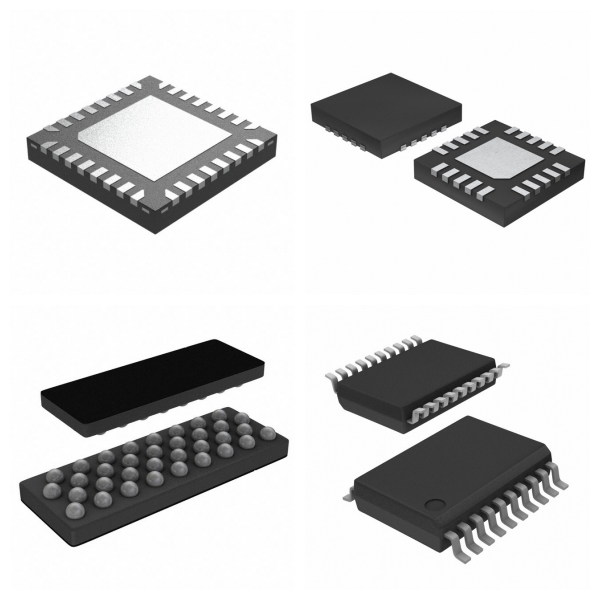
CMX655DQ6 | 18011 | CML Microcircuits | LINEAR IC'S | 24-VFQFN Exposed Pad |
|
|
NAU88C22YG TR | 12824 | Nuvoton Technology Corporation | STEREO AUDIO CODEC FOR CONSUMER | 32-WFQFN Exposed Pad |
|
|
NAU88L20YG | 7478 | Nuvoton Technology Corporation | ULP STEREO AUDIO CODEC, DIFFEREN | 32-WFQFN Exposed Pad |
|
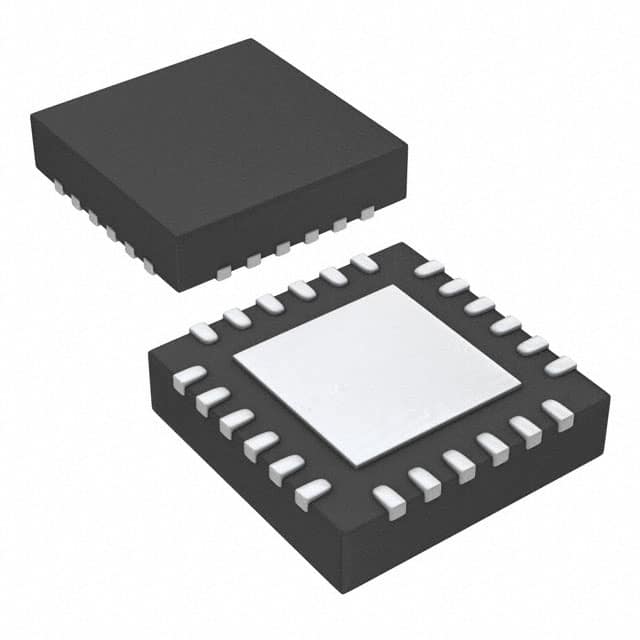
WM8940KGEFL/RV | 23261 | Cirrus Logic Inc. | IC STEREO CODEC | 24-VFQFN Exposed Pad |
|
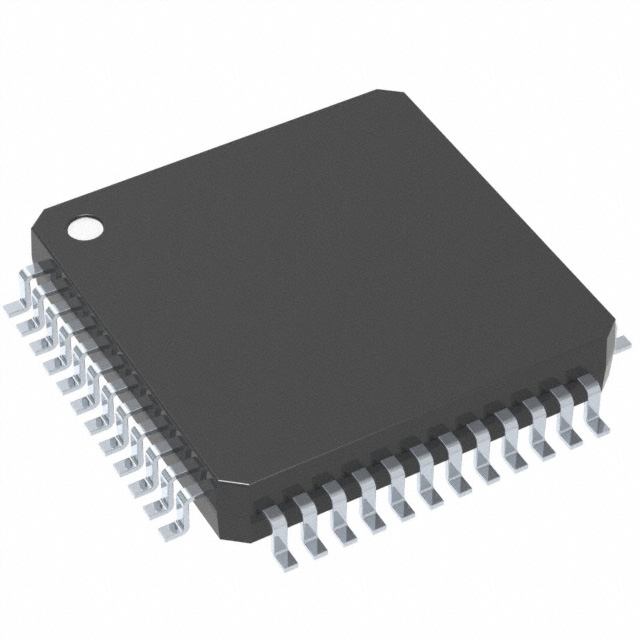
LM4546BVHX | 17197 | Texas Instruments | IC AUDIO CODEC 2MULTICH 48-LQFP | 48-LQFP |
|
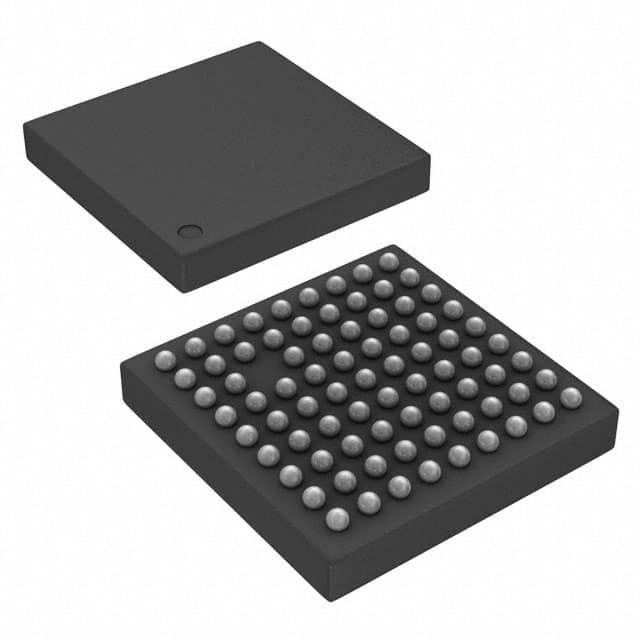
TLV320AIC23IGQER | 16734 | Texas Instruments | IC AUDIO CODEC 32BIT SER 80BGA | 80-VFBGA |
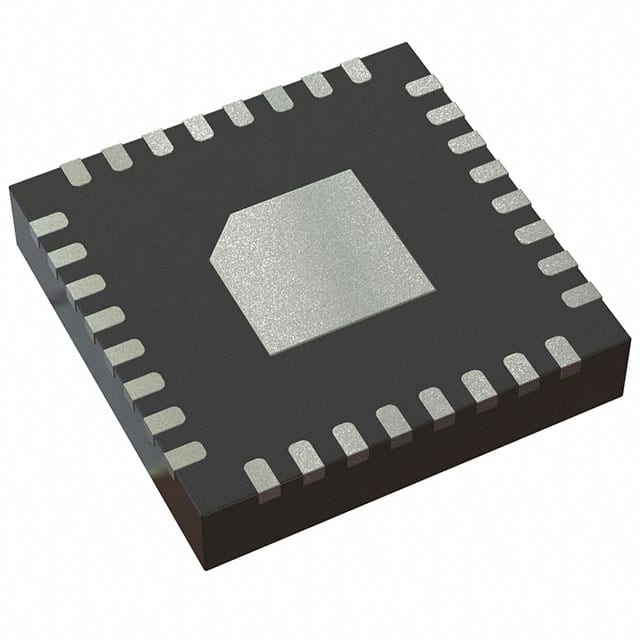
|
TLV320AIC31IRHBRG4 | 27913 | Texas Instruments | IC STEREO AUDIO CODEC LP 32-VQFN | 32-VFQFN Exposed Pad |
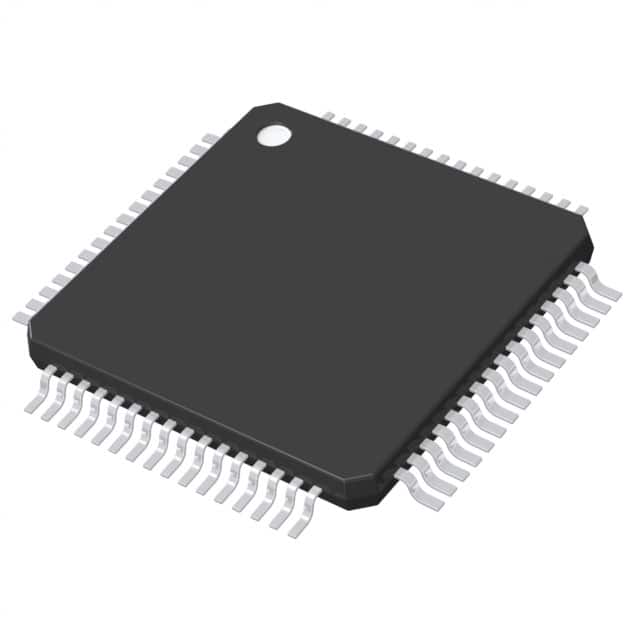
|
CS42448-DQZ | 18690 | Cirrus Logic Inc. | IC CODEC 108DB 192KHZ 64LQFP | 64-LQFP |
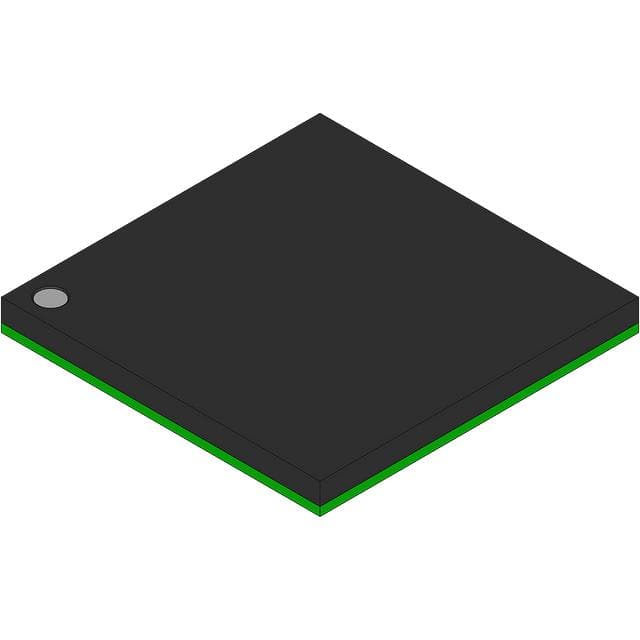
|
PEF3304ELV2.1-G | 7052 | Lantiq | VINETIC VOICE AND INTERNET ENHAN | Bulk |
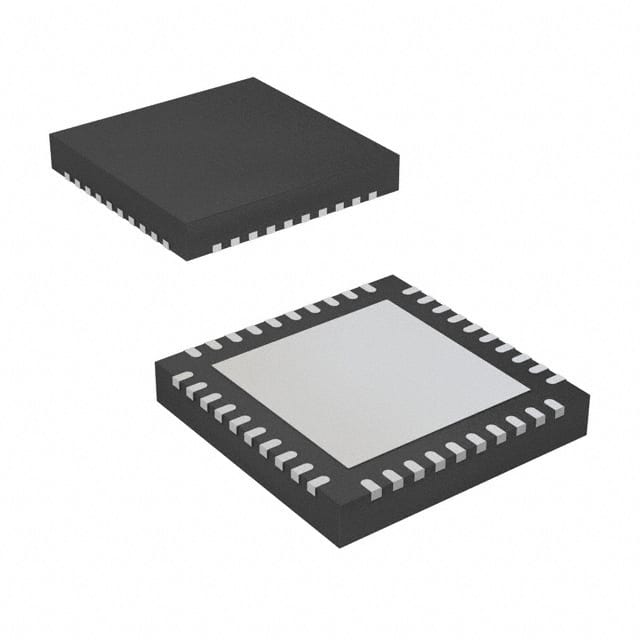
|
CS4244-CNZR | 21712 | Cirrus Logic Inc. | IC AUDIO CODEC PCM/TDM 40QFN | 40-VFQFN Exposed Pad |

CODECS
Coder-Decoder interface ICs are an important class of digital integrated circuits that are mainly used for data encoding, decoding, and signal conversion and are widely used in the fields of communication, storage control, and system interface design. These ICs achieve efficient data transmission and error control by converting input data into a specific encoding format or recovering the original information from the encoded data.
1. How do CODECS Work?
Encoder: Converts the input digital signal (such as binary data) into a compressed or specific rule encoding format (such as a run-length limited code) to reduce the transmission bandwidth or enhance the anti-interference ability. For example, a ternary encoder uses a ROM as a code lookup table to map the binary input to an output sequence containing three symbols (0, 1, 2).
Decoder: Performs the inverse process to restore the encoded signal to the original data. Common types include variable decoders (such as n-line-2^n-line decoders) and display decoders, which can convert binary codes into seven-segment display codes for driving LEDs or LCD devices. Decoders usually contain logic circuits (such as gate circuits and triggers) to handle encoding ambiguities.
2. What are the Typical Types of CODECS?
Binary and Ternary Encoder/Decoders: Binary decoders (such as 74LS138) use combinational logic to convert 3-bit inputs into an activation signal in 8-bit outputs, which is suitable for address decoding and control signal generation. Ternary encoders (such as designs based on ECL technology) support higher data density, achieve microvolt-level signal processing through Sigma-Delta ADC or SAR ADC, and improve recording density and detection window width.
Integrated Interface IC: This type of IC is often integrated into mixed signal systems, for example, combining ADC modules and communication interfaces (such as SPI and I²C) to achieve multi-device cascade signal interaction. In chip examples such as CMS8H1215, the encoding/decoding function is embedded in the RISC core, supporting wide voltage input (2.4V-4.5V) and real-time data processing.
3. What are CODECS Used for?
Communication System: In serial bus protocols (such as IIC), encoder-decoder ICs are used to manage bidirectional data transmission between master and slave devices, ensuring signal integrity through clock synchronization (SCL line) and data line (SDA), which is suitable for sensor networks, memory control, and display driving.
Storage and Data Processing: Used for Run Length Limited Coding (RLL) to increase storage density, for example, in hard disk drives, the ternary 3 PM encoder can increase the data rate to 25 Mb/s while maintaining a stable Tmax/Tmin ratio.
Embedded Systems: In microcontrollers (such as STM32 or GD32), these ICs act as interface modules to connect processors and peripherals, supporting logic level conversion (such as 3.3V to 1.8V) to ensure smooth communication across voltage domains.
In short, encoder-decoder interface ICs support the high-performance and low-power design of modern electronic devices through efficient data conversion mechanisms and are one of the core components of digital circuits.
4. CODECS FAQs
1) What are the common interface protocols of CODECS? What are the key differences?
Codec ICs communicate with the main control chip (such as SoC) through a digital interface. The mainstream protocols include:
I²S (Inter-IC Sound): Designed specifically for audio, it supports dual-channel, high-fidelity transmission and is widely used in consumer electronics (such as smart speakers).
PCM/TDM: Suitable for multi-channel scenarios (such as conference systems), supporting multiple audio streams through time division multiplexing.
PDM (Pulse Density Modulation): Used to directly connect digital microphones to simplify circuit design.
Difference: I²S focuses on sound quality, PDM is suitable for low-power microphones, and PCM/TDM has strong scalability.
2) How to solve the logic level mismatch between the CODECS and the main control chip?
Level mismatch may cause communication failure or signal distortion. Solutions include:
Level Conversion Chip: Use dedicated logic devices (such as LVCMOS-LVTTL converters) to ensure compatibility between different voltage devices (such as 3.3V CODEC and 1.8V processors).
Series Resistor: Match impedance and reduce signal reflection, enhancing driving capability.
Check Vih/Vil Parameters: Ensure that the input high/low-level threshold meets the interface specifications.
3) What key parameters should be paid attention to when selecting CODECS?
Signal-to-noise Ratio (SNR): ≥90dB can meet high-fidelity requirements (such as Hi-Fi equipment), and low SNR makes it easy to introduce noise.
Sampling Rate and Bit Depth: 16bit/48kHz is the basic configuration for voice, and 24bit/192kHz supports lossless audio.
Power Consumption: Portable devices need to choose models with standby power consumption <1mW.
Integrated Functions: Some ICs have built-in amplifiers and noise reduction algorithms to reduce peripheral circuits.
4) The interface IC is not recognized by the system. How to troubleshoot?
Typical troubleshooting steps:
Hardware Check: Confirm that the power supply voltage is stable and the clock signal (such as MCLK) has no jitter.
Driver Configuration: Check whether the register settings (such as I²C address and sampling rate configuration) match the data manual.
Signal Integrity: Use an oscilloscope to detect whether the data line (such as SDIN) is attenuated or interfered.
Compatibility Verification: Confirm that the host interface protocol (such as I²S mode) is consistent with the CODEC.