New title

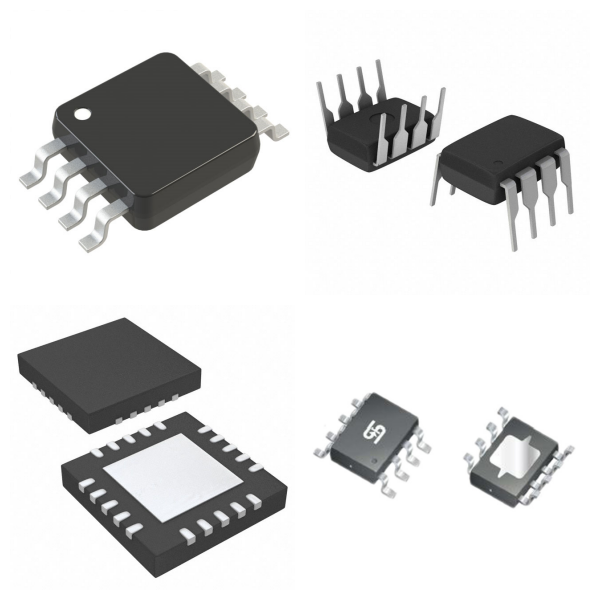
<h1> Audio Amplifiers </h1> <p> Audio amplifiers are devices specifically designed to amplify audio signals, boosting weak input signals to drive speakers and produce high-quality sound. They are primarily designed to optimize the audio frequency range, ensuring high fidelity and efficiency in sound reproduction. </p> <p>   </p> <h2> 1. What are the Components of Audio Amplifiers? </h2> <p> Audio amplifiers typically consist of several key components: </p> <p>   </p> <p> <strong>Input Circuit</strong>: Receives external audio signals, isolates DC interference, and screens for signal stability. </p> <p> <strong>Voltage Amplifier Stage</strong>: Amplifies weak signals in stages, preparing for subsequent power amplification. </p> <p> <strong>Power Amplifier Stage</strong>: The core component, using transistors or integrated circuits to boost signal power to drive speakers. </p> <p> <strong>Output Circuit</strong>: Transmits the amplified audio to the speakers, achieving impedance matching. </p> <p>   </p> <p> Auxiliary components include power supplies and cooling systems to ensure stable operation. </p> <p>   </p> <h2> 2. What are the Features and Benefits of Audio Amplifiers? </h2> <p> <strong>High Efficiency and Low Distortion</strong>: Modern Class D amplifiers offer high efficiency and low distortion, making them suitable for battery-powered devices such as mobile phones and portable speakers. </p> <p> <strong>Wide Power Range</strong>: Output power ranges from a few watts to tens of watts, supporting diverse scenarios such as home theater and professional audio. </p> <p> <strong>Integrated Design</strong>: Integrated circuit form factors (such as the TPA3106) feature built-in DSP and high-precision audio processing, supporting 24-bit/192kHz high-definition sound quality. </p> <p>   </p> <h2> 3. What are the Applications and Types of Audio Amplifiers?  </h2> <p> Widely used in high-fidelity audio, portable electronics (such as MP3 players and smart speakers), and professional audio systems. Class D amplifiers have evolved from early vacuum tubes to transistors and modern integrated circuits. Mainstream Class D amplifiers feature small packages (such as the QFN32) and low power consumption. Typical models include the LM386 and TDA2822 series, which are compatible with and replace international standards. </p> <p>
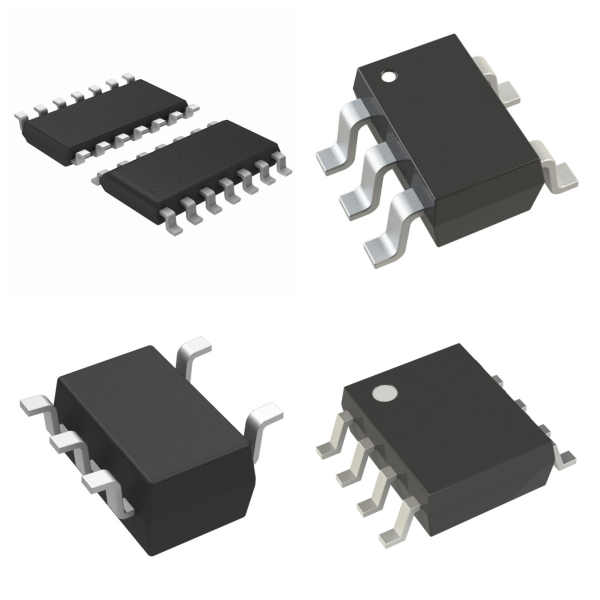
<h1> Instrumentation, Op Amps, Buffer Amps </h1> <p> Products in this family are used for the reproduction of analog signals with an attendant increase in amplitude, reduction of source impedance, and/or isolation of a signal source from a driven load, as well as performing mathematical operations on analog signals such as summation, negation, integration, etc. Instrumentation amplifiers, chopper stabilized/auto-zero/zero-drift amplifiers, and current feedback types are included. </p> <p>
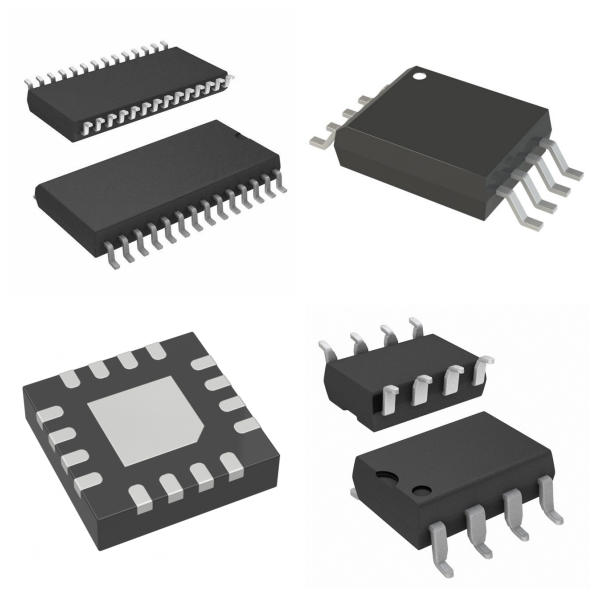
<h1> Special Purpose Amplifiers </h1> <p> Special Purpose Amplifiers (SPA) are amplifiers designed for specific applications or functions. They are designed to meet specialized performance requirements that general-purpose amplifiers cannot efficiently handle. These devices typically have the following core features: </p> <p>   </p> <h3> 1) Functional Specialization: </h3> <p> <strong>Variable/Programmable Gain (VGA/PGA)</strong>: Precise gain control via a digital interface (such as SPI™) or analog voltage is ideal for applications such as automatic gain control (AGC) and signal conditioning. For example, the MCP6S91 offers eight preset gain levels, while the AD8330 supports continuous gain adjustment. </p> <p> <strong>High Output Current Capability</strong>: For example, the AD8397 can provide up to 30mA of output current, enabling it to drive low-impedance loads or long cables. </p> <p> <strong>Specific Bandwidth Optimization</strong>: Designed for high frequency (such as the AD8330's 150MHz), low noise, or precision measurement requirements. </p> <p> <strong>Special Topologies</strong>: These include specialized architectures such as variable gain amplifiers (VGAs) and instrumentation amplifiers. </p> <p>   </p> <h3> 2) Performance Parameters: </h3> <p> <strong>Wide Operating Voltage Range</strong>: Supports single and dual power supply with various voltage ranges (e.g., 2.7V to 6V single power supply or ±1.5V to ±12V dual power supply), adapting to different system power supply designs. </p> <p> <strong>Rail-to-Rail Input/Output (RRIO)</strong>: For example, the MCP6S91 series supports input and output close to the power rails, maximizing dynamic range. </p> <p> <strong>Specific Process Technology</strong>: Utilizes CMOS and bipolar technologies to balance speed, power consumption, and accuracy. </p> <p>   </p> <h3> 3) Robustness and Reliability: </h3> <p> <strong>Wide Operating Temperature</strong>: Industrial (-40°C to 85°C) or automotive (-40°C to 125°C) temperature ranges are available to accommodate harsh environments. </p> <p> <strong>Standardized Packages</strong>: Available in a variety of compact surface-mount packages, including MSOP, SOIC, TSSOP, and LFCSP, for easy integration. </p> <p>   </p> <p> In summary, Special Purpose Amplifiers are dedicated to solving amplification problems in specific applications. Through customized performance (such as gain adjustability, high drive capability, and wide bandwidth) and enhanced stability (wide voltage and wide temperature), they serve high-demand fields such as communications, test instruments, medical equipment, and industrial control. </p> <p>
<h1> Video Amps and Modules </h1> <p> Video Amplifiers and Modules are devices whose output is proportionally greater than its input. Items in this family are meant to be used in video circuits. The output types are Differential, Push-Pull, Rail-to-Rail, and Single-Ended with circuits ranging from 1 to 24 and the -3 dB bandwidth ranging from 800 kHz to 1.4 GHz. The current output per channel is 3.6 mA to 10 A with a voltage supply of ±1.2 V to 85 V. </p> <p>

Amplifiers

1. What are Linear Amplifier ICs?‌

A linear amplifier IC is an integrated circuit based on amplifier design, which belongs to the category of analog integrated circuits. Its core function is to perform distortion-free linear amplification of the input signal, and the output signal maintains the same waveform and proportional relationship with the input signal, which is suitable for scenarios with high signal quality requirements (such as audio amplification and communication systems).


2. What are the ‌Core Characteristics of Linear Amplifier ICs?‌

‌Linear Relationship‌: The input and output signals are in strict linear proportion, the amplification factor is stable, and it is suitable for precise signal processing.

‌Low Distortion‌: Within the rated operating range, the integrity of the signal waveform can be maintained to avoid nonlinear distortion.

‌High Precision‌: The integrated process makes the internal components have good consistency of characteristics and high proportional accuracy, and improves circuit stability.


3. ‌Typical Representative Devices of Linear Amplifier ICs‌

‌Operational amplifier (Op-Amp)‌ is the most common linear amplifier IC, with high gain, wide frequency response, and multi-purpose (such as signal conditioning, filtering, comparison) and other characteristics. It is the core component of analog circuit design.


4. What are the ‌Main Application Areas of Linear Amplifier ICs?‌

‌Audio Processing‌: sound system, microphone preamplifier

‌Communication System‌: RF signal amplification, base station signal conditioning

‌Instrumentation‌: sensor signal amplification, precision measurement circuit

‌Power Management‌: regulator control loop, feedback regulation


5. ‌Difference from Nonlinear Elements‌

Linear amplifier ICs are active linear elements, which are different from nonlinear elements such as diodes and transistors:

‌Linear Elements‌: the input-output relationship can be described linearly (such as operational amplifiers working in the linear region);

‌Nonlinear Elements‌: input and output are exponential or switching characteristics (such as diode rectification and digital logic gates).


6. ‌Manufacturing Process of Linear Amplifier ICs‌

Mainly manufactured using bipolar process‌ or BiCMOS process‌. High-performance models may combine ion implantation and MOS process (such as switched capacitor filter technology) to achieve better frequency response and energy consumption control.


7. Summary

Linear signal amplification integrated circuits represented by operational amplifiers have low distortion and high precision characteristics, making them the core components of analog circuits and widely used in consumer electronics, industrial control, and communications.