
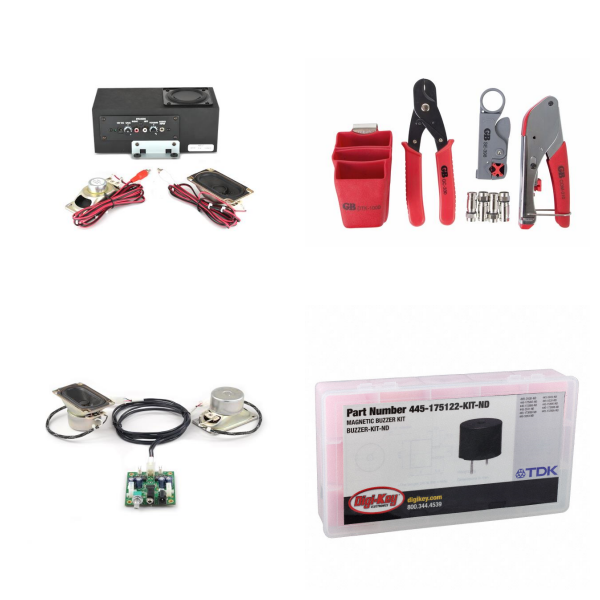
<h1> Audio Kits </h1> <p> Products in this family are assortments of similar audio-related products such as speakers or microphones, intended to facilitate evaluation of a manufacturer's product range or to provide a convenient means of acquiring a variety of product of a particular type. It specifically does not include collections of diverse parts which can be assembled to provide a more complex function. </p> <p>
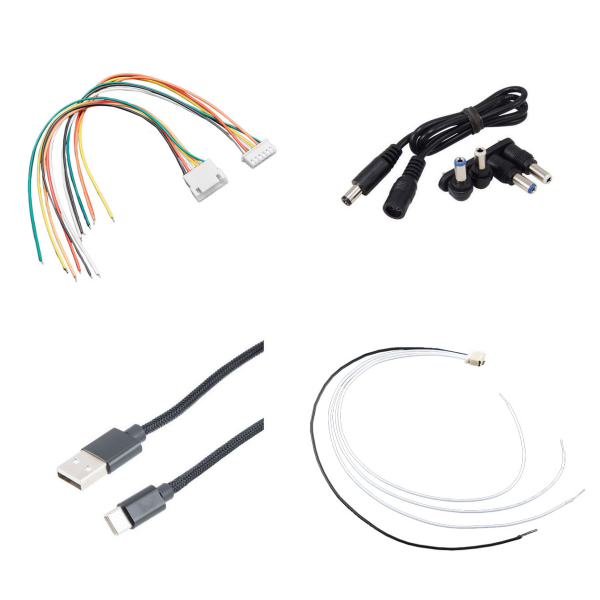
<h1> Cable Assembly Kits </h1> <p> Cable assembly kits are specialized kits used for assembling and connecting cable harnesses and are widely used in building various electronic devices and systems. These kits typically include prefabricated cables, connectors, terminals, and related accessories, enabling efficient assembly for reliable signal or power transmission. The assembly process involves various techniques, such as crimping, insulation displacement connection (IDC), and soldering, ensuring a secure connection and optimizing electrical conductivity. IDC technology achieves insulation displacement with low insertion force, simplifying installation. </p> <p> </p> <p> Product types range from basic electronic cable assembly kits (such as AWG16-AWG28 wire gauge assemblies) to professional-grade connector bracket kits (such as those from Molex or TE Connectivity), offering both standard sizes and custom options to suit diverse project needs. </p> <p> </p> <p> Key features of assembly kits include wire specification selection (such as wire diameter, color, and length), terminal matching, and process control (such as thermocompression or high-frequency induction soldering). These factors directly impact signal integrity and system efficiency; in modern electronics manufacturing, they significantly improve equipment reliability and production efficiency. </p> <p> </p> <p> Application scenarios cover automotive electronics, consumer electronics, and high-speed communication equipment. For example, automotive power charger kits support OEM customized production to meet the needs of harsh environments; high-speed connector kits, such as Twinaxial wiring harnesses, are suitable for USB 4, Thunderbolt, and other protocols, and have excellent bending resistance and shielding performance. </p> <p>
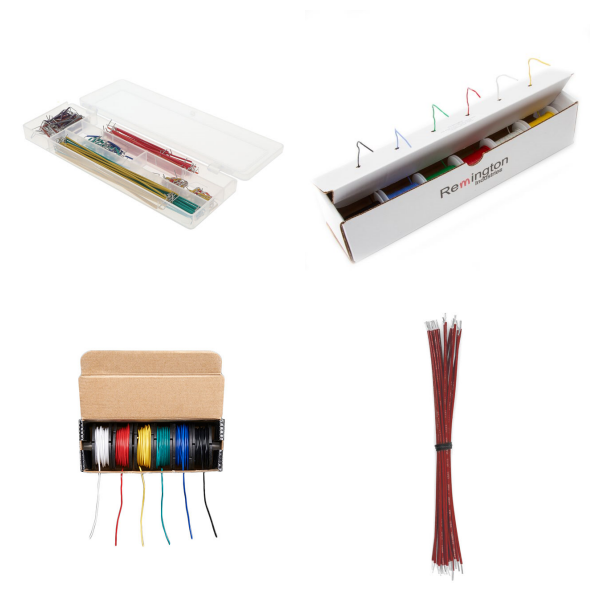
<h1> Cables, Wires - Single Conductors </h1> <h2> 1. What are Single Conductor Wires? </h2> <p> Single-core conductor wires are a type of wire consisting of a single metal conductor. Their core structure consists solely of the conductor material and an outer insulation layer. Unlike multi-strand, twisted flexible wires (such as flexible conductors), single-core conductors lack the flexibility inherent in twisting multiple filaments. In specialized applications (such as locomotive wiring harnesses), a pre-set helical structure can be used to match the parameters of the finished twisted-pair cable, eliminating internal stress and improving stability. </p> <p> </p> <h2> 2. What are the Core Technical Features of Single Conductor Wires? </h2> <h3> 1) Mechanical Performance: </h3> <p> The conductor cross-section is a single solid structure, offering superior deformation resistance compared to multi-strand wires, but with lower bending flexibility. </p> <p> </p> <p> The helical design prevents torsional deformation during use, making it suitable for use in vibrating environments. </p> <p> </p> <h3> 2) Electrical Performance: </h3> <p> High-purity copper/aluminum conductors ensure low-resistance conductivity. </p> <p> </p> <p> Insulation materials include PVC and XLPE, with voltage ratings ranging from 600V to 10kV and operating temperatures up to 150°C. </p> <p> </p> <h2> 3. What are the Applications of Single Conductor Wires? </h2> <p> <strong>Industrial Equipment</strong>: Locomotive cable systems, industrial robot power harnesses. </p> <p> <strong>Electronic Appliances</strong>: Internal wiring in home appliances (such as UL3321-certified wires) and static circuit connections. </p> <p> <strong>Aerospace and Energy</strong>: Power transmission in fixed installations, not dynamic bending locations. </p> <p> </p> <h2> 4. Product Specifications of Single Conductor Wires </h2> <table> <tbody> <tr class="firstRow"> <td width="224" valign="top" style="padding: 0px 7px; border-width: 1px; border-color: windowtext; background: rgb(190, 190, 190);"> <p> Parameter </p> </td> <td width="186" valign="top" style="padding: 0px 7px; border-width: 1px; border-color: windowtext; background: rgb(190, 190, 190);"> <p> Typical Value </p> </td> <td width="158" valign="top" style="padding: 0px 7px; border-width: 1px; border-color: windowtext; background: rgb(190, 190, 190);"> <p> Reference Standard </p> </td> </tr> <tr style="height:27px"> <td width="224" valign="top" style="padding: 0px 7px; border-left-width: 1px; border-left-color: windowtext; border-right-width: 1px; border-right-color: windowtext; border-top: none; border-bottom-width: 1px; border-bottom-color: windowtext;"> <p> Conductor Cross-Sectional Area </p> </td> <td width="186" valign="top" style="padding: 0px 7px; border-left-width: 1px; border-left-color: windowtext; border-right-width: 1px; border-right-color: windowtext; border-top: none; border-bottom-width: 1px; border-bottom-color: windowtext;"> <p> 2.5mm² to 22AWG </p> </td> <td width="158" valign="top" style="padding: 0px 7px; border-left-width: 1px; border-left-color: windowtext; border-right-width: 1px; border-right-color: windowtext; border-top: none; border-bottom-width: 1px; border-bottom-color: windowtext;"> <p> CSA/IEC </p> </td> </tr> <tr style="height:27px"> <td width="224" valign="top" style="padding: 0px 7px; border-left-width: 1px; border-left-color: windowtext; border-right-width: 1px; border-right-color: windowtext; border-top: none; border-bottom-width: 1px; border-bottom-color: windowtext;"> <p> Insulation Thickness </p> </td> <td width="186" valign="top" style="padding: 0px 7px; border-left-width: 1px; border-left-color: windowtext; border-right-width: 1px; border-right-color: windowtext; border-top: none; border-bottom-width: 1px; border-bottom-color: windowtext;"> <p> 0.1mm–0.3mm Classified </p> </td> <td width="158" valign="top" style="padding: 0px 7px; border-left-width: 1px; border-left-color: windowtext; border-right-width: 1px; border-right-color: windowtext; border-top: none; border-bottom-width: 1px; border-bottom-color: windowtext;"> <p> UL758/UL1581 </p> </td> </tr> <tr> <td width="224" valign="top" style="padding: 0px 7px; border-left-width: 1px; border-left-color: windowtext; border-right-width: 1px; border-right-color: windowtext; border-top: none; border-bottom-width: 1px; border-bottom-color: windowtext;"> <p> Dielectric Strength Test </p> </td> <td width="186" valign="top" style="padding: 0px 7px; border-left-width: 1px; border-left-color: windowtext; border-right-width: 1px; border-right-color: windowtext; border-top: none; border-bottom-width: 1px; border-bottom-color: windowtext;"> <p> 600V (Conventional) </p> </td> <td width="158" valign="top" style="padding: 0px 7px; border-left-width: 1px; border-left-color: windowtext; border-right-width: 1px; border-right-color: windowtext; border-top: none; border-bottom-width: 1px; border-bottom-color: windowtext;"> <p> C22.2 No.210 </p> </td> </tr> <tr> <td width="224" valign="top" style="padding: 0px 7px; border-left-width: 1px; border-left-color: windowtext; border-right-width: 1px; border-right-color: windowtext; border-top: none; border-bottom-width: 1px; border-bottom-color: windowtext;"> <p> Flammability Rating </p> </td> <td width="186" valign="top" style="padding: 0px 7px; border-left-width: 1px; border-left-color: windowtext; border-right-width: 1px; border-right-color: windowtext; border-top: none; border-bottom-width: 1px; border-bottom-color: windowtext;"> <p> Passes FT2 Vertical Burning Test </p> </td> <td width="158" valign="top" style="padding: 0px 7px; border-left-width: 1px; border-left-color: windowtext; border-right-width: 1px; border-right-color: windowtext; border-top: none; border-bottom-width: 1px; border-bottom-color: windowtext;"> <p> UL1581 </p> </td> </tr> </tbody> </table> <p> </p> <p>
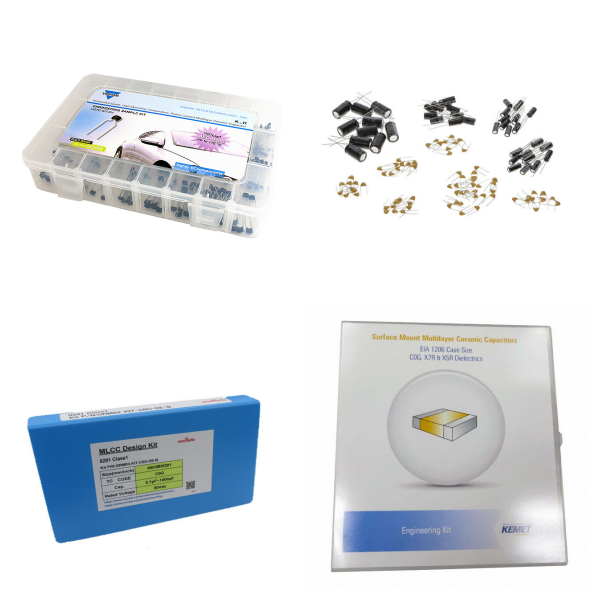
<h1> Capacitor Kits </h1> <p> Capacitor kits are collections of capacitors specifically designed for electronics design engineers, allowing them to quickly access a variety of capacitors for testing and prototyping. These kits typically include fixed or variable capacitor types, such as ceramic MLCCs, tantalums, or polymers, covering a variety of material and temperature coefficient parameters. </p> <p> </p> <p> In applications, they support filtering, tuning, and frequency response adjustments, helping optimize circuit design efficiency. Key parameters include capacitance value, maximum operating temperature (such as 125°C), and package type (such as SMD or bulk), ensuring the kit's suitability for applications such as high-frequency bypassing and low-frequency coupling. Manufacturers such as Johanson Dielectrics and Vishay offer customized options, including series-specific or application-specific kit combinations. </p> <p> </p> <p> <strong>Capacitor kits can be categorized as follows</strong>: </p> <p> <strong>1) By Construction</strong>: Fixed capacitor kits, variable capacitor kits, and trimmer capacitor kits, catering to diverse circuit tuning needs. </p> <p> <strong>2) By Material</strong>: Electrolytic capacitor kits, ceramic capacitor kits (such as C0G/X7R), and tantalum capacitor kits, designed for high-temperature or high-frequency environments. </p> <p> <strong>3) By Application</strong>: Filter capacitor kits, tuning capacitor kits, and small capacitor kits are optimized for specific functions. These kits simplify inventory management through standardized packaging (such as bulk or SMT) and provide comprehensive parameter examples for engineers' reference. </p> <p>
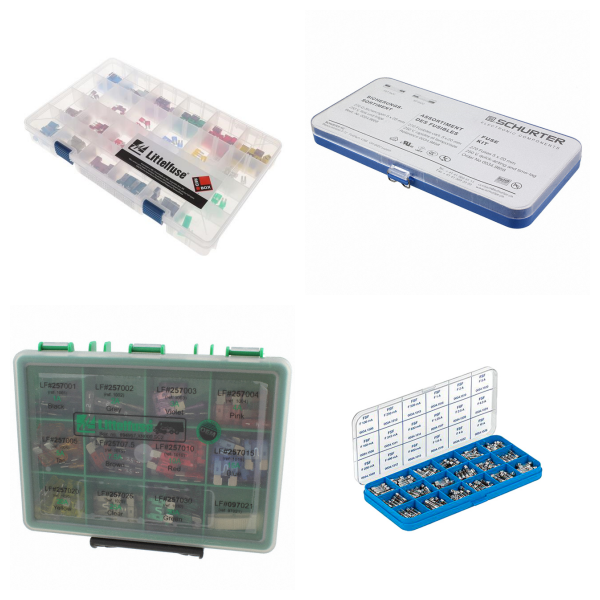
<h1> Circuit Protection Kits - Fuse </h1> <p> Circuit protection fuse kits are core components designed to provide overcurrent and short-circuit protection for electronic circuits. They typically include the fuse body, adapter holder, and optional accessories (such as test tools or fuses of various sizes). They are designed to quickly disconnect power when the current flow becomes abnormally high, preventing equipment damage or fire risks. These kits are widely used in consumer electronics, automotive circuits, industrial control systems, and data communications equipment, ensuring the reliability of critical components and user safety. </p> <p> </p> <p> Fuse kits can be categorized by type: traditional glass fuse kits (such as the IEC-5X20MM-GLASS-KIT, which includes fuses and holders of various current sizes and is suitable for slow-response scenarios) and integrated electronic fuse (eFuse) solutions (such as Littelfuse's products). The latter combines resettable, adjustable current limit and overvoltage protection with nanosecond response times, significantly surpassing traditional fuses. Key advantages include: </p> <p> </p> <p> <strong>High-precision Protection</strong>: Adjustable current limit and fast response (eFuse, for example, is a million times faster) reduce false fuses and component damage. </p> <p> <strong>Integrated Design</strong>: Multiple protection features, such as overcurrent, overvoltage, and reverse current blocking, are integrated into a single chip or kit, reducing PC board space and bill of materials (BOM) costs. </p> <p> <strong>Ease of Use and Maintainability</strong>: Adapter designs simplify fuse replacement (e.g., a fuse knob mechanism), while the resettable nature of eFuse eliminates the need for physical replacement, extending device life. </p> <p> </p> <p> In specific applications, such as laptop USB ports or LED lighting control systems, fuse kits provide input/output protection against overloads while meeting international safety standards such as IEC/UL62368-1, ensuring design compliance. The trend is accelerating towards eFuse technology, which combines affordability, compact size, and real-time diagnostic capabilities, making it an ideal choice for cost-effective circuit protection. </p> <p>
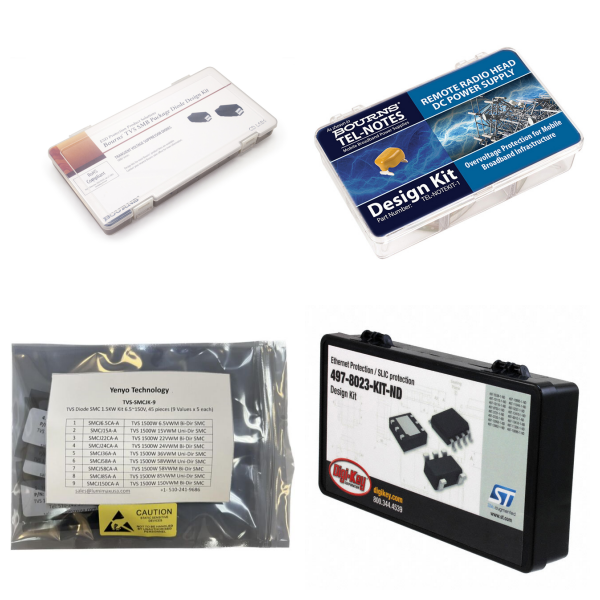
<h1> Circuit Protection Kits - TVS Diodes </h1> <p> A transient-voltage-suppression (TVS) diode, also transil or thyrector, is an electronic component used to protect electronics from voltage spikes induced on connected wires. Pre-packaged sets of circuit protection TVS diodes in surface mount and through-hole configurations are for evaluation, demonstration, and experimentation. Kits are available with a number of values and quantities of each value. </p> <p>
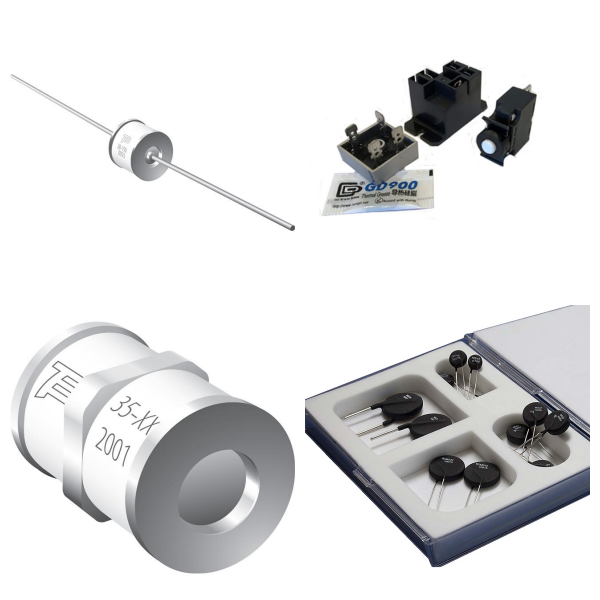
<h1> Circuit Protection - Assortment Kits </h1> <p> Circuit protection assortment kits are collections of devices that prevent circuit damage due to excessive temperature, inrush current, transient voltages, LED open circuits, electrostatic discharge, and RFI suppression using discrete devices such as PTC heat elements, transient voltage suppressors, inrush current limiters, varistors, thermostats, LED switching shunts, and MOVs. </p> <p>
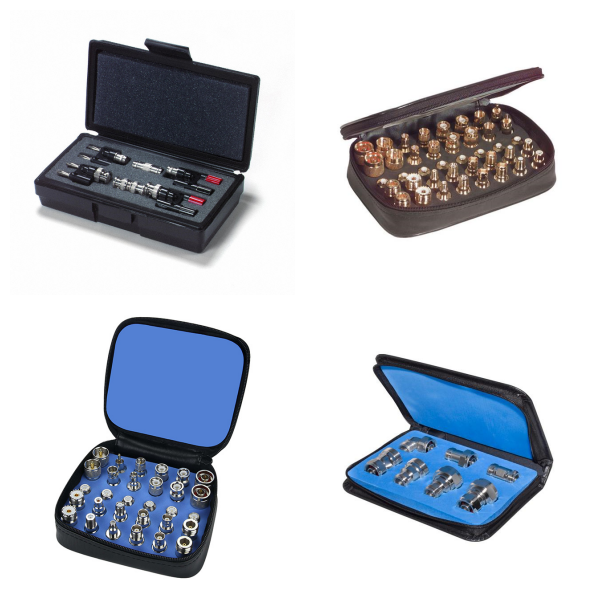
<h1> Connector Adapter Kits </h1> <p> Connector adapter kits are primarily used to convert and expand connections between connectors of different types, specifications, or interfaces, ensuring reliable signal or current transmission between different systems. </p> <p> </p> <h2> 1. What are the Core Functions of Connector Adapter Kits? </h2> <p> <strong>Interface Conversion Bridge</strong>: Resolves compatibility issues between different connector standards (e.g., SMA to BNC, D-Sub to RJ45) by acting as a physical adapter between dissimilar interfaces. </p> <p> <strong>System Expansion Component</strong>: By combining adapters, a single port can be expanded to multiple ports, meeting the cascading requirements of complex devices. </p> <p> <strong>Test and Measurement Tool</strong>: In radio frequency (RF) testing and circuit debugging, adapter kits are used to connect instrument probes to the device under test to ensure signal integrity. </p> <p> </p> <h2> 2. What are the Typical Components of Connector Adapter Kits? </h2> <p> <strong>A complete adapter kit typically includes</strong>: </p> <p> <strong>Adapters</strong>: Such as SMA male to N-type female and RF coaxial adapters. </p> <p> <strong>Couplers/Attenuators</strong>: Used for signal distribution or strength adjustment (some high-end kits). </p> <p> <strong>Protective Covers and Tools</strong>: Accessories such as dust covers and specialized wrenches ensure interface life and installation accuracy. </p> <p> </p> <h2> 3. What are the Core Application Areas of Connector Adapter Kits? </h2> <p> <strong>High-Frequency Signal Transmission</strong>: </p> <p> RF communication systems (such as 5G base stations and antenna feed lines) rely on adapters to achieve low-loss connections, ensuring impedance matching and shielding effectiveness. </p> <p> </p> <p> <strong>Test and Measurement</strong>: </p> <p> In electronics labs, adapter kits connect to oscilloscopes, spectrum analyzers, and other equipment, supporting high-speed signal analysis. </p> <p> </p> <p> <strong>Industrial Equipment Maintenance</strong>: </p> <p> Quickly replace interfaces in harsh environments (such as vibration and high temperatures), reducing downtime. </p> <p> </p> <h2> 4. Key Selection Parameters for Connector Adapter Kits </h2> <p> <strong>Frequency Range</strong>: The interface must cover the application frequency band (e.g., DC-18 GHz) to avoid excessive signal attenuation. </p> <p> <strong>Impedance</strong>: Maintain a consistent 50Ω or 75Ω impedance to prevent signal reflections. </p> <p> <strong>Interface Durability</strong>: Gold-plated contacts and a stainless steel housing enhance corrosion resistance and plug-in/plug-out life. </p> <p> <strong>Environmental Protection</strong>: Industrial-grade kits must meet IP67 dust and water resistance or vibration resistance certification. </p> <p> </p> <h2> 5. Summary </h2> <p> Connector Adapter Kits are the "universal language" for interconnecting electronic systems. They address device compatibility bottlenecks through standardized connections and are particularly indispensable in high-frequency communications, precision testing, and industrial automation. When selecting a kit, strictly match the electrical performance and environmental requirements to ensure system stability. </p> <p>
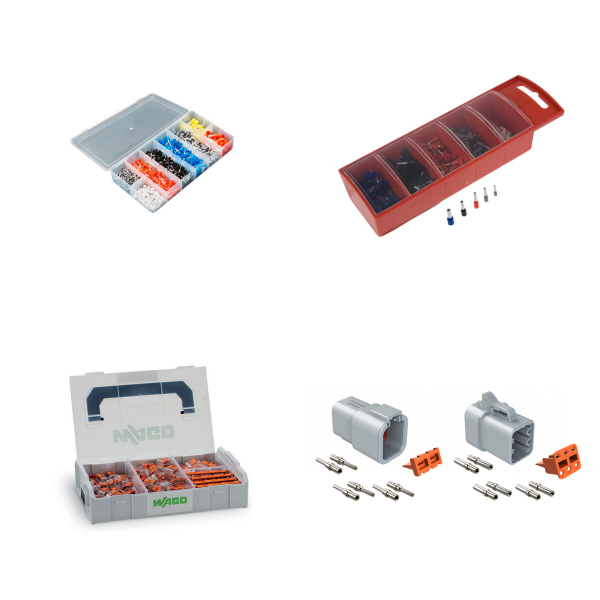
<h1> Connector Kits </h1> <p> Connector kits are sets of components designed for electronic device assembly and maintenance. They include matching components such as terminals, housings, and bases, facilitating quick wiring and integration, improving productivity, and reducing the risk of installation errors. </p> <p> </p> <p> Connector kits also offer advantages such as modularity. For example, by purchasing a combination of bases, terminals, and housings, they allow for flexible customization to meet the tight space requirements or high-frequency data transmission requirements of IoT devices. </p> <p> </p> <p> These kits are widely used in consumer electronics, automotive electronics, telecommunications equipment, and industrial automation. For example, they support board-to-cable connections in OEM applications and provide standardized solutions for varying pin pitches and current requirements. </p> <p> </p> <p> When selecting a connector kit, consider options that are compatible with mainstream pitch specifications (such as 1.25mm and 2.0mm) and designed for high-reliability applications, such as corrosion-resistant terminals or vibration-resistant structures, to ensure stable signal and power transmission in harsh environments. Products from renowned brands such as Molex, JST, and TE Connectivity cover a wide range of applications, from micro wearables to automotive sensors, helping engineers streamline procurement and prototyping. </p> <p> </p> <p> </p> <p>
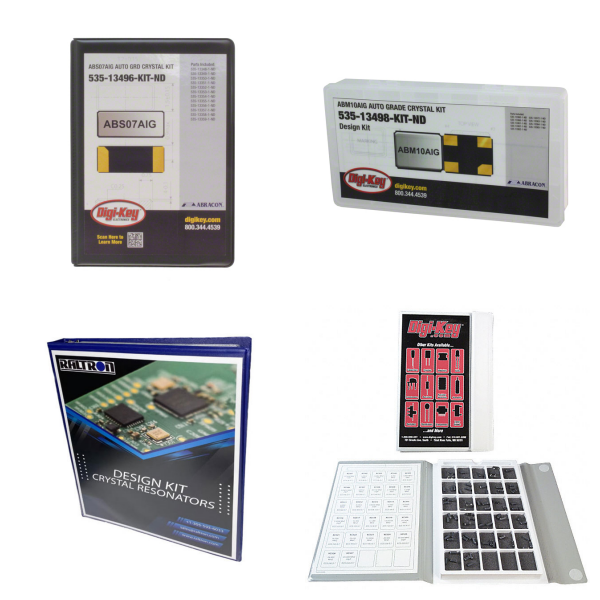
<h1> Crystal Kits </h1> <p> Crystal kits are collections of crystal-related components designed to simplify the design and experimentation of frequency control and signal stabilization. These kits typically include core components such as quartz crystal resonators and oscillators. They utilize the piezoelectric effect to achieve high-precision frequency generation. Quartz is widely used for its stability and low temperature coefficient. These components enable users to quickly build circuit systems, such as those used in communications equipment or computers, to ensure clock synchronization and data transmission accuracy. </p> <p> </p> <p> <strong>Major types of kits include</strong>: </p> <p> <strong>Crystal Resonators</strong>: These have a resonant frequency determined by the size of the quartz cut, making them suitable for basic frequency references. </p> <p> <strong>Crystal Oscillators</strong>: These integrate amplification circuits to improve frequency stability, such as standard oscillators (SPXOs) and temperature-compensated oscillators (TCXOs), which utilize compensation technology to adapt to environmental changes. </p> <p> </p> <p> Applications include consumer electronics, security surveillance, and industrial control systems, significantly improving device reliability and performance efficiency. </p> <p>
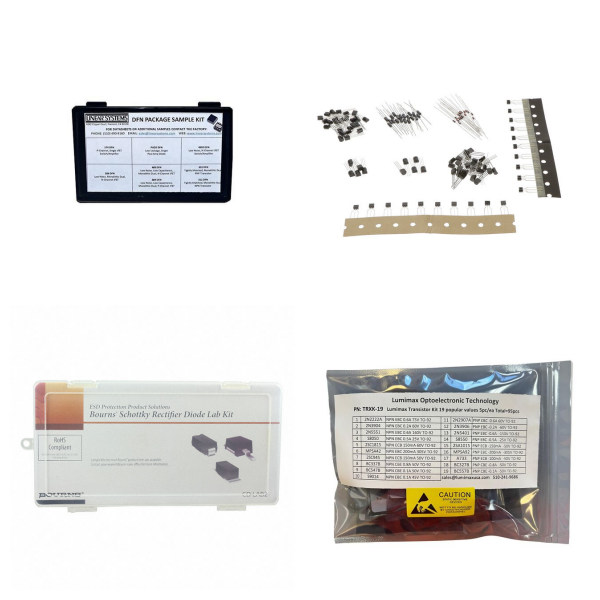
<h1> Discrete Assortment Kits </h1> <p> Pre-packaged sets of surface mount and through-hole discrete semiconductors for evaluation, demonstration and experimentation. Book, box and plastic bin boxes with bin guides contain sets of MOSFETs, rectifier diodes, transistors or Zener diodes. Kits are available according to the number of values and the quantity of each value required. </p> <p>
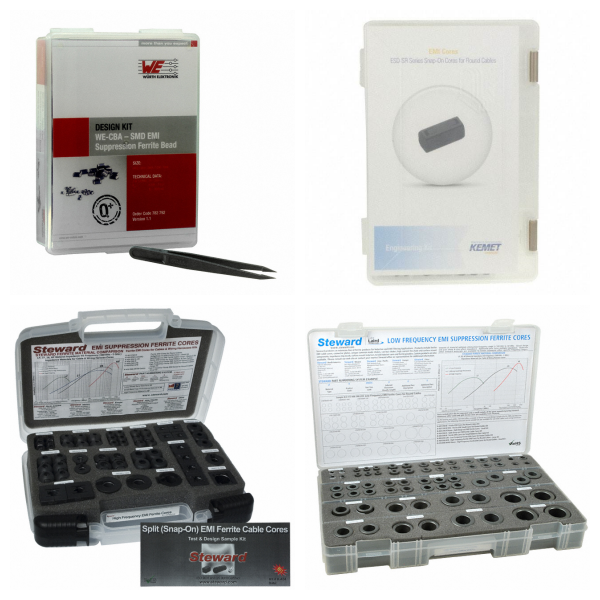
<h1> EMI, Filter Kits </h1> <p> EMI filters suppress noise in electric currents that are conducted through wiring such as power cables and conductor paths. A common mode choke is an EMI filter that blocks high frequency noise common to two or more data or power lines while allowing the desired DC or low-frequency signal to pass. Filter kits allow for experimentation with varying sizes and types of filters including chokes, ferrite disks, plates, beads and chips, transformers, cores, resonators, and saw filters. </p> <p>
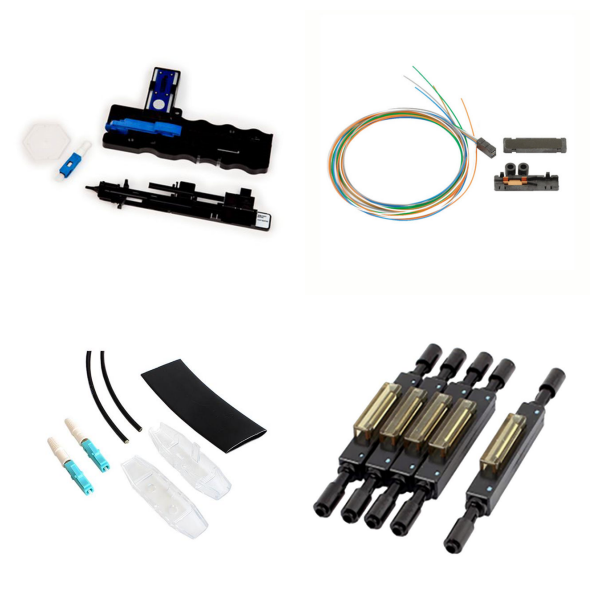
<h1> Fiber Optic Kits </h1> <p> Fiber Optic Kits contain either full cable assemblies, test kits, installation accessories, or splice and termination accessories. These can be filtered by the kit type or the kit contents. </p> <p>
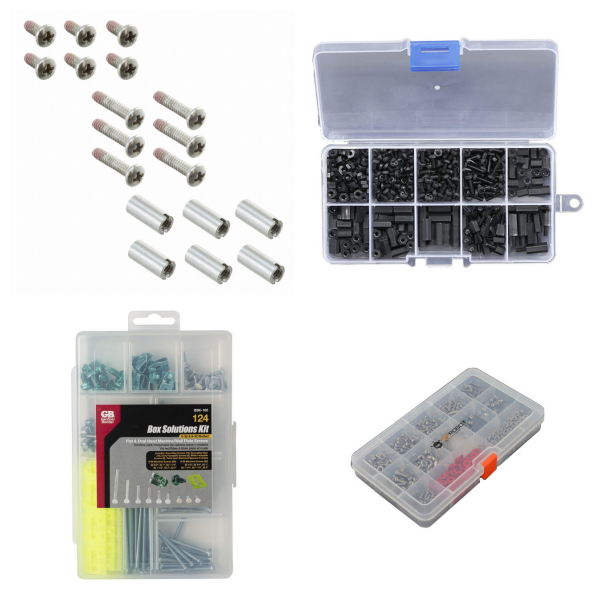
<h1> Hardware Kits </h1> <p> Pre-packaged sets of hardware designed to work as a system or sets of hardware organized by a specific parameter such as length or thread size. Sets are available in bags, boxes and cabinets, and are selectable by kit type and value parameters. Hardware types include fasteners, standoffs, spacers, washers, rivets, anchors, hole plugs, reflective markers, and electrical bonding screws and nuts. </p> <p>
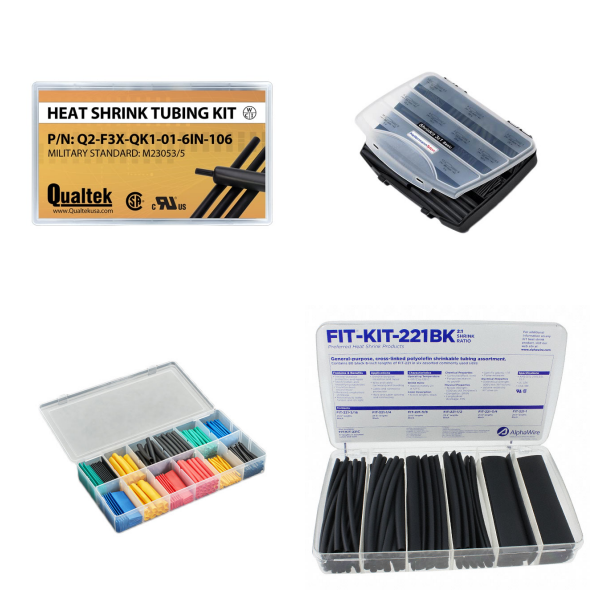
<h1> Heat Shrink Tubing Kits </h1> <p> Heat Shrink Tubing Kits are comprehensive sets designed for protecting electronic components. They typically include a variety of heat shrink tubing options (e.g., different diameters, lengths, and colors), allowing users to quickly select and apply them based on cable size. Made from materials such as irradiated cross-linked polyethylene (PE) and polyester (PET), these kits feature low-temperature shrinkage (starting at approximately 80°C) and shrink ratios of 2:1, 3:1, or 4:1, ensuring a snug fit and effective insulation. Features include flame retardant certification (UL certified), a wide temperature range (-55°C to 125°C), and optional adhesive options for enhanced waterproof sealing. </p> <p> </p> <p> The diverse product portfolio, ranging from basic tubing to molded shapes (such as end caps), meets international standards and supports customization for diverse scenarios. Key advantages lie in high quality, low price, and easy operation. The kits utilize heat for rapid shrinkage, improving efficiency and safety. </p> <p> </p> <p> They are widely used in applications such as waterproofing electronic wiring, automotive wiring harness protection, and telecommunications equipment maintenance. They are also suitable for insulating solder joints and protecting metal pipes from corrosion, providing reliable insulation and corrosion protection. Kit contents often come in pre-cut form, including colored or clear tubing, making them easier to manage inventory and use daily. </p> <p>
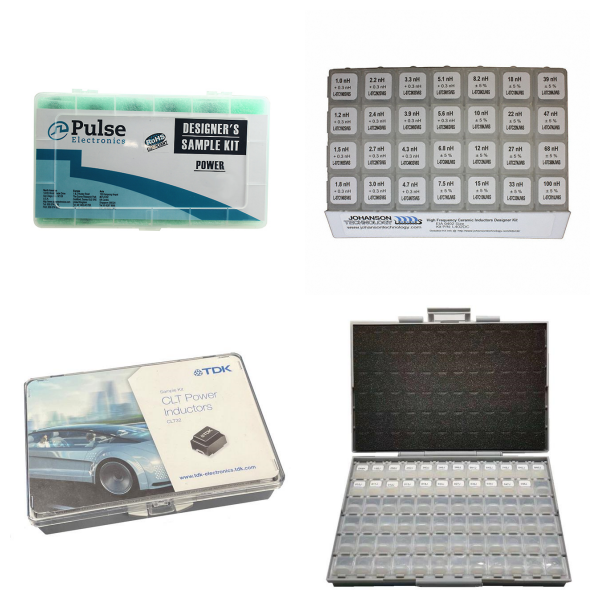
<h1> Inductor Kits </h1> <p> Inductor Kits are a passive electrical component that can store energy in a magnetic field created by the electric current passing through it. The kit types include arrays – signal transformers, fixed, and wireless charging and an inductance range from 300pH to 150mH in a surface mount or through hole mounting type. </p> <p>
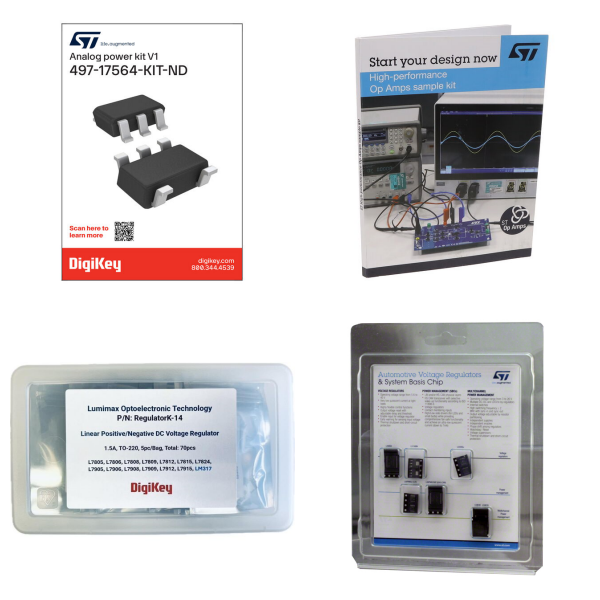
<h1> Integrated Circuits Kits </h1> <p> Pre-packaged sets of surface mount and through-hole integrated circuits (ICs) for evaluation, demonstration and experimentation. Cardboard and plastic kit boxes include digital isolators, high-side drivers, logic, memory, microcontrollers, RF, switches, multiplexors, demultiplexers, transceivers, and translators. Kits are available according to the number of values and the quantity of each value required. </p> <p>
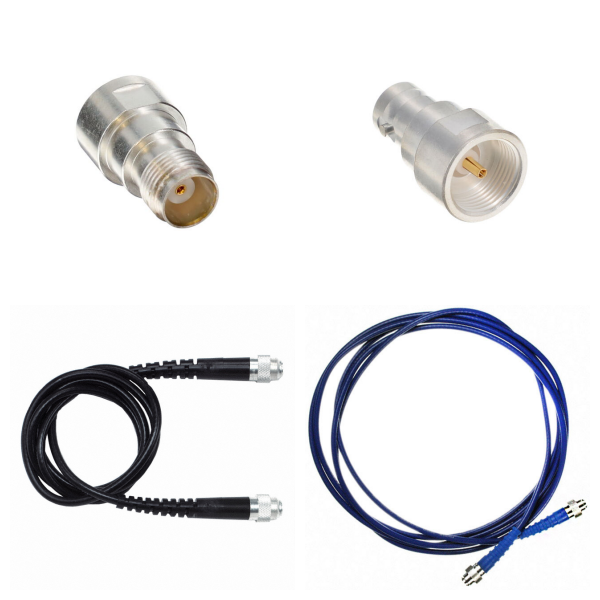
<h1> Kit Accessories </h1> <p> Supplementary items used with other devices in this category. </p> <p>
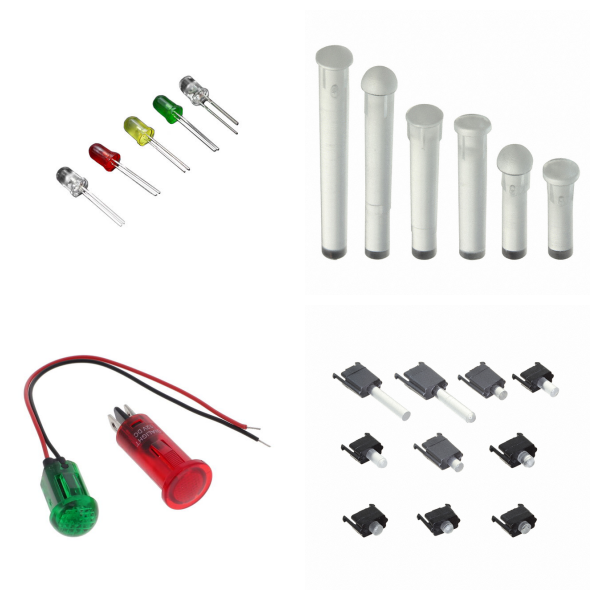
<h1> LED Kits </h1> <p> LED kits are prepackaged groups of light emitting diodes available in either surface mount or though hole package cases for evaluation and experimentation. Available in plastic boxes with bins or individually bagged items, kits are available according the color and the quantity of LEDs required. </p> <p>
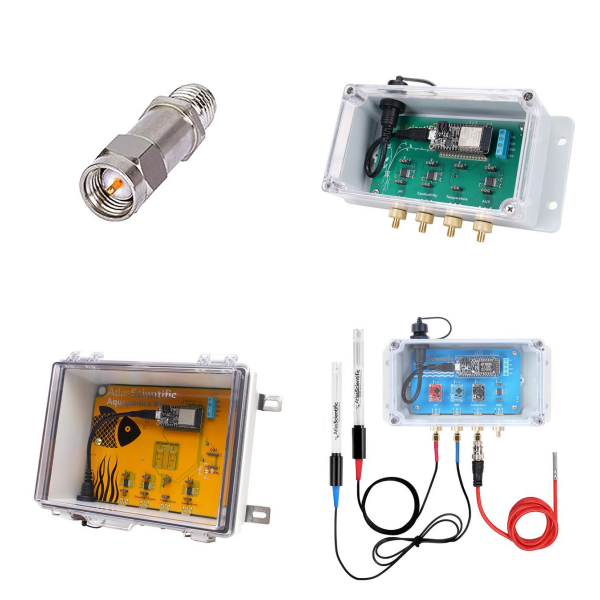
<h1> Miscellaneous </h1> <p> A variety of devices that are related to parts in this category, but do not fit into a specific family. </p> <p>
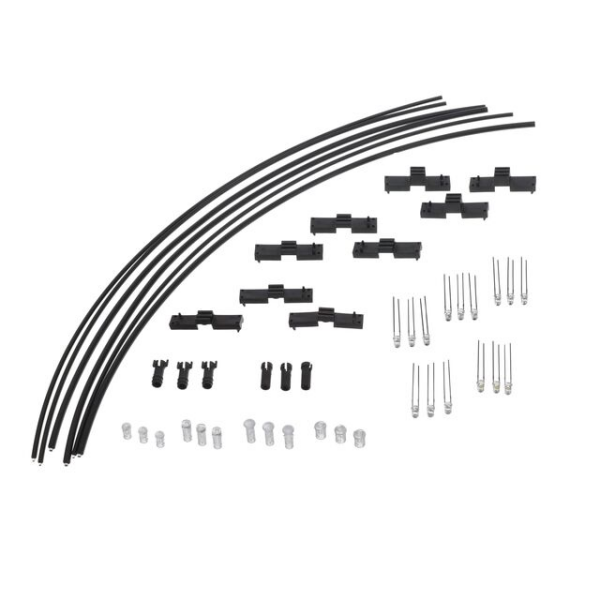
<h1> Optics - Light Pipe Kits </h1> <p> Light Pipe Kits are comprehensive kits designed for evaluating and implementing light guide performance. These kits are commonly used in indicator lights, panel lighting, and signal transmission systems for electronic devices, offering a variety of components to suit diverse application requirements. </p> <p> </p> <p> <strong>These kits include several key elements</strong>: </p> <p> LED components (covering a variety of colors, including red, amber, green, blue, and white) for light generation; </p> <p> Mounting fixtures (such as vertical and horizontal mounting options) for flexible positioning; </p> <p> Lens covers (available in sizes ranging from 4.1mm to 5mm) for protection and optimized light distribution; </p> <p> The light pipes themselves, available in standard or large cable sizes (such as SH4001 and SH6001), are typically 30cm long and support efficient light transmission. </p> <p> </p> <p> Light pipes are available in rigid or flexible configurations, with mounting options including panel crimping, right-angle snap-in, or surface mount. Lens styles include rectangular, circular, and oval designs, with sizes ranging from 3mm x 1.52mm to 1.75mm x 11.9mm, meeting diverse applications from industrial equipment to consumer electronics. </p> <p>
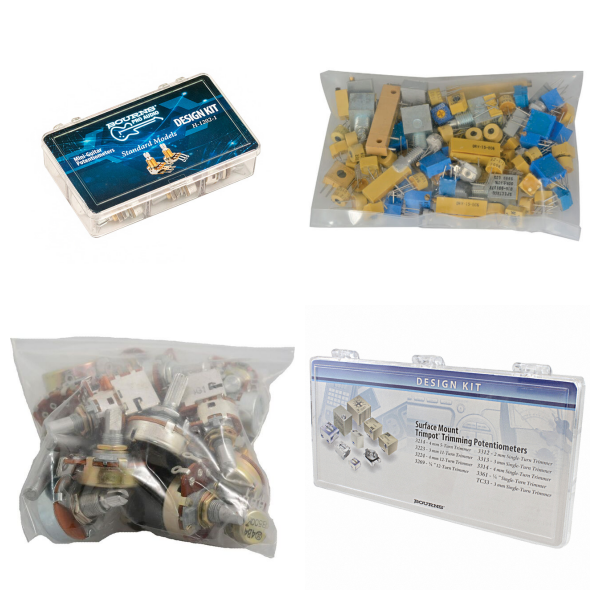
<h1> Potentiometer Kits </h1> <p> Potentiometer kits range in resistance from 10 ohms to 2 Mega ohms with a resistive material being carbon, cermet, conductive plastic, Hybritron, and wirewound in a linear or logarithmic taper. A pot (potentiometer) is a three-terminal resistor with a rotating or sliding contact that forms an adjustable voltage divider. The number of turns range from 1 to 25 with a power rating of 0.06W (1/10W) to 2W. </p> <p>
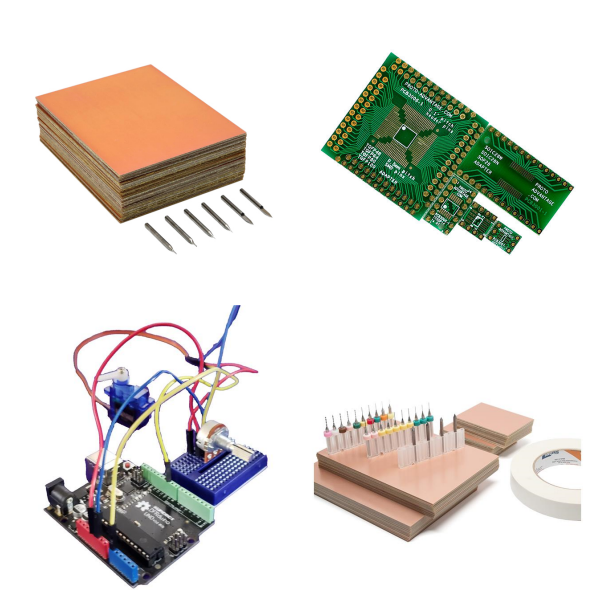
<h1> Prototyping Boards, Fabrication Kits </h1> <p> Prototyping Boards and Fabrication Kits are designed for use with related products such as CNC machines, 3d printers, liquid or gas transfer systems, and more. These can be filtered by the kit type, quantity, and more. </p> <p>
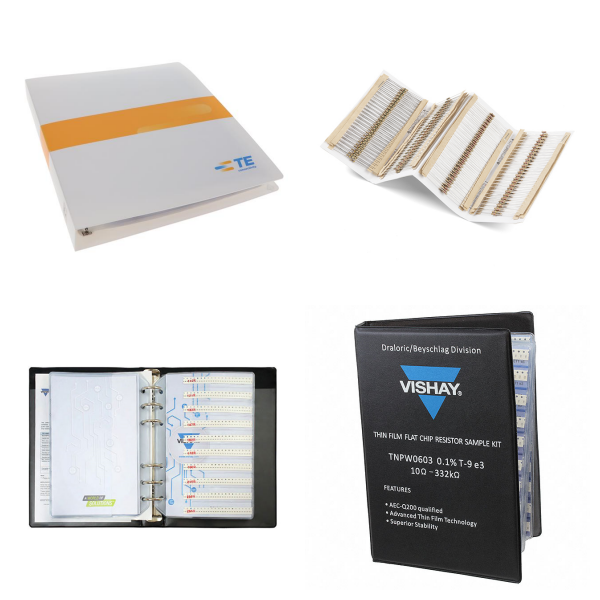
<h1> Resistor Kits </h1> <p> Resistor Kit types are carbon film, ceramic, metal element, metal film, metal foil, metal oxide, thick film, and wirewound with resistance ranging from 0.0 ohms to 10M ohms and power ranging from 0.03W, 1/32W to 250W. A resistor is a two-terminal passive electronic component designed to oppose an electric current by producing a voltage drop between its terminals in proportion to the current. </p> <p>
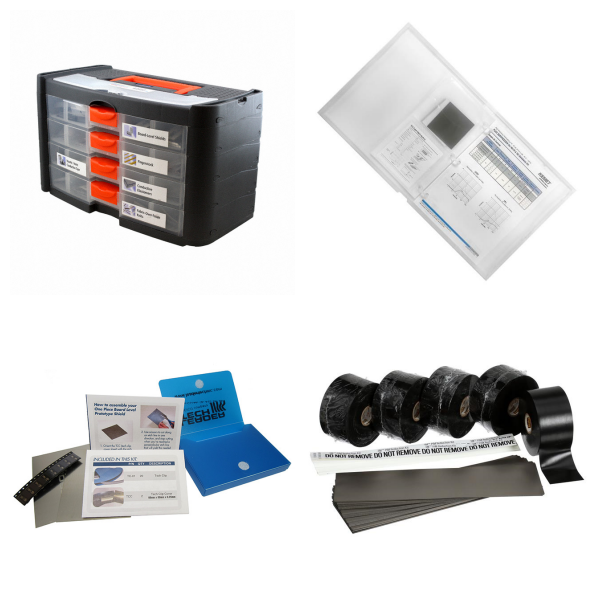
<h1> RF Shield Kits </h1> <p> RF Shield Kits are an assortment of kits made up of EMI absorber sample kit, EMI contact finger, EMI shielding clip kit, EMI shielding engineering kit, EMI shielding fabric kit, EMI shielding fingerstock kit, EMI shielding prototype kit, and flex suppressor with quantities being assorted, 5 pieces (5 values - 1 each), 9 pieces (9 values – 1 each), 11 pieces (11 values – 1 each), 20 pieces (20 values – 1 each), 290 pieces (15 values – mixed quantities), and 320 pieces (16 values – 20 each). </p> <p>
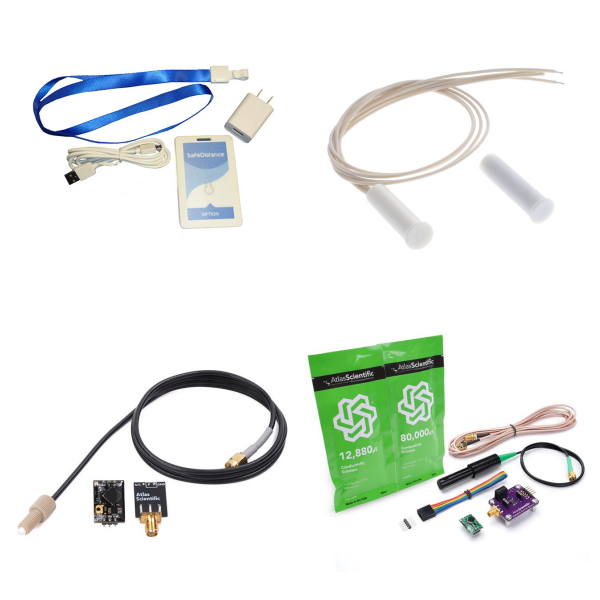
<h1> Sensor Kits </h1> <p> Sensor Kits are a grouping of devices that detect and respond to changes in a property. The kit types are current sensor, encoders, force sensing resistor, gas sensor, humidity/temperature, laser scanner, linear motion potentiometer, magnetic, magnetic sensor, oxygen sensor, piezo sensor, reflective optical sensor, rotary position sensor, thermal sensors, ultrasonic sensor, and wireless IoT sensor kits. </p> <p>
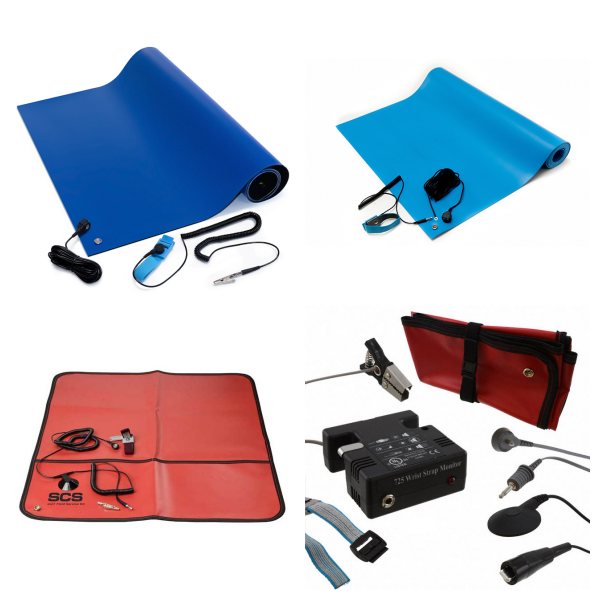
<h1> Static Control Kit </h1> <p> Static control kit is an electrostatic protection kit designed to prevent electrostatic discharge (ESD) damage to sensitive electronic components, ensuring circuit safety and reliability. </p> <p> </p> <p> The kit is designed to take into account parameter compatibility, such as quiescent current and power dissipation, to ensure efficient operation with low power consumption. It typically includes various protection components, such as transient suppressor diodes (TVS) and gas discharge tubes (GDTs), which can quickly absorb surge voltages and transient currents, preventing component damage or failure. </p> <p> </p> <p> Static control kits are widely used in electronics assembly, repair, and testing environments, for example, to provide surge protection in PLC cabinets or precision equipment, improving overall system stability. </p> <p>
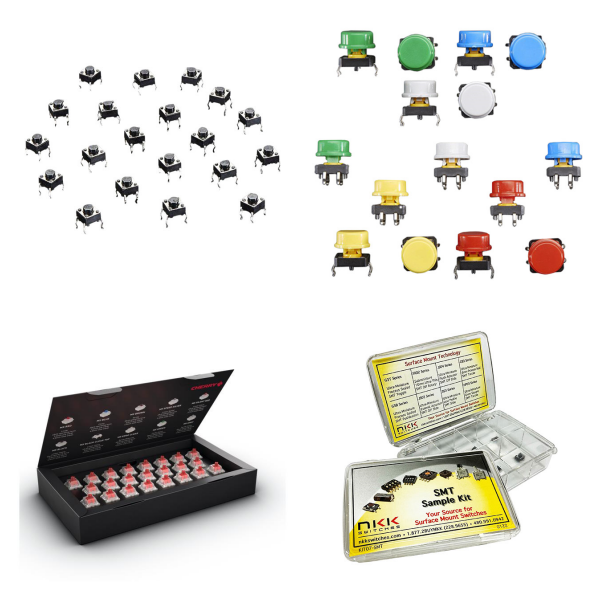
<h1> Switch Kits </h1> <p> Switch kits typically contain one type of switch (tactile, pushbutton, slide, etc.), but can have a mix of current and voltage ratings along with circuit and mounting types. Each kit has varying quantities of switches in them. There are panel mount, through-hole, surface mount, R/A, and snap-in available. Circuit types include an assorted mix, SPDT, SPDT-NO, and SPST-NO. </p> <p>
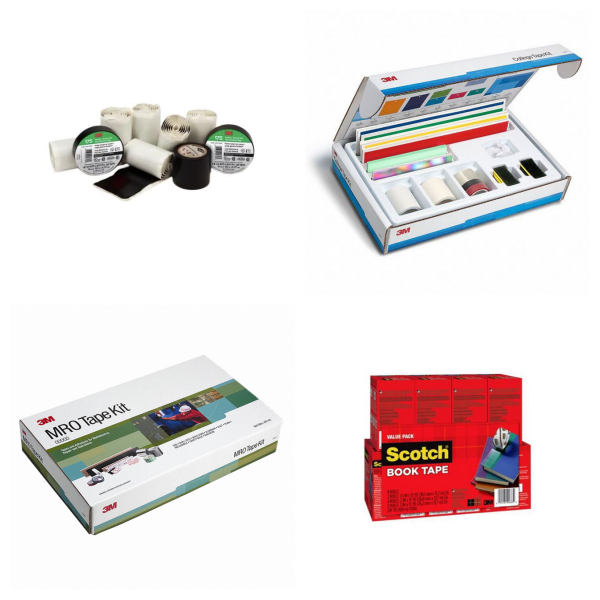
<h1> Tape Kits </h1> <p> Tape kits are a variety of tapes combined in one package. This can include single-sided or double-sided, hooks, rolls, strips, sheets, and tubes. Tape type options are electrical, book, design, maintenance, marine, safety, splicing, transportation, weather proofing, and woodwork. Some tapes are permanent while others are temporary. The manufacturer specifications should be checked to identify materials they will adhere to. </p> <p>
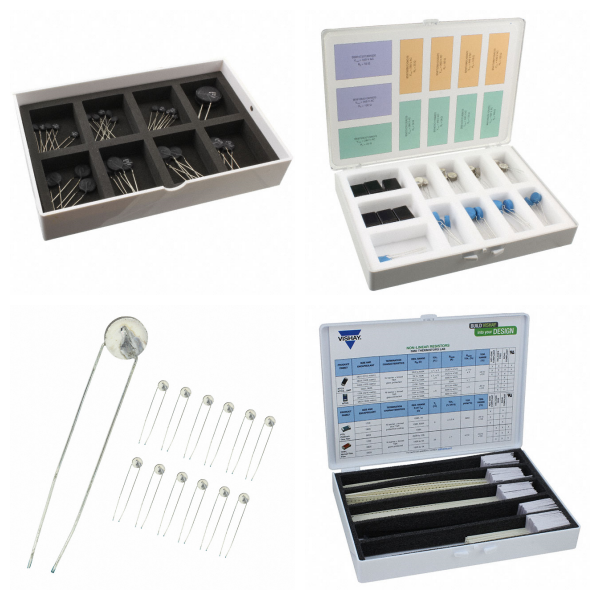
<h1> Thermistor Kits </h1> <p> Thermistor Kits are designed for electronics experiments and provide a variety of thermistors. These are semiconductor resistors whose resistance changes significantly with temperature. They are widely used in temperature sensing, circuit compensation, and overheat protection. </p> <p> </p> <p> <strong>They primarily include two core components</strong>: </p> <p> <strong>NTC Thermistors</strong>: Their resistance decreases exponentially with increasing temperature, making them suitable for wide-temperature range temperature measurement, such as in environmental monitoring systems. </p> <p> <strong>PTC Thermistors</strong>: Their resistance increases sharply after a certain temperature threshold, making them commonly used in overcurrent protection or resettable fuse designs. </p> <p> </p> <p> In circuits, thermistors operate by converting temperature changes into electrical signals. For example, in a voltage divider configuration, temperature fluctuations cause a change in resistance, which in turn changes voltage or current according to Ohm's law, making it easy for microcontrollers to read and calibrate them. </p> <p> </p> <p> <strong>Kits typically include the following practical components</strong>: </p> <p> Standard NTC/PTC resistors (such as a 10kΩ reference resistor); </p> <p> High-precision B-value materials (within ±0.5%); </p> <p> Glass encapsulation or manganese-based spinel structure devices for improved environmental resistance. </p> <p> </p> <p> Applications include appliance temperature control (±0.5°C accuracy), lithium battery pack protection, and industrial automation systems. The kit allows users to quickly verify nonlinear characteristics and optimize compensation algorithms. Be mindful of self-heating during operation. It is recommended to control the current to reduce measurement interference and ensure that the response time matches cooling conditions. </p> <p>
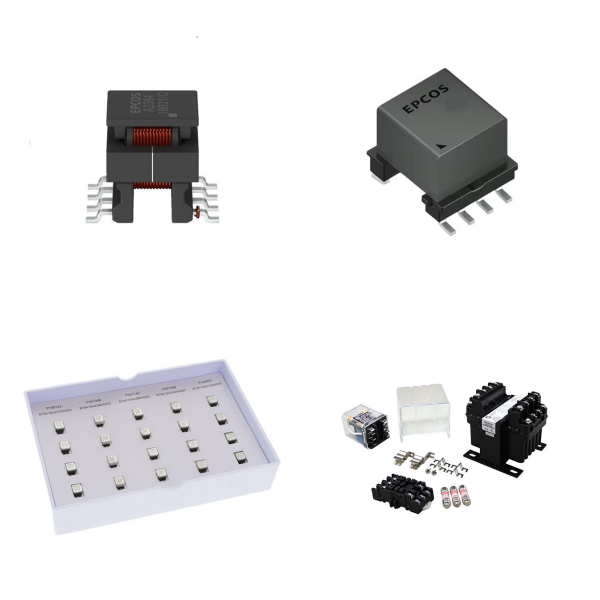
<h1> Transformer Kits </h1> <p> Transformer Kits are groupings of transformers of different values and quantities. A transformer transfers energy usually through the use of a pair of wound coil wires from one circuit to another. The characteristics are kit type, quantity, and mounting type. The kit types are current sense, design power-over-Ethernet, ferrite cores/rods, for DC/DC converter, gate drive, high frequency current sense, high frequency gate drive, LAN, and speedy design power transformer. </p> <p>
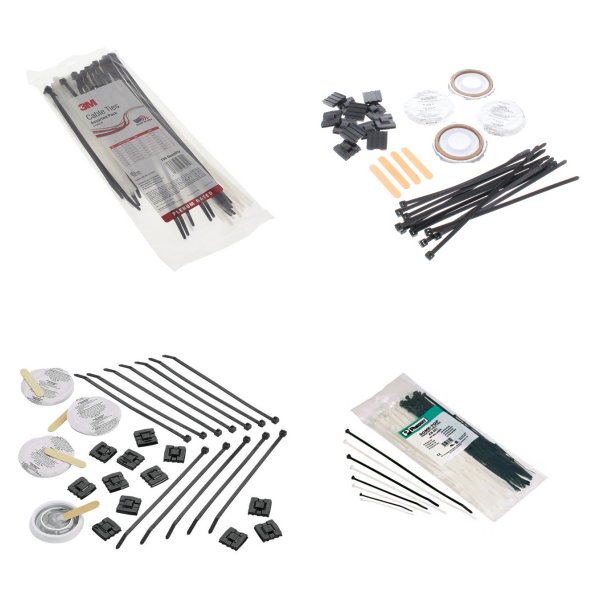
<h1> Wire and Cable Tie Kits </h1> <p> Wire and cable tie kits are collections of similar products used in wire and cable management supplied in packaged sets in convenient containers such as plastic and metal bin boxes, carrying cases, bags and carded packaging. Kit contents may include varying quanitities, colors and combinations of cable ties, straps and cable tie mounts. </p> <p>
Kits
A kit product is a collection of similar items that differ in some way and are intended to be convenient for development, repair, or evaluation purposes. For example, common gauge wire of different colors, timing crystals of different frequencies, resistors or inductors of different values, fuses of different sizes and current ratings, heat shrink tubing of different sizes, LEDs of different colors, etc.