
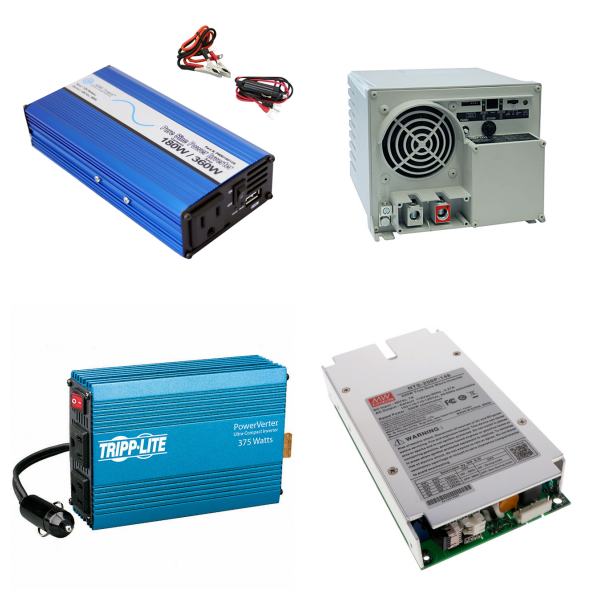
<h1> DC to AC (Power) Inverters </h1> <p> An inverter is a power electronic device that converts direct current (DC) into alternating current (AC). It is widely used in solar power systems, UPS power supplies, electric vehicles, and other applications to meet the AC power needs of these devices. </p> <p> </p> <p> Its operating principle typically consists of two stages: First, the DC power is boosted to a higher voltage (such as 290V DC) through a high-frequency oscillator circuit or DC-DC amplifier stage. Then, an inverter bridge composed of power switching transistors (such as MOSFET transistors) converts the high-voltage DC into standard AC (such as 230V AC), ultimately outputting a sinusoidal or square wave. </p> <p> </p> <p> Based on technical specifications, inverters can be categorized into various types, such as off-grid or grid-connected, based on output capacity and functionality, to meet different load requirements. Key features include high conversion efficiency (often optimized through PWM pulse-width modulation technology), robust safety features (including multiple protections for short circuits, overloads, and overtemperature), and excellent physical properties (such as an all-aluminum housing for heat dissipation). </p> <p> </p> <p> In practical applications, inverters not only provide reliable power for portable devices such as laptops and mobile phones but can also be used in conjunction with generators or renewable energy systems (such as wind power and solar power), significantly improving energy efficiency and reducing noise. </p> <p>
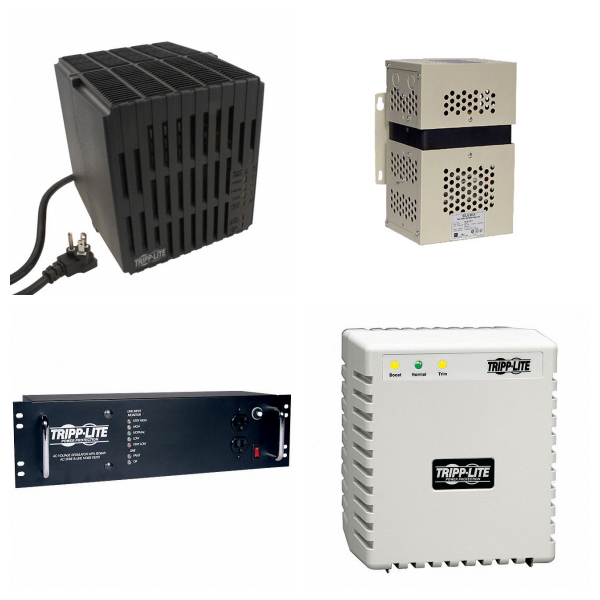
<h1> Line Conditioners </h1> <p> Line conditioners are specialized devices used to improve power quality and stabilize electrical parameters. Their primary functions include voltage regulation, filtering and noise reduction, surge suppression, and waveform correction. </p> <p> </p> <h2> 1. What are the Core Functions of Line Conditioners? </h2> <p> <strong>Voltage Stability</strong> </p> <p> These automatically adjust voltage fluctuations to compensate for excessively high or low input voltages, ensuring stable operation of downstream equipment within the rated voltage range. </p> <p> </p> <p> <strong>Noise and Harmonic Suppression</strong> </p> <p> Filters out high-frequency interference, electromagnetic noise, and harmonic components in the power grid, reducing signal interference with precision electronic equipment. For example, PCB's ICP sensor signal conditioner (Model 482C Series) utilizes built-in filtering circuitry to optimize sensor signal output accuracy. </p> <p> </p> <p> <strong>Transient Protection</strong> </p> <p> Protected against transient high-voltage surges such as lightning strikes and switching surges, reducing the risk of equipment damage. Some models (such as the XC2V6000 series FPGA) have integrated surge protection modules, making them suitable for industrial control scenarios. </p> <p> </p> <h2> 2. What are the Classifications and Typical Applications of Line Conditioners? </h2> <p> <strong>Active Regulators</strong> </p> <p> Based on power electronics technology (such as IGBTs and MOSFETs), they dynamically adjust the output waveform and are suitable for applications with stringent power quality requirements, such as medical equipment and data center servers. These devices must comply with functional safety standards such as IEC 61508 to ensure system safety even in failure modes. </p> <p> </p> <p> <strong>Passive Regulators</strong> </p> <p> Using passive components such as inductors and capacitors to build filter networks, they are relatively low-cost but have a limited adjustment range. They are primarily used in household appliances or small industrial equipment. </p> <p> </p> <h2> 3. Industrial Scenario Requirements of Line Conditioners </h2> <p> In environments such as microfluidics systems and automated production lines, line conditioners must work in conjunction with precision sensors (such as DEP separators and piezoelectric microvalves) to prevent electromagnetic interference from distorting control signals. Furthermore, solar air conditioner assembly lines (such as the KKFR-35GW model) rely on regulators to balance voltage fluctuations caused by compressor startup and shutdown, extending equipment life. </p> <p> </p> <h2> 4. Selection and Standards for Line Conditioners </h2> <p> Prioritize load compatibility, response speed, and compliance with standards (such as the IEEE 1459 power quality specification). Also, consider the impact of environmental stresses (temperature and humidity) on component reliability. </p> <p>
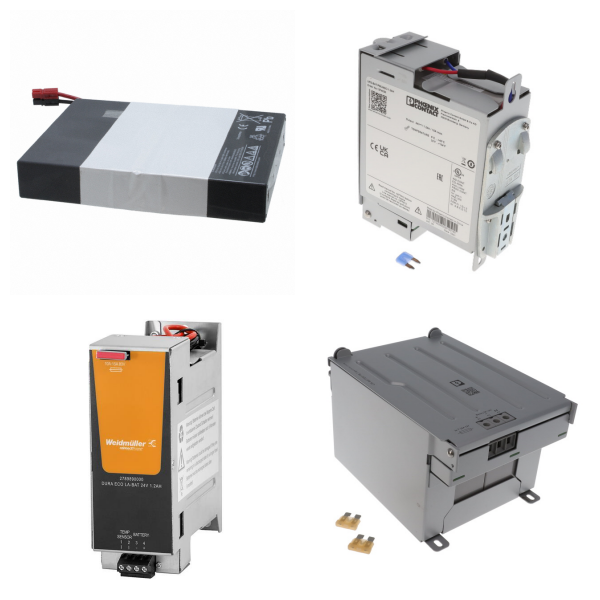
<h1> Line Protection, Distribution Accessories </h1> <p> Supplementary items used with other devices in this category. </p> <p>
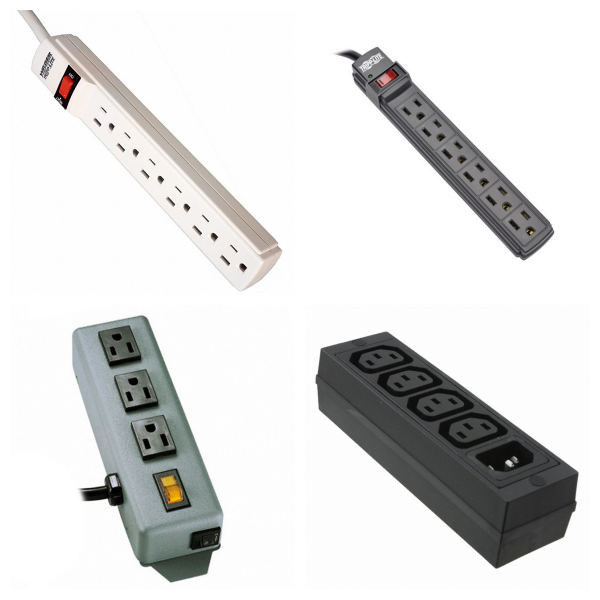
<h1> Power Distribution, Surge Protectors </h1> <h2> 1. What is Power Distribution Unit (PDU)? </h2> <p> Serving as the central expansion device for the power system, it provides multi-port output and centralized power distribution management. High-end models integrate intelligent monitoring capabilities, enabling real-time tracking of current load, energy consumption, and port status. Industrial-grade PDUs feature a 19-inch rack-mount design and are equipped with high-power interfaces such as C13/C19 to meet the power redundancy requirements of data center server clusters. </p> <p> </p> <h2> 2. What is Surge Protector (SPD)? </h2> <h3> 1) Core Protection Mechanism: </h3> <p> Overvoltages are directed to the ground system within nanoseconds using nonlinear components such as varistors (MOVs) and gas discharge tubes (GDTs). MOVs experience a sudden drop in impedance when a threshold voltage is exceeded, creating a low-resistance path; GDTs utilize the ionization properties of gas to conduct high-energy surges. </p> <p> </p> <h3> 2) Tiered Protection System: </h3> <p> <strong>First-level Protection</strong>: Installed at the power inlet, it protects against high-voltage surges of several thousand volts caused by direct lightning strikes or grid faults. </p> <p> <strong>Second-level Protection</strong>: Further limits residual voltage to a safe range for residual surges at the device end. </p> <p> <strong>Final-level Protection</strong>: SPDs specifically designed for precision electronic equipment utilize fast-response components such as TVS diodes. </p> <p> </p> <h2> 3. Application Scenarios and Technology Evolution </h2> <p> <strong>Data Centers</strong>: SPDs and PDUs work together to provide a three-level protection system, ensuring continuous server operation during lightning strikes or grid fluctuations. </p> <p> <strong>Smart Homes</strong>: Surge-protected power strips with integrated USB charging ports simultaneously power digital devices and provide transient overvoltage protection. </p> <p> <strong>Industrial Sector</strong>: SPDs specifically designed for DC power supplies (such as the PC40-1000DC model) are suitable for photovoltaic systems and DC circuits in communication base stations. The latest SPD designs incorporate thermal fuses to prevent MOV component failure and fire, and LED status indicators indicate component lifespan. </p> <p> <strong>Note</strong>: SPDs cannot protect against sustained low voltage (such as power outages/voltage sags) or ultra-high energy shocks from direct lightning strikes. They must be used in conjunction with a UPS system for comprehensive power protection. </p> <p>
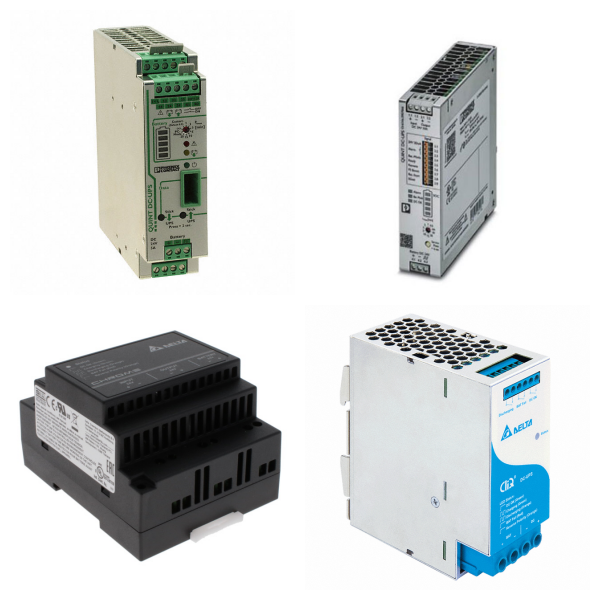
<h1> Uninterruptible Power Supply (UPS) Systems </h1> <p> UPS systems (Uninterruptible Power Supply) are electronic components designed to provide stable power, ensuring continuous operation of critical equipment during utility power failures or anomalies. They utilize energy storage devices and intelligent switching technology to achieve zero-interruption or millisecond-level power switching, effectively preventing voltage fluctuations, power outages, and data loss. </p> <p> </p> <h2> 1. What are the Core Functions of UPS Systems? </h2> <p> <strong>Power Backup</strong>: Immediately provides short-term power support during utility power outages, preventing equipment from experiencing sudden power outages. </p> <p> <strong>Voltage Stabilization</strong>: Filters out interference from the utility power (such as surges and noise) to output pure, sinusoidal AC power. </p> <p> <strong>Equipment Protection</strong>: Prevents hardware damage and data loss, particularly for precision instruments. </p> <p> </p> <h2> 2. What are the Key Components of UPS Systems? </h2> <p> <strong>Rectifier</strong>: Converts AC power to DC while simultaneously charging the battery. </p> <p> <strong>Battery Bank</strong>: Stores energy for backup; its capacity determines the duration of power supply. </p> <p> <strong>Inverter</strong>: The core component converts DC power to stable AC power, keeping voltage fluctuations within ±1%. </p> <p> <strong>Static Switch</strong>: Enables seamless switching between mains power and inverter output. </p> <p> </p> <h2> 3. How do UPS Systems Work? </h2> <p> <strong>This UPS operates in two modes</strong>: When the mains power is normal, the UPS provides stable voltage and charges the battery; when the mains power is abnormal, the battery immediately switches to power through the inverter, with switching times as low as milliseconds. </p> <p> </p> <h2> 4. What are the Types of UPS Systems? </h2> <p> Based on their technical principles, UPSs can be divided into three categories: </p> <p> </p> <p> <strong>Backup UPS</strong>: Low-cost, with a switching time of approximately 10 milliseconds and square wave output, suitable for home or small office equipment. </p> <p> <strong>Online UPS</strong>: Zero switching delay, filters 99% of power pollution, and is suitable for data centers and medical equipment. </p> <p> <strong>Line-interactive UPS</strong>: Combines voltage regulation with a switching time of less than 4 milliseconds, offering high cost-effectiveness and suitable for network equipment or harsh power grid environments. </p> <p> </p> <h2> 5. What are UPS Systems Used for? </h2> <p> <strong>Information Technology</strong>: Power backup for servers and network equipment. </p> <p> <strong>Medical</strong>: Continuous power supply for life-support equipment (such as MRI machines). </p> <p> <strong>Industrial Control</strong>: Stable operation of automated production lines and communication base stations. </p> <p> <strong>Infrastructure</strong>: Traffic lights and financial systems, ensuring business continuity. </p> <p> </p> <h2> 6. Summary </h2> <p> As a core component of modern power supply, UPS systems offer a variety of options based on load size and power environment, balancing cost and performance to effectively enhance equipment reliability and safety. </p> <p>
Line Protection, Distribution, Backups
Products in the Line Protection, Power Distribution, and Backup categories are finished products designed to operate from standard AC mains power or equipment requiring that power, including multi-outlet power strips, battery backup systems, surge protection and noise filtering devices, and DC to AC power conversion. Also included are accessories designed specifically for use with these products, such as replacement battery packs and interface cables.