
New title

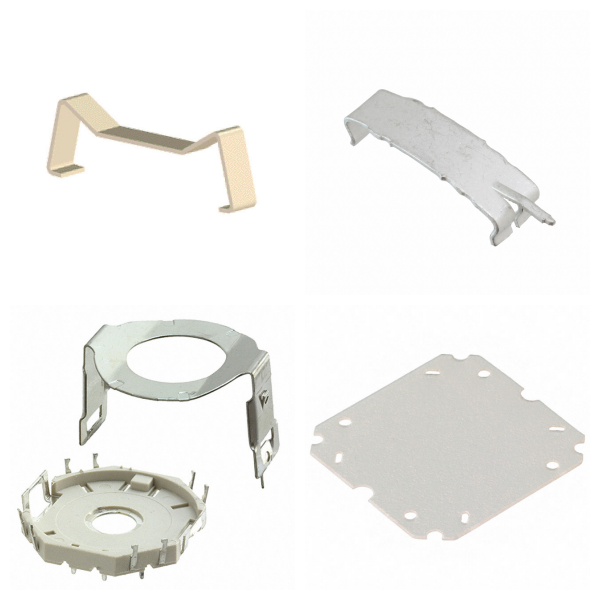
<h1> Bobbins (Coil Formers), Mounts, Hardware </h1> <h2> 1. What are Bobbins/Coil Formers? </h2> <p> They are the core components of transformers, used to secure the coils and core. Typically made of plastic or resin, they provide insulation and mechanical support, directly impacting transformer performance and safety. Common types include: </p> <p>   </p> <p> EI Type: Constructed from "E" and "I"-shaped laminations with a central gap, suitable for designs requiring a clear magnetic flux path. </p> <p>   </p> <p> EE Type: A gapless lamination structure improves magnetic flux efficiency, making it suitable for high-efficiency transformers. </p> <p>   </p> <p> Other Types: Such as EF, ER, and RM, are optimized for different applications, such as high-frequency power supplies or industrial controls, based on their shape. </p> <p>   </p> <h2> 2. What are Mounts? </h2> <p> Refers to fixtures (such as brackets or mounting plates) used to secure the bobbin or coil in place within the equipment. In this patented design, the bobbin utilizes radial protrusions or lugs on the base to engage with the support plate. Rotating and locking prevent displacement, making it suitable for automated production lines or high-frequency winding machines. </p> <p>   </p> <h2> 3. What is Hardware? </h2> <p> This includes connectors, fasteners, and auxiliary components that enable mechanical integration and reliable connections in electronic systems. For example, relays and solenoid valves control circuit switches, and power management modules (such as voltage regulators) ensure a stable power supply. These hardware components work in conjunction with the circuit board to improve device durability. </p> <p>
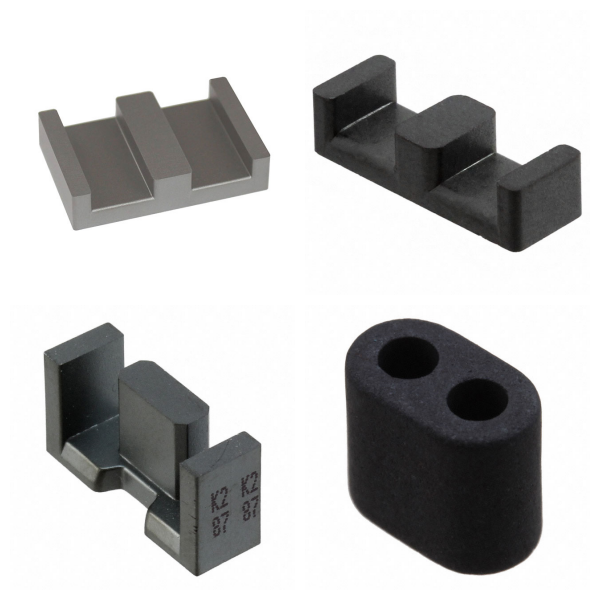
<h1> Ferrite Cores </h1> <p> Ferrite cores are electronic components made from a ferrite material (a mixture of iron oxide and metal oxides such as manganese and zinc, sintered together). Their high magnetic permeability and low loss are crucial to the performance of modern electronic devices. </p> <p>   </p> <h2> 1. What are the Core Classifications and Characteristics of Ferrite Cores? </h2> <p> <strong>Manganese-zinc ferrite (MnZn)</strong> </p> <p> Suitable for low- and medium-frequency applications (such as power transformers and filters), it features high saturation flux density and low loss. </p> <p>   </p> <p> <strong>Nickel-zinc ferrite (NiZn)</strong> </p> <p> Designed for high-frequency applications (such as RF inductors and antennas), it exhibits excellent impedance performance in the high-frequency range. </p> <p>   </p> <p> <strong>Soft ferrites</strong> </p> <p> Used in reversible magnetization applications such as transformers and inductors; hard ferrites are used in permanent magnets such as speakers and motors. </p> <p>   </p> <h2> 2. What are the Core Functions of Ferrite Cores? </h2> <p> Ferrite cores achieve two key functions by converting current energy into magnetic field energy: </p> <p> <strong>Electromagnetic Shielding</strong>: Absorbs high-frequency electromagnetic waves and reduces interference between devices (e.g., communications equipment filters); </p> <p> <strong>Filtering and Current Stabilization</strong>: Suppressing power supply noise and improving signal purity (e.g., switching power supplies and automotive ignition coils). </p> <p>   </p> <h2> 3. What are the Applications of Ferrite Cores? </h2> <p> <strong>Power Electronics</strong>: Energy conversion in UPS power supplies and solar inverters; </p> <p> <strong>Communications Equipment</strong>: Antenna anti-interference components in routers and mobile phones; </p> <p> <strong>Automotive and Medical</strong>: Electric vehicle motors and magnetic field generation units in MRI equipment. </p> <p>   </p> <h2> 4. Standardization and Processing of Ferrite Cores </h2> <p> The international standard IEC 63093 series specifies different core shapes: </p> <p>   </p> <p> <strong>E-type/ETD-type</strong>: General-purpose transformers and high-frequency inductors (IEC 63093-2, -3); </p> <p> <strong>PQ-type/RM-type</strong>: High-power-density switching power supplies and compact communications equipment (IEC 63093-6, -4). </p> <p>   </p> <p> The manufacturing process encompasses raw material mixing, high-temperature sintering, mold forming, and surface treatment to ensure magnetic and mechanical stability. </p> <p>   </p> <h2> 5. Technological Evolution of Ferrite Cores </h2> <p> Compared to traditional ferrites, ultra-fine crystal cores offer lower losses and more stable magnetic permeability at high temperatures. They are suitable for high-frequency transformers below 100kHz, significantly improving power supply efficiency and reliability. </p> <p>   </p> <p> Through continuous optimization of materials and structures, ferrite cores support the trend toward higher frequencies and smaller sizes in electronic devices. </p> <p>
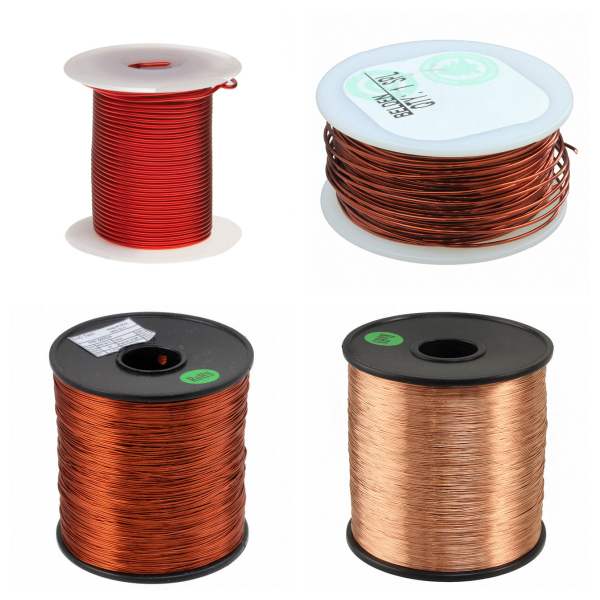
<h1> Magnet Wire </h1> <p> Magnet wire is a key component in electronic devices, specifically used to create coils or windings in electrical equipment, converting electrical and magnetic energy through the principle of electromagnetic induction. </p> <p>   </p> <p> Major categories include enameled wire (coated with insulating varnish), wrapped wire (fiber-wrapped), enameled wrapped wire (composite insulation), and inorganically insulated wire, meeting varying electrical and mechanical performance requirements. </p> <p>   </p> <p> Standards such as ANSI/NEMA define its dimensions, insulation test methods, and cover both round and rectangular conductor designs. </p> <p>   </p> <p> In applications, it is widely used in general applications such as motors, transformers, and instrumentation to generate electromagnetic effects. In specialized applications such as new energy vehicles, photovoltaic inverters, and LED drivers, magnet wire must withstand high temperatures, vibration, and EMC standards to ensure efficient energy storage and conversion. </p> <p>   </p> <p> For example, in magnetic components such as transformers and inductors, magnet wire serves as the winding core, combined with soft magnetic materials to optimize performance for high frequencies and extreme environments. </p> <p>

Magnetics – Transformer, Inductor Components

1. What are the ‌Core Types of Magnetic Components? ‌

‌Transformer‌: used for voltage conversion, circuit isolation and energy transfer, its design needs to combine core materials and winding structures to optimize efficiency‌.

‌Inductor‌: plays a key role in filtering, energy storage and resonant circuits, and high-frequency applications need to consider core saturation characteristics and loss control‌.

‌Integrated magnetic components‌: such as planar magnetic components, coreless PCB transformers, etc., improve power density through miniaturization design, suitable for high-frequency switching power supplies‌.

2. What are the ‌Technical Features of Magnetic Components? ‌

‌High-frequency Performance Optimization‌: for high-frequency switching converters (such as DC-DC), the core material needs to reduce eddy current losses, and the winding layout needs to reduce parasitic parameters‌.

‌Core Structure Innovation‌: including split core design (such as upper and lower core splicing), multi-axis flux path, etc., to improve heat dissipation and prevent magnetic saturation‌.

‌Temperature and Reliability Management‌: improve the stability of components in high temperature environments through core material selection (such as ferrite) and packaging process‌.

3. What are Magnetic Components Used for?‌

‌Power Conversion Systems‌: Energy storage and transfer in AC-DC rectifiers and DC-DC converters.

‌Signal Isolation and Coupling‌: Physical isolation between circuits in communication equipment to reduce noise interference.

‌IC Integration‌: Micro inductors or transformers can be directly embedded in chips for use in RF circuits or power management modules.

4. What is the Core Difference between Transformers and Inductors? ‌

‌Functional Differences‌:

Inductors mainly convert electrical energy into magnetic energy storage and hinder instantaneous changes in current‌.

Transformers are used to achieve voltage conversion, energy transfer, and circuit isolation through electromagnetic induction‌.

‌Structural Features‌:

Inductors are usually single-winding structures, while transformers contain at least two sets of mutually insulated windings‌.

Transformers need to achieve energy transfer through magnetic core coupling, and the inductor core may be hollow or magnetic material‌.

5. ‌Product Examples of Inductor Components‌

‌Ferroxcube CP-P14/8-2S‌: A typical ferrite core inductor suitable for high-frequency power filtering with low loss and high temperature stability.

6. Magnetic Components FAQs

1) What are the main application scenarios of magnetic components? ‌

‌Inductors‌:

Power filtering (such as suppressing high-frequency noise);

Resonant circuits (such as wireless charging and RF modules);

Dynamic current control (such as energy storage elements in switching power supplies).

‌Transformer‌:

Voltage conversion (such as AC/DC adapter, power transmission)‌;

Signal isolation (such as communication interface, medical equipment)‌;

Power converter (such as energy coupling in LLC resonant topology)‌.

2) ‌How do the distributed parameters of magnetic components affect circuit performance? ‌

‌Eddy current loss‌: Eddy currents generated by core materials at high frequencies cause heating, and the core lamination or powder pressing process needs to be optimized‌;

‌Parasitic capacitance‌: The capacitance between winding layers may cause resonance peaks, which need to be suppressed by staggered winding or shielding layer design‌;

‌Leakage inductance effect‌: The magnetic field that is not fully coupled by the transformer will form leakage inductance, and a buffer circuit needs to be reserved in the topology design‌.

3) ‌How to test the key parameters of magnetic components? ‌

‌Inductance measurement‌: Use an LCR meter to test at a specified frequency (such as 1kHz-1MHz);

‌Saturation current test‌: Gradually increase the DC bias current and observe the critical point where the inductance drops to the nominal value‌;

‌Temperature rise experiment‌: Monitor the core and winding temperature during full load operation and evaluate the heat dissipation design‌.

4) ‌What is the future development trend of magnetic components? ‌

‌High frequency‌: Adapt to the high-frequency switching requirements of GaN/SiC devices and develop low-loss core materials‌;

‌Integration‌: Integrate magnetic components with PCB (such as planar transformers) to improve power density‌;

‌Intelligence‌: Embed sensors to monitor temperature and current status in real time and realize fault warnings‌.

5) How will the performance of magnetic components change in high-temperature environments?

Attenuation of magnetic core characteristics:

The magnetic permeability of ferrite decreases with increasing temperature (failure after exceeding the Curie temperature), so it is necessary to select high Curie point materials (such as manganese-zinc ferrite);

The eddy current loss of silicon steel sheets increases at high temperatures, so the operating temperature range needs to be limited.

Reduced winding reliability:

The insulation layer of enameled wire is prone to aging at high temperatures, and polyimide or Teflon coated wire is recommended.

6) How to suppress electromagnetic interference (EMI) of magnetic components in high-frequency circuits?

Shielding design:

The magnetic core is wrapped with copper foil or nickel-zinc ferrite shielding layer to absorb high-frequency radiation;

The transformer winding adopts the sandwich winding method to balance leakage inductance and distributed capacitance.

PCB layout optimization:

The magnetic components are kept away from sensitive signal lines, and ground isolation strips are added.

7) What are the typical manifestations of magnetic components when they fail? ‌

‌Physical damage characteristics‌:

Cracked core or blackened winding (caused by overcurrent or overheating);

Carbonized insulation layer (high voltage breakdown or failure in a humid environment).

‌Abnormal electrical parameters‌:

Sudden drop in inductance (core saturation or winding short circuit);

Reduced transformer turn-to-turn withstand voltage (aging of insulation material).