
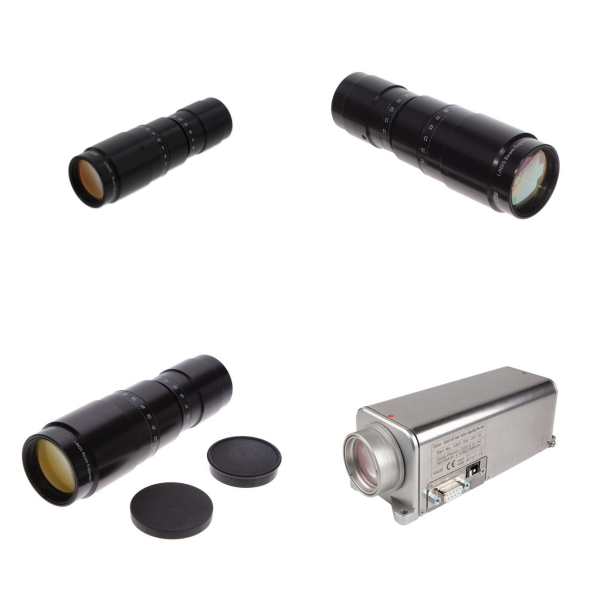
<h1> Beam Expanders </h1> <p> A beam expander is an optical device composed of a lens assembly. It adjusts the diameter and divergence angle of the incident laser beam to achieve collimated beam expansion or contraction. Based on the optical path design, it can be categorized into two types: Galilean (without an internal focus) and Keplerian (with an internal focus). </p> <p> </p> <h2> 1. What are the Core Parameters of Beam Expanders? </h2> <p> <strong>Beam Expansion Ratio</strong>: Adjustable from 2× to 20×, with a common industrial range of 3× to 10×. </p> <p> <strong>Clear Aperture</strong>: Φ5mm-Φ50mm (compatible with lasers of varying power). </p> <p> <strong>Wavelength Compatibility</strong>: </p> <p> Ultraviolet (193-355nm) </p> <p> Visible light (400-700nm) </p> <p> Infrared (780-1550nm) </p> <p> </p> <p> <strong>Wavefront Distortion</strong>: <λ/4 @ 633nm (high-precision model) </p> <p> </p> <h2> 2. What are the Typical Application Scenarios of Beam Expanders? </h2> <table> <tbody> <tr class="firstRow"> <td width="169" valign="top" style="padding: 0px 7px; border-width: 1px; border-color: windowtext; background: rgb(190, 190, 190);"> <p> Application Areas </p> </td> <td width="207" valign="top" style="padding: 0px 7px; border-width: 1px; border-color: windowtext; background: rgb(190, 190, 190);"> <p> Functional Requirements </p> </td> <td width="192" valign="top" style="padding: 0px 7px; border-width: 1px; border-color: windowtext; background: rgb(190, 190, 190);"> <p> Selection Key Points </p> </td> </tr> <tr> <td width="169" valign="top" style="padding: 0px 7px; border-left-width: 1px; border-left-color: windowtext; border-right-width: 1px; border-right-color: windowtext; border-top: none; border-bottom-width: 1px; border-bottom-color: windowtext;"> <p> Laser Processing </p> </td> <td width="207" valign="top" style="padding: 0px 7px; border-left-width: 1px; border-left-color: windowtext; border-right-width: 1px; border-right-color: windowtext; border-top: none; border-bottom-width: 1px; border-bottom-color: windowtext;"> <p> Focused Spot Size Control </p> </td> <td width="192" valign="top" style="padding: 0px 7px; border-left-width: 1px; border-left-color: windowtext; border-right-width: 1px; border-right-color: windowtext; border-top: none; border-bottom-width: 1px; border-bottom-color: windowtext;"> <p> Damage Threshold >5J/cm² </p> </td> </tr> <tr style="height:32px"> <td width="169" valign="top" style="padding: 0px 7px; border-left-width: 1px; border-left-color: windowtext; border-right-width: 1px; border-right-color: windowtext; border-top: none; border-bottom-width: 1px; border-bottom-color: windowtext;"> <p> Optical Measurement </p> </td> <td width="207" valign="top" style="padding: 0px 7px; border-left-width: 1px; border-left-color: windowtext; border-right-width: 1px; border-right-color: windowtext; border-top: none; border-bottom-width: 1px; border-bottom-color: windowtext;"> <p> Reduced Beam Divergence </p> </td> <td width="192" valign="top" style="padding: 0px 7px; border-left-width: 1px; border-left-color: windowtext; border-right-width: 1px; border-right-color: windowtext; border-top: none; border-bottom-width: 1px; border-bottom-color: windowtext;"> <p> Achromatic Design </p> </td> </tr> <tr style="height:31px"> <td width="169" valign="top" style="padding: 0px 7px; border-left-width: 1px; border-left-color: windowtext; border-right-width: 1px; border-right-color: windowtext; border-top: none; border-bottom-width: 1px; border-bottom-color: windowtext;"> <p> Medical Aesthetics </p> </td> <td width="207" valign="top" style="padding: 0px 7px; border-left-width: 1px; border-left-color: windowtext; border-right-width: 1px; border-right-color: windowtext; border-top: none; border-bottom-width: 1px; border-bottom-color: windowtext;"> <p> Uniform Energy Distribution </p> </td> <td width="192" valign="top" style="padding: 0px 7px; border-left-width: 1px; border-left-color: windowtext; border-right-width: 1px; border-right-color: windowtext; border-top: none; border-bottom-width: 1px; border-bottom-color: windowtext;"> <p> Compact Structure </p> </td> </tr> <tr> <td width="169" valign="top" style="padding: 0px 7px; border-left-width: 1px; border-left-color: windowtext; border-right-width: 1px; border-right-color: windowtext; border-top: none; border-bottom-width: 1px; border-bottom-color: windowtext;"> <p> Space Communications </p> </td> <td width="207" valign="top" style="padding: 0px 7px; border-left-width: 1px; border-left-color: windowtext; border-right-width: 1px; border-right-color: windowtext; border-top: none; border-bottom-width: 1px; border-bottom-color: windowtext;"> <p> Long-Distance Transmission Optimization </p> </td> <td width="192" valign="top" style="padding: 0px 7px; border-left-width: 1px; border-left-color: windowtext; border-right-width: 1px; border-right-color: windowtext; border-top: none; border-bottom-width: 1px; border-bottom-color: windowtext;"> <p> Temperature Stability ±0.01%/°C </p> </td> </tr> </tbody> </table> <p> </p> <h2> 3. What are the Technology Trends of Beam Expanders? </h2> <p> <strong>Active Adjustment</strong>: Piezoelectric Ceramic-Driven Real-Time Zoom System </p> <p> <strong>Ultra-Wideband Design</strong>: 400-1100nm Continuous Spectrum Adaptation </p> <p> <strong>Integrated Solution</strong>: Intelligent Feedback Model with Integrated PSD Sensor </p> <p> <strong>New Material</strong>: Calcium Fluoride (CaF₂) Lens Improves UV Performance </p> <p> </p> <p>
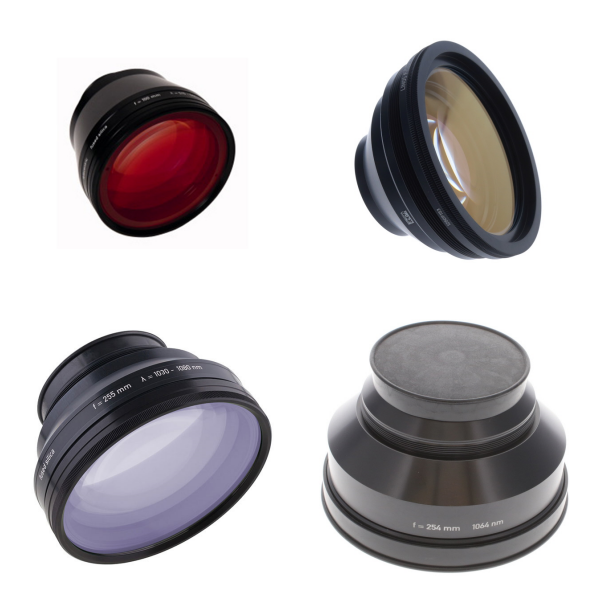
<h1> F-Theta Lenses </h1> <p> F-Theta Lenses are used in laser optic systems that are designed to focus on a planar image. These provide distortion to make the image height proportional to the focal length and scanning angle theta. These can be filtered by wavelength, lens material, focal length, beam diameter, and more. </p> <p>
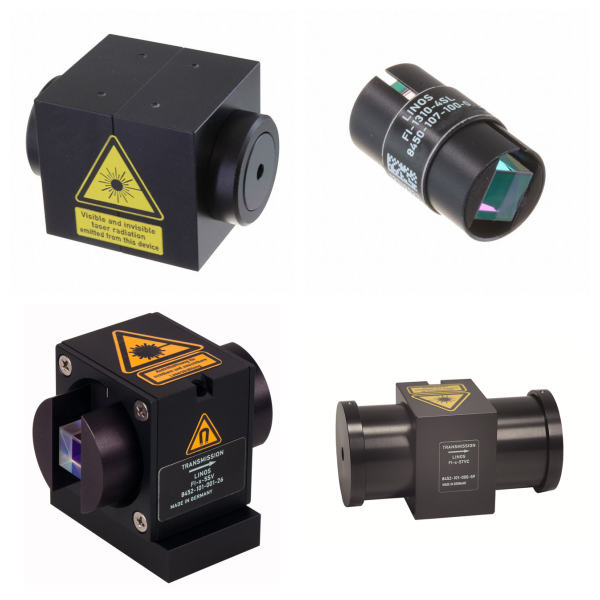
<h1> Faraday Isolators </h1> <p> Faraday isolators are key optoelectronic devices based on the Faraday effect. They are primarily used to control reverse light propagation in optical systems, protecting sensitive components such as lasers from interference from reflected light. </p> <p> </p> <h2> 1. What are the Core Principles of Faraday Isolators? </h2> <p> When linearly polarized light passes through a magneto-optical crystal under an axial magnetic field, its polarization plane is rotated by a fixed angle (typically 45°) independent of the propagation direction. The device typically consists of an input polarizer, a Faraday rotator (containing a magneto-optical crystal and a permanent magnet), and an output polarizer. Forward-propagating light, after being filtered by the polarizer, undergoes a 45° rotation of its polarization plane by the rotator, allowing it to pass smoothly through the output polarizer. However, when reverse-propagating light passes through the rotator again, its polarization plane undergoes a superimposed rotation, deviating from its original direction and ultimately being blocked by the input polarizer. </p> <p> </p> <h2> 2. What are the Core Features and Technical Parameters of Faraday Isolators? </h2> <h3> 1) Key Specifications </h3> <p> <strong>Isolation</strong>: This measures the ability to block reverse-propagation light. Single-stage isolators typically achieve >30 dB, while dual-stage isolators can reach >60 dB. Insertion Loss: Transmission loss of forward light, >90% for single-stage and >80% for dual-stage. </p> <p> <strong>Operating Wavelength Range</strong>: Covers a wide range of wavelengths from 390nm to 1550nm, with some models supporting wide-spectrum tunability. </p> <p> <strong>Damage Threshold</strong>: The ability to withstand high-power lasers is key to selecting a model for high-power applications. </p> <p> <strong>Operating Temperature Range</strong>: This affects device stability and should be selected based on the application environment. </p> <p> </p> <h3> 2) Core Materials </h3> <p> Faraday rotators often use rare-earth-doped crystals (such as terbium gallium garnet (TGG) or terbium neodymium yttrium salt). The magneto-optical effect is the basis for polarization rotation. Crystal performance directly affects the thermal stability and isolation effectiveness of the isolator. </p> <p> </p> <h2> 3. What are Faraday Isolators Used for? </h2> <p> <strong>Laser Protection</strong>: Prevents reflected light from returning to the resonator, ensuring laser output stability. </p> <p> <strong>Optical Communication Systems</strong>: Isolates backscattered light in fiber links, improving the signal-to-noise ratio. </p> <p> <strong>Optical Measurement Equipment</strong>: Avoids echo interference and ensures measurement accuracy. </p> <p> <strong>Amplifier System Isolation</strong>: Provides optical decoupling between oscillators and amplifiers. </p> <p> </p> <h2> 4. Classification and Selection for Faraday Isolators </h2> <p> <strong>Free-Space Isolators</strong>: Suitable for non-fiber optical systems requiring precise optical path alignment. </p> <p> <strong>Fiber-Coupled Isolators</strong>: Directly integrate into fiber links, simplifying system design. </p> <p> <strong>Single-Stage/Dual-Stage Isolators</strong>: Dual stages provide higher isolation and are suitable for harsh environments. </p> <p> <strong>Tunable Isolators</strong>: Support continuous adjustment within a specific wavelength range, suitable for multi-wavelength applications. </p>
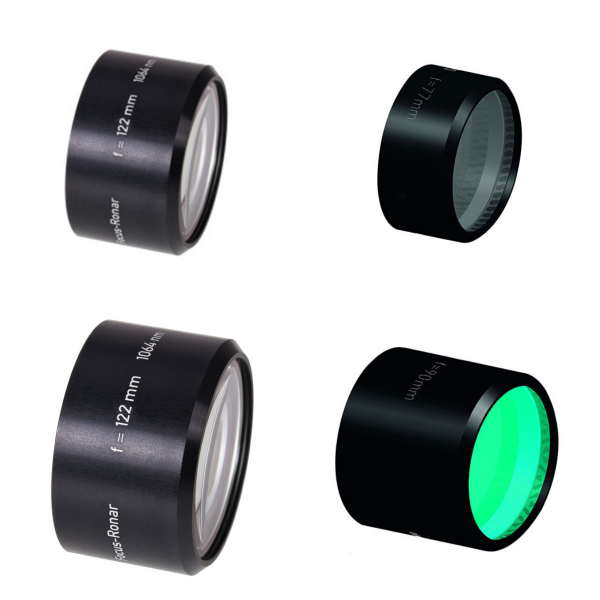
<h1> Focus Lenses </h1> <p> Laser Optic Focus Lenses are the final piece in a laser system and are used to focus the beam to a specific focal length. </p> <p>
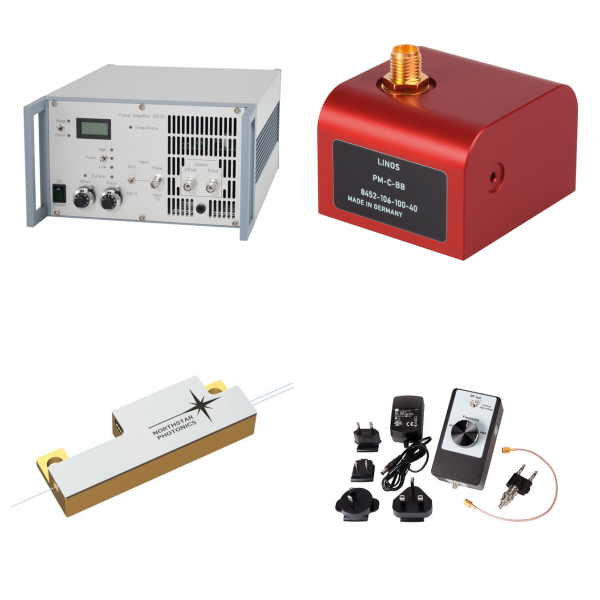
<h1> Laser Modulators </h1> <p> Laser Modulators are devices used to manipulate the optical beam in a predefined way depending on the modulator type. These can be filtered down by type, wavelength, aperture, and more. </p> <p>
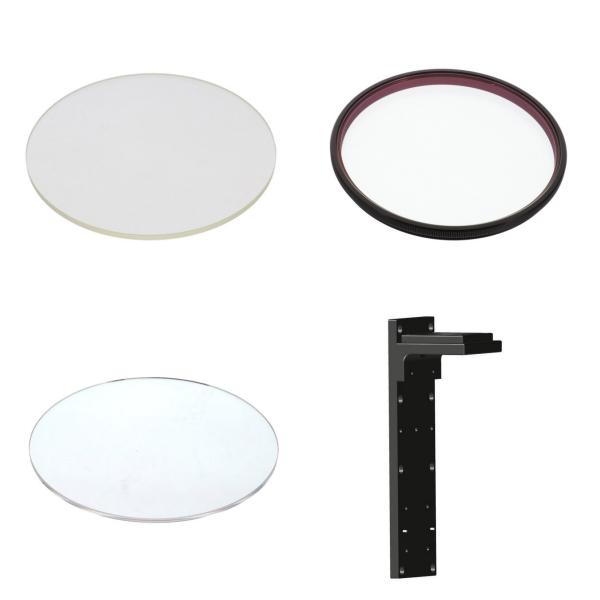
<h1> Laser Optics Accessories </h1> <p> Laser Optic Accessories are items used in coordination with pieces of a laser optic system. </p> <p>
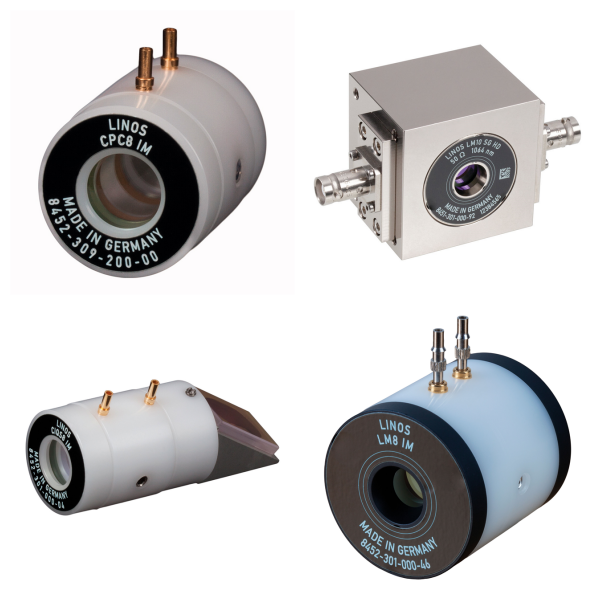
<h1> Pockels Cells </h1> <p> Pockels cells are laser modulators based on the electro-optic effect. They alter the refractive index of a crystal by applying a high-voltage electric field, thereby modulating the polarization state or phase of a light beam and enabling rapid control of optical signals. They are widely used in applications such as Q-switched lasers, mode-locked lasers, single-pulse selectors, and optical isolators, and are core components of electro-optic modulation systems. </p> <p> </p> <h2> 1. What are the Working Principles of Pockels Cells? </h2> <p> <strong>Electro-optic Effect Principle</strong>: When an external voltage is applied across an electro-optic crystal, the polarization state of linearly polarized light changes. The crystal's refractive index becomes proportional to the electric field intensity, making it a voltage-controlled variable wave plate. </p> <p> </p> <h2> 2. What are the Structure Types of Pockels Cells? </h2> <p> <strong>Longitudinal Pockels Cell</strong>: The electric field is parallel to the beam propagation direction, and the drive voltage is independent of the aperture. This makes it suitable for large-aperture applications (such as high-power lasers) and requires a high half-wave voltage (typically hundreds to thousands of volts). </p> <p> <strong>Transverse Pockels Cell</strong>: The electric field is perpendicular to the beam propagation direction, and the drive voltage is aperture-dependent. This results in a low switching voltage and is suitable for high-frequency modulation (up to 800 MHz) and small-aperture designs. </p> <p> </p> <h2> 3. What are the Key Materials and Parameters of Pockels Cells? </h2> <h3> 1) Crystal Materials </h3> <p> Commonly used materials include KDP (potassium dideuterium phosphate), BBO (barium metaborate), RTP, and LiNbO3 (lithium niobate). KDP has a high damage threshold (>500 MW/cm²), BBO is suitable for high-repetition-rate modulation, and LiNbO3 is used in low-voltage scenarios. </p> <p> </p> <h3> 2) Key Parameters </h3> <p> <strong>Half-wave Voltage</strong>: The voltage required to produce a π phase change. Longitudinal modulation is independent of crystal length, while transverse modulation is dependent on aperture and electrode spacing. </p> <p> <strong>Modulation Bandwidth</strong>: Limited by crystal capacitance and driver, low-dielectric materials (such as BBO) can achieve higher bandwidths. </p> <p> <strong> </strong> </p> <p> <strong>Other Performance Specifications</strong>: Transmittance (84%-99%), extinction ratio (>200:1), and wavefront distortion (<λ/4) are key performance indicators. </p> <p> </p> <p> In summary, Pockels cells, with their high-speed response and precise control, play a vital role in optoelectronic engineering. Their selection requires optimizing the crystal material and structure based on application requirements (such as aperture, voltage, and frequency). </p> <p>
Laser Optics
Laser Optic devices are used in a variety of applications such as measurement systems, imaging, printers, and more. Components included in this category are beam expanders, F-Theta lenses, Faraday isolators, focus lenses, laser modulators, Pockels cells, and more.