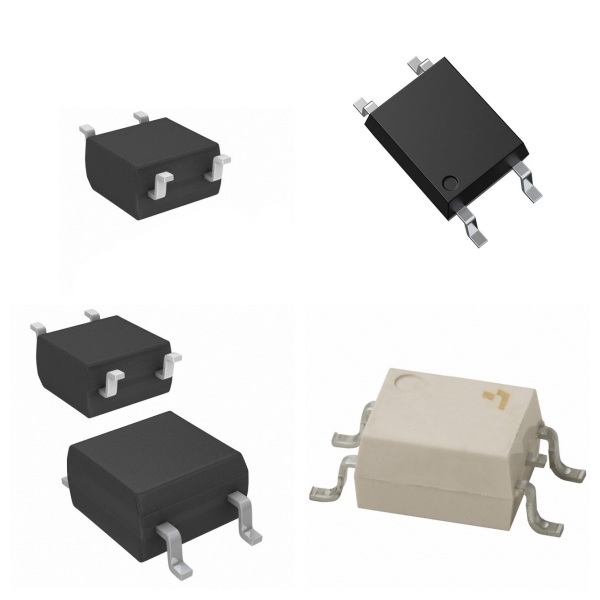
New title

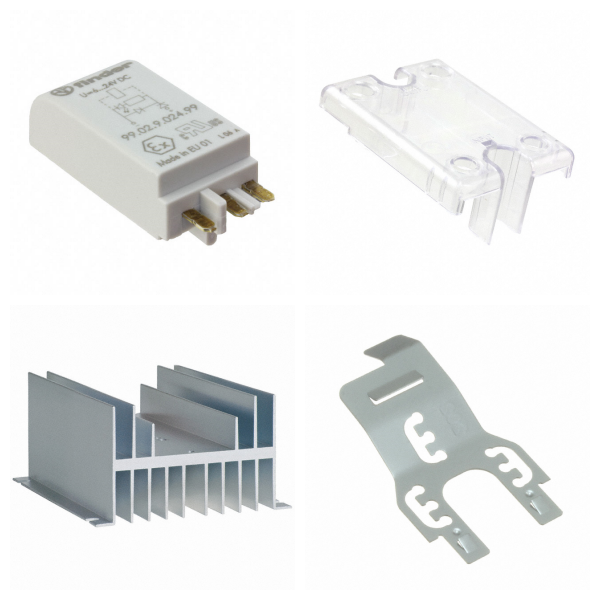
<h1> Accessories </h1> <p> Relays accessories are parts and products that are used to help ensure that a relay system is functioning properly. These accessories may include relays, switches, circuit breakers, enclosures, and other components. These parts and products are important for keeping a relay system running smoothly and safely. They can also be used to help extend the life of the system and to reduce the amount of maintenance that is required. </p>
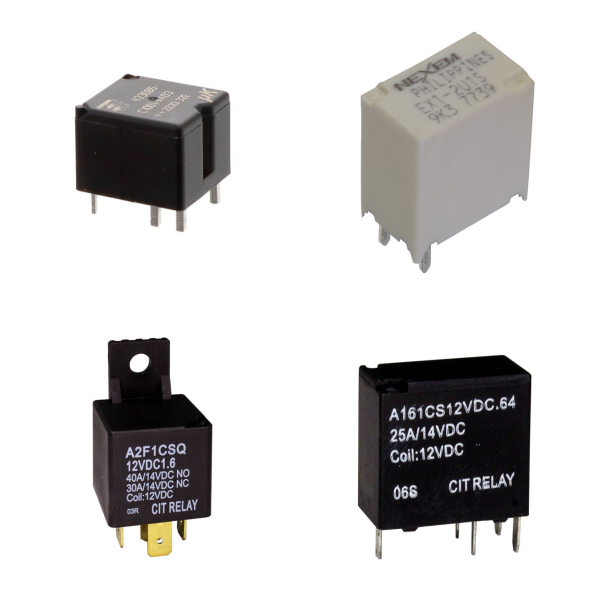
<h1> Automotive Relays </h1> <p> Automotive relays are core control components in a vehicle's electrical system, fulfilling the critical function of controlling high-current circuits with low current. As the "smart switch" of onboard circuits, their reliability directly impacts the stability of the entire vehicle's electrical system. According to the latest industry standards set for 2025, modern automotive relays must meet AEC-Q100 certification and extend their operating temperature range to -40°C to 125°C. </p> <p>   </p> <h2> 1. What are the Core Technical Features of Automotive Relays? </h2> <p> <strong>Contact Structure</strong>: </p> <p> Silver alloy contacts (AgSnO₂) achieve a mechanical lifespan of over 100,000 cycles. </p> <p> Arc-quenching design complies with ISO 8820-3 electromagnetic interference protection standards. </p> <p>   </p> <p> <strong>Packaging</strong>: </p> <p> Fully sealed with an IP67 protection rating. </p> <p> Vibration resistance reaches 50G (ISO 16750-3 standard). </p> <p>   </p> <p> <strong>Intelligent Evolution</strong>: </p> <p> Fourth-generation relay with integrated current sensor. </p> <p> Support for CAN FD bus diagnostics. </p> <p>   </p> <h2> 2. What are the Typical Application Scenarios of Automotive Relays? </h2> <table> <tbody> <tr class="firstRow"> <td width="143" valign="top" style="padding: 0px 7px; border-width: 1px; border-color: windowtext; background: rgb(190, 190, 190);"> <p> System Module </p> </td> <td width="197" valign="top" style="padding: 0px 7px; border-width: 1px; border-color: windowtext; background: rgb(190, 190, 190);"> <p> Functionality Implementation </p> </td> <td width="228" valign="top" style="padding: 0px 7px; border-width: 1px; border-color: windowtext; background: rgb(190, 190, 190);"> <p> Technical Parameters </p> </td> </tr> <tr style="height:33px"> <td width="143" valign="top" style="padding: 0px 7px; border-left-width: 1px; border-left-color: windowtext; border-right-width: 1px; border-right-color: windowtext; border-top: none; border-bottom-width: 1px; border-bottom-color: windowtext;"> <p> Powertrain </p> </td> <td width="197" valign="top" style="padding: 0px 7px; border-left-width: 1px; border-left-color: windowtext; border-right-width: 1px; border-right-color: windowtext; border-top: none; border-bottom-width: 1px; border-bottom-color: windowtext;"> <p> Pre-charge Control </p> </td> <td width="228" valign="top" style="padding: 0px 7px; border-left-width: 1px; border-left-color: windowtext; border-right-width: 1px; border-right-color: windowtext; border-top: none; border-bottom-width: 1px; border-bottom-color: windowtext;"> <p> 40A/12VDC with Arc Chute </p> </td> </tr> <tr> <td width="143" valign="top" style="padding: 0px 7px; border-left-width: 1px; border-left-color: windowtext; border-right-width: 1px; border-right-color: windowtext; border-top: none; border-bottom-width: 1px; border-bottom-color: windowtext;"> <p> Body Electronics </p> </td> <td width="197" valign="top" style="padding: 0px 7px; border-left-width: 1px; border-left-color: windowtext; border-right-width: 1px; border-right-color: windowtext; border-top: none; border-bottom-width: 1px; border-bottom-color: windowtext;"> <p> Lighting Load Management </p> </td> <td width="228" valign="top" style="padding: 0px 7px; border-left-width: 1px; border-left-color: windowtext; border-right-width: 1px; border-right-color: windowtext; border-top: none; border-bottom-width: 1px; border-bottom-color: windowtext;"> <p> 20A/24VDC Low Contact Resistance </p> </td> </tr> <tr> <td width="143" valign="top" style="padding: 0px 7px; border-left-width: 1px; border-left-color: windowtext; border-right-width: 1px; border-right-color: windowtext; border-top: none; border-bottom-width: 1px; border-bottom-color: windowtext;"> <p> New Energy System </p> </td> <td width="197" valign="top" style="padding: 0px 7px; border-left-width: 1px; border-left-color: windowtext; border-right-width: 1px; border-right-color: windowtext; border-top: none; border-bottom-width: 1px; border-bottom-color: windowtext;"> <p> High-Voltage Contactor </p> </td> <td width="228" valign="top" style="padding: 0px 7px; border-left-width: 1px; border-left-color: windowtext; border-right-width: 1px; border-right-color: windowtext; border-top: none; border-bottom-width: 1px; border-bottom-color: windowtext;"> <p> 500A/450VDC Vacuum Encapsulation </p> </td> </tr> </tbody> </table> <p>   </p> <p>   </p> <p>   </p>
<h1> Contactors (Electromechanical) </h1> <h2> 1. What are Electromechanical Contactors? </h2> <p> An electromagnetic contactor is an automatic switching device driven by an electromagnet. Its core structure consists of a coil, an iron core, and a contact system. When the coil is energized, the electromagnetic force closes the moving and stationary contacts, closing the circuit. Typical operating voltages range from AC 24V-480V/DC 12V-250V, and the contact current ranges from 5A to 3000A. </p> <p>   </p> <h2> 2. What are the Key Features of Electromechanical Contactors? </h2> <p> <strong>High Reliability</strong>: Mechanical lifespan exceeds 10 million cycles, electrical lifespan approximately 500,000-1 million cycles. </p> <p> <strong>Fast Response</strong>: Actuation time is typically less than 20ms. </p> <p> <strong>Overload Protection</strong>: Can be combined with thermal relays for circuit protection. </p> <p> <strong>Modular Design</strong>: Supports expanded functions such as auxiliary contacts and mechanical interlocks. </p> <p>   </p> <h2> 3. What are the Typical Applications of Electromechanical Contactors? </h2> <p> Motor start/stop control (accounting for 70% of industrial applications); </p> <p> Power system distribution cabinets; </p> <p> New energy sectors (photovoltaic inverters, charging stations); </p> <p> Rail transit traction systems. </p> <p>   </p> <h2> 4. Selection Considerations for Electromechanical Contactors </h2> <p> <strong>Rated Voltage</strong>: Matches the power system voltage level. </p> <p> <strong>Contact Current</strong>: 1.2-1.5 times the load current. </p> <p> <strong>Coil Voltage</strong>: Must be consistent with the control circuit. </p> <p> <strong>Ambient Temperature</strong>: Industrial-grade, typically -25°C to 55°C. </p> <p>   </p> <h2> 5. Technology Trends of Electromechanical Contactors </h2> <p> Solid-State Contactors (Contactless); </p> <p> Intelligent Contactors (Integrated Communication Modules); </p> <p> Wide Bandgap Semiconductor Applications (SiC/GaN Drive Technology). </p>
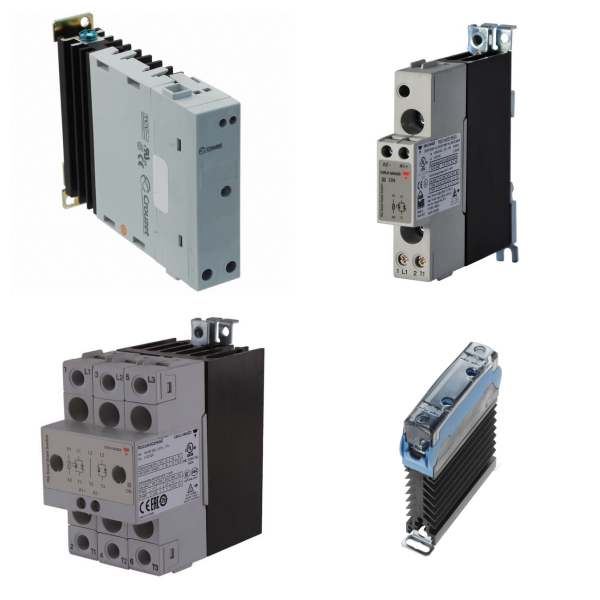
<h1> Contactors (Solid State) </h1> <h2> 1. What are Solid State Contactors? </h2> <p> A solid-state contactor is a contactless switching device that uses semiconductor devices (such as IGBTs and MOSFETs) to connect and disconnect circuits. Unlike traditional electromagnetic contactors, it utilizes zero-voltage conduction/zero-current shutdown technology to achieve high-precision power control. </p> <p>   </p> <h2> 2. What are the Structural Advantages of Solid State Contactors? </h2> <p> No mechanical moving parts, lifespan of over 1 million cycles (electromagnetic types only 100,000-200,000 cycles); </p> <p> Response time <1ms, supports kHz-level high-frequency operation; </p> <p> Excellent electromagnetic compatibility, no arcing. </p> <p>   </p> <h2> 3. What are the Performance Parameters of Solid State Contactors? </h2> <table> <tbody> <tr style="height:31px" class="firstRow"> <td width="189" valign="top" style="padding: 0px 7px; border-width: 1px; border-color: windowtext; background: rgb(190, 190, 190);"> <p> Indicator </p> </td> <td width="189" valign="top" style="padding: 0px 7px; border-width: 1px; border-color: windowtext; background: rgb(190, 190, 190);"> <p> Typical Value </p> </td> <td width="189" valign="top" style="padding: 0px 7px; border-width: 1px; border-color: windowtext; background: rgb(190, 190, 190);"> <p> Test Conditions </p> </td> </tr> <tr style="height:32px"> <td width="189" valign="top" style="padding: 0px 7px; border-left-width: 1px; border-left-color: windowtext; border-right-width: 1px; border-right-color: windowtext; border-top: none; border-bottom-width: 1px; border-bottom-color: windowtext;"> <p> On-resistance </p> </td> <td width="189" valign="top" style="padding: 0px 7px; border-left-width: 1px; border-left-color: windowtext; border-right-width: 1px; border-right-color: windowtext; border-top: none; border-bottom-width: 1px; border-bottom-color: windowtext;"> <p> 0.5-5mΩ </p> </td> <td width="189" valign="top" style="padding: 0px 7px; border-left-width: 1px; border-left-color: windowtext; border-right-width: 1px; border-right-color: windowtext; border-top: none; border-bottom-width: 1px; border-bottom-color: windowtext;"> <p> at 25°C </p> </td> </tr> <tr style="height:31px"> <td width="189" valign="top" style="padding: 0px 7px; border-left-width: 1px; border-left-color: windowtext; border-right-width: 1px; border-right-color: windowtext; border-top: none; border-bottom-width: 1px; border-bottom-color: windowtext;"> <p> Insulation Withstand Voltage </p> </td> <td width="189" valign="top" style="padding: 0px 7px; border-left-width: 1px; border-left-color: windowtext; border-right-width: 1px; border-right-color: windowtext; border-top: none; border-bottom-width: 1px; border-bottom-color: windowtext;"> <p> 2500VAC/1min </p> </td> <td width="189" valign="top" style="padding: 0px 7px; border-left-width: 1px; border-left-color: windowtext; border-right-width: 1px; border-right-color: windowtext; border-top: none; border-bottom-width: 1px; border-bottom-color: windowtext;"> <p> compliant with IEC 60947-4-3 </p> </td> </tr> <tr style="height:35px"> <td width="189" valign="top" style="padding: 0px 7px; border-left-width: 1px; border-left-color: windowtext; border-right-width: 1px; border-right-color: windowtext; border-top: none; border-bottom-width: 1px; border-bottom-color: windowtext;"> <p> Operating Temperature </p> </td> <td width="189" valign="top" style="padding: 0px 7px; border-left-width: 1px; border-left-color: windowtext; border-right-width: 1px; border-right-color: windowtext; border-top: none; border-bottom-width: 1px; border-bottom-color: windowtext;"> <p> -40℃~85℃ </p> </td> <td width="189" valign="top" style="padding: 0px 7px; border-left-width: 1px; border-left-color: windowtext; border-right-width: 1px; border-right-color: windowtext; border-top: none; border-bottom-width: 1px; border-bottom-color: windowtext;"> <p> industrial-grade standard </p> </td> </tr> </tbody> </table> <p>   </p> <h2> 4. What are the Application Scenarios of Solid State Contactors? </h2> <p> <strong>New Energy</strong>: DC-side protection for photovoltaic inverters, electric vehicle charging stations. </p> <p> <strong>Industrial Automation</strong>: Servo drive main circuit switching, inverter output control. </p> <p> <strong>Special Environments</strong>: Spacecraft power distribution systems, nuclear power plant auxiliary power supply. </p> <p>   </p> <h2> 5. Selection Guide for Solid State Contactors </h2> <p> <strong>Voltage Matching</strong>: A 20% margin is required for continuous operating voltage. </p> <p> <strong>Thermal Management</strong>: A heat sink is required (junction temperature ≤ 125°C). </p> <p> <strong>Drive Isolation</strong>: Optocoupler isolation is recommended. </p>
<h1> High Frequency (RF) Relays </h1> <h2> 1. What are High Frequency (RF) Relays? </h2> <p> High-frequency relays are electromagnetic switching elements designed specifically for radio frequency signal transmission. Operating in frequencies from 1 MHz to 40 GHz, they feature low insertion loss (typically <0.3 dB) and high isolation (≥80 dB at 10 GHz). They utilize ceramic or hermetic packaging to ensure signal integrity. </p> <p>   </p> <h2> 2. What are the Key Parameters of High Frequency (RF) Relays? </h2> <p> <strong>Frequency Response</strong>: Supports a wide frequency range of DC-40 GHz. </p> <p>   </p> <p> <strong>Switching Speed</strong>: Mechanical ≤ 10 ms, Solid-State ≤ 1 μs. </p> <p>   </p> <p> <strong>Durability</strong>: Mechanical contact lifespan reaches 1 × 10⁶ cycles (DC load). </p> <p>   </p> <p> <strong>Impedance Matching</strong>: 50 Ω/75 Ω standard configuration, VSWR ≤ 1.5. </p> <p>   </p> <h2> 3. What are the Innovation Trends of High Frequency (RF) Relays? </h2> <p> <strong>GaN Integration</strong>: Gallium nitride improves high-frequency current handling. </p> <p>   </p> <p> <strong>MEMS Technology</strong>: Microelectromechanical Systems enable miniaturization (size ≤ 3 × 2 × 1 mm). </p> <p>   </p> <p> <strong>Intelligent Control</strong>: Digital relays with integrated SPI/I²C interfaces. </p> <p>   </p> <h2> 4. What are the Typical Applications of High Frequency (RF) Relays? </h2> <p> 5G base station antenna array switching; </p> <p>   </p> <p> Satellite communication system signal routing; </p> <p>   </p> <p> Medical MRI RF coil control; </p> <p>   </p> <p> Semiconductor test equipment RF matrix. </p>
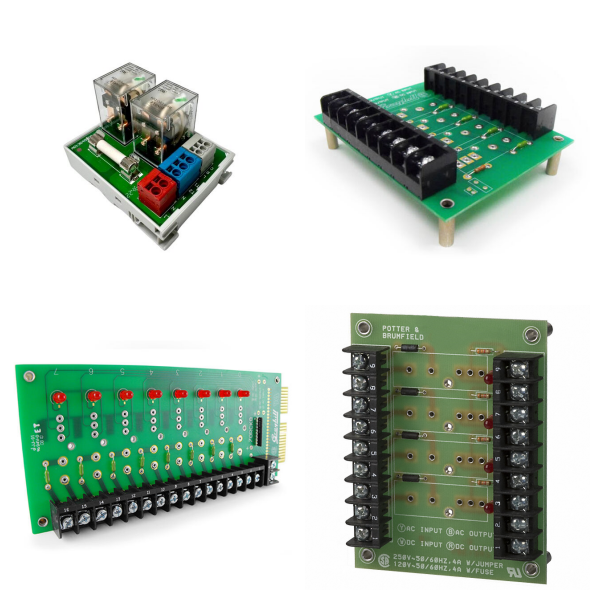
<h1> I/O Relay Module Racks </h1> <h2> 1. What are I/O Relay Module Racks? </h2> <p> An I/O relay module is an electrically controlled switching device that uses an electromagnetic coil to actuate contacts to switch circuits on and off. Its core function is to convert low-current signals into high-current load control. It is commonly used in automation systems, industrial control, and embedded devices. </p> <p>   </p> <h2> 2. What are the Working Principles of I/O Relay Module Racks?   </h2> <p> <strong>Electromagnetic Induction Drive</strong>: When the coil is energized, it generates a magnetic field, attracting the armature, which drives the contacts, switching the circuit. </p> <p> Isolation: Some modules utilize optocoupler isolation (e.g., with an isolation voltage of 1500V) to enhance system safety. </p> <p>   </p> <h2> 3. What are the Typical Parameters of I/O Relay Module Racks? </h2> <p> <strong>Operating Voltage</strong>: Commonly available options include 5V/12V/24V DC. </p> <p> <strong>Load Capacity</strong>: Supports specifications such as 250V/10A. </p> <p> <strong>Triggering Mode</strong>: Supports dry contact and NPN inputs. </p> <p>   </p> <h2> 4. What are the Application Scenarios of I/O Relay Module Racks? </h2> <p> <strong>Industrial Automation</strong>: Used for PLC control and sensor signal switching. </p> <p> <strong>Communications</strong>: The modular design facilitates integration into systems such as switches and routers. </p> <p> <strong>Redundancy</strong>: Parallel operation or hot backup improves system reliability. </p> <p>   </p> <h2> 5. Modular Expansion of I/O Relay Module Racks </h2> <p> Supports series and parallel expansion to meet varying voltage and current requirements. </p> <p> Can be integrated with a cloud platform for remote monitoring, alarms, and data management. </p>
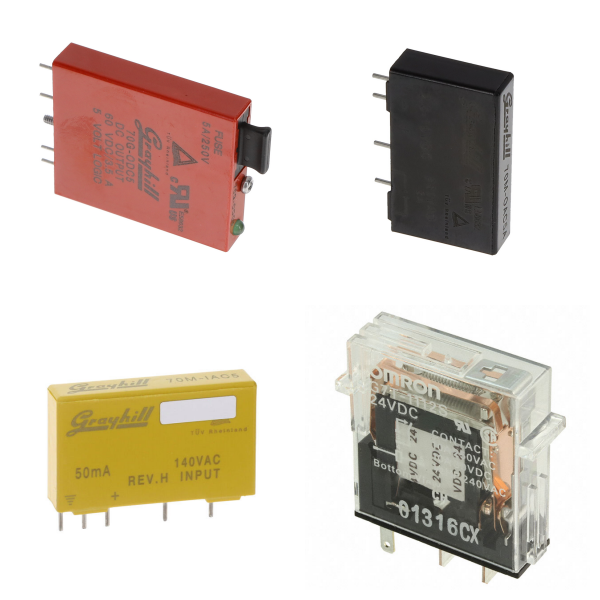
<h1> I/O Relay Modules </h1> <p> I/O Relay Modules (I/O Relay Modules) are core components of automation control systems, providing electrical isolation and signal conversion. Their core function is to switch high-power load circuits via low-power control circuits. Typical applications include industrial equipment control, security systems, and home automation. </p> <p>   </p> <h2> 1. What are the Key Features of I/O Relay Modules? </h2> <h3> 1) Electrical Isolation </h3> <p> Relay contacts separate the control circuit from the load circuit, protecting sensitive components from high voltage and current surges. </p> <p>   </p> <p> Insulation resistance is typically required to be at least tens of megohms to ensure circuit safety. </p> <p>   </p> <h3> 2) Module Types </h3> <p> <strong>Electromagnetic Relay Modules</strong>: Based on the principle of electromagnetic induction, they are suitable for general industrial applications, with an activation/release time of approximately a few milliseconds to tens of milliseconds. </p> <p>   </p> <p> <strong>Solid-State Relay Modules (SSRs)</strong>: Lack mechanical contacts, offering faster response times (as low as a few milliseconds), longer lifespan, and are suitable for high-frequency switching scenarios. </p> <p>   </p> <h3> 3) Performance Parameters </h3> <p> <strong>Load Capacity</strong>: For example, a 5V relay module can support a 250V/10A load, with a drive current as low as 5mA. </p> <p>   </p> <p> <strong>Operating Environment</strong>: Industrial-grade modules typically support a temperature range of -20°C to 70°C. </p> <p>   </p> <h2> 2. What are the Typical Applications of I/O Relay Modules? </h2> <p> <strong>Industrial Automation</strong>: Multiple modules are combined to implement complex logic control, such as motor start/stop and equipment interlocking. </p> <p>   </p> <p> <strong>Fault Protection</strong>: Power outages or alarms are triggered when a system anomaly occurs, ensuring operational safety. </p> <p>   </p> <p> Module selection requires a comprehensive evaluation based on load voltage/current, response speed, and environmental adaptability. For example, plug-in modules are suitable for manual maintenance, while surface-mount modules facilitate automated production. </p>
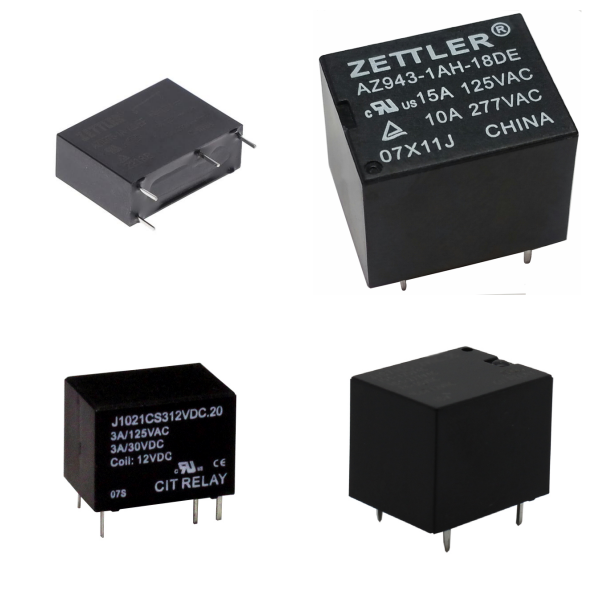
<h1> Power Relays, Over 2 Amps </h1> <h2> 1. What are Power Relays Over 2 Amps? </h2> <p> Power relays over 2 amps are electromechanical devices that use a small control signal to open or close large loads. They are used to protect circuits and equipment from overloads, short circuits, and other electrical problems. </p> <p>   </p> <h2> 2. How do Power Relays Work? </h2> <p> Power relays use an electromagnetic coil to seamlessly transfer power, opening or closing a circuit. These cost-effective relays consist of an armature, a spring, and one or more contacts. If the relay is set to normally open (NO), the electromagnet attracts the armature when power is applied. </p> <p>   </p> <h2> 3. What are the Types of Power Relays? </h2> <p> <strong>Electromagnetic Relays</strong> </p> <p> These are the most common types of relays used to switch circuits. They typically consist of an electromagnet, a spring, and a set of contacts. </p> <p>   </p> <p> <strong>Thermal Relays</strong> </p> <p> These devices rely on a thermal element (such as a bimetallic strip) to open or close a circuit. They are used in applications where high currents must be switched, such as in electric motors. </p> <p>   </p> <p> <strong>Solid State Relays</strong> </p> <p> These relays use semiconductors to open or close a circuit. They are often used in applications requiring fast switching speeds or high reliability. </p> <p>   </p> <p> <strong>Mercury Displacement Relays</strong> </p> <p> These relays use the displacement of mercury to open or close a circuit. They are often used for precise control. </p> <p>   </p> <p> <strong>Reed Relays</strong> </p> <p> These relays use a magnetized reed switch to connect or disconnect a circuit. They are often used in applications requiring low power. </p> <p>   </p> <h2> 4. What are Power Relays Used for? </h2> <p> A power relay is an electrical switch used to connect and disconnect circuits. It can be used to manage high-power circuits, control motors, and protect electrical equipment from overloads. It is commonly used in industrial, automotive, and household applications. </p>
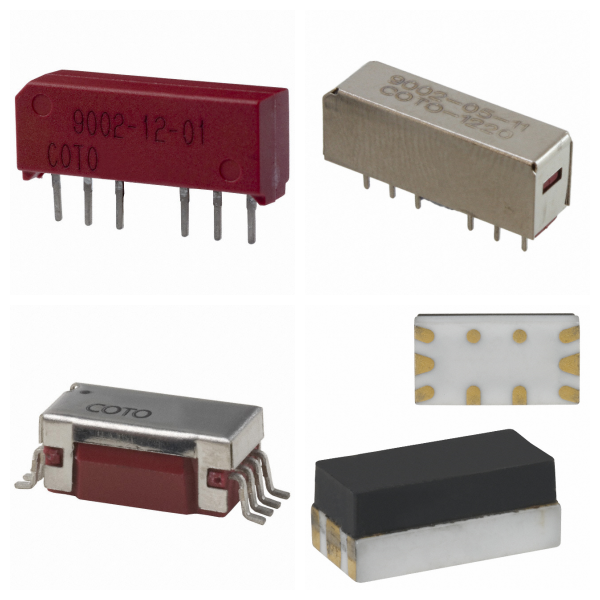
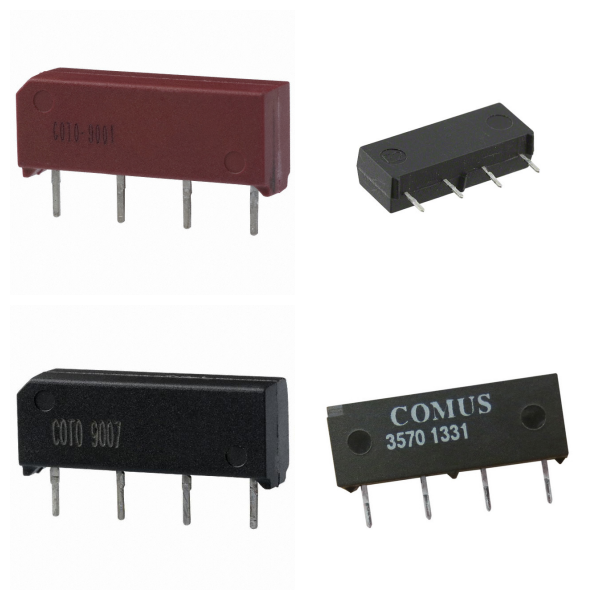
<h1> Reed Relays </h1> <h2> 1. What are the Working Principles of Reed Relays? </h2> <p> A reed relay uses an external magnetic field to control the closing of reed contacts within a sealed glass tube, thus switching the circuit on and off. Its core components consist of two reeds made of ferromagnetic material (typically nickel-iron alloy), encapsulated within a glass tube filled with an inert gas, forming either normally open or normally closed contacts. When the coil is energized, an axial magnetic field is generated, causing the reeds to close and conduct due to the ferromagnetic effect. When the magnetic field disappears, the reeds reset and open. </p> <p>   </p> <h2> 2. What are the Technical Advantages of Reed Relays? </h2> <p> <strong>Long Life</strong>: No mechanical wear, with a contact life of up to 108 cycles (typical); </p> <p>   </p> <p> <strong>Low Power Consumption</strong>: Drive power is typically less than 0.5W, making it suitable for battery-powered devices; </p> <p>   </p> <p> <strong>High Reliability</strong>: The fully sealed structure withstands harsh environments such as dust and moisture; </p> <p>   </p> <p> <strong>Fast Response</strong>: Actuation times can reach microseconds, making it suitable for high-frequency applications. </p> <p>   </p> <h2> 3. What are the Application Areas of Reed Relays? </h2> <p> Widely used in high-precision applications such as new energy vehicle circuit protection, industrial automation control systems, and medical equipment. They are also commonly found in communications equipment, test instruments, and smart home control modules. </p> <p>   </p> <h2> 4. Key Parameters and Selection Recommendations for Reed Relays </h2> <p> <strong>Magnetic Potential (AT)</strong>: Determines the product of the current and number of turns in the drive coil and must be matched to the contact load. </p> <p> <strong>Contact Type</strong>: Single-pole, single-throw (SPST, Form A) is the most reliable. </p> <p> <strong>Anti-interference Design</strong>: Magnetic field shielding or polarity alignment should be considered in dense layouts to prevent false operation. </p> <p>   </p> <h2> 5. Comparison with Other Relays </h2> <p> Compared to electromagnetic relays, reed relays offer faster response times and longer mechanical lifespans. However, solid-state relays (SSRs) offer advantages in contactless applications. </p>
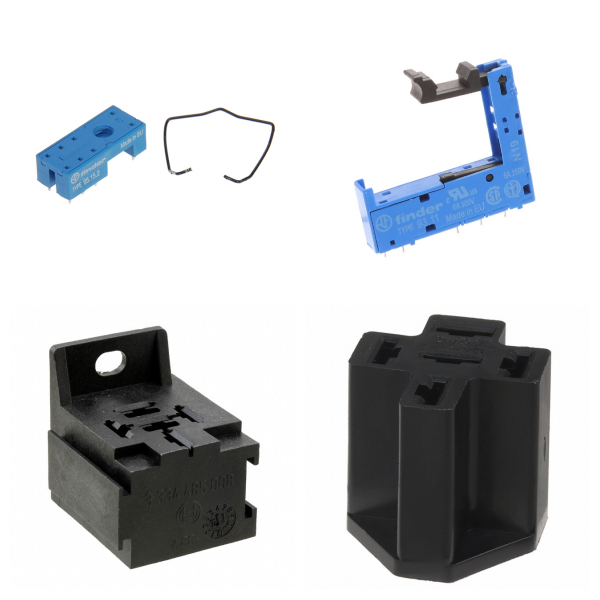
<h1> Relay Sockets </h1> <p> Relay sockets, as key connection components in electronic systems, provide standardized mounting interfaces for various relay types (such as PCB relays and power relays). Their core functions are to ensure signal transmission stability, simplify equipment maintenance, and provide electrical isolation protection. </p> <p>   </p> <h2> 1. What are the Core Features of Relay Sockets? </h2> <h3> 1) Modular Design </h3> <p> Supports both DIP and SMT mounting options, compatible with mainstream relay models (such as the Omron G5Q and Hongfa HF series); </p> <p> Gold-plated contacts, contact resistance ≤10mΩ, and a lifespan of 10,000 plug-in cycles. </p> <p>   </p> <h3> 2) Electrical Performance </h3> <p> <strong>Rated Voltage</strong>: 250V AC/30V DC. </p> <p> <strong>Current Capacity</strong>: 16A (UL certified). </p> <p> <strong>Insulation Withstand Voltage</strong>: 1500V/min. </p> <p>   </p> <h3> 3) Industrial-Grade Protection </h3> <p> Flame-retardant material (UL94 V-0 standard)。 </p> <p> Guide slots to prevent mis-insertion. </p> <p> Optional LED status indicator. </p> <p>   </p> <h2> 2. What are the Typical Applications of Relay Sockets? </h2> <p> Industrial Automation Control Cabinets </p> <p> New Energy Charging Stations </p> <p> Smart Home Hub Systems </p> <p> Medical Equipment Signal Switching </p> <p>   </p> <h2> 3. Selection Recommendations for Relay Sockets </h2> <p> Select the corresponding socket series based on relay size (e.g., 5mm/7mm pin pitch). Locking models are recommended for high-vibration environments. Products with IP65 protection are recommended for humid environments. </p>
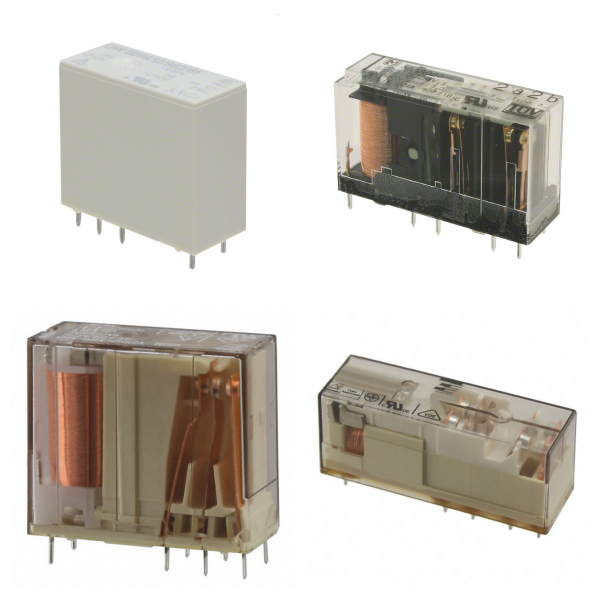
<h1> Safety Relays </h1> <p> Safety relays are crucial safety components in industrial automation and control systems, designed to safeguard personnel, equipment, and the production environment. Their core function is to monitor equipment operating status and immediately shut down hazardous sources when an anomaly is detected, complying with international safety standards such as ISO 13849-1 and IEC 62061. </p> <p>   </p> <h2> 1. What are the Core Features of Safety Relays? </h2> <p> <strong>Dual-channel Redundant Design</strong> </p> <p> Employs two independent contact circuits with a cross-interlock mechanism for fault self-detection, ensuring safety functionality even in the event of a single point of failure. </p> <p>   </p> <p> <strong>Forced-guided Contact Structure</strong> </p> <p> The mechanical structure prevents the normally open and normally closed contacts from closing simultaneously, preventing the risk of short circuits caused by accidental operation. </p> <p>   </p> <p> <strong>Fast Response Time</strong> </p> <p> Typical disconnection time is ≤20ms, meeting the millisecond-level protection requirements of emergency braking and other scenarios. </p> <p>   </p> <h2> 2. What are the Typical Application Scenarios of Safety Relays? </h2> <p> Machinery emergency stop systems (e.g., stamping machines, injection molding machines). </p> <p> Safety door interlocks (automated production lines). </p> <p> Optical grating/laser scanner signal processing. </p> <p>   </p> <h2> 3. Key Selection Parameters of Safety Relays </h2> <p> <strong>Contact Rating</strong>: Typically 5A-10A/250VAC </p> <p> <strong>Safety Level</strong>: SIL2/SIL3 or PLd/PLc </p> <p> <strong>Certification Standards</strong>: UL508/EN 60204-1 </p>
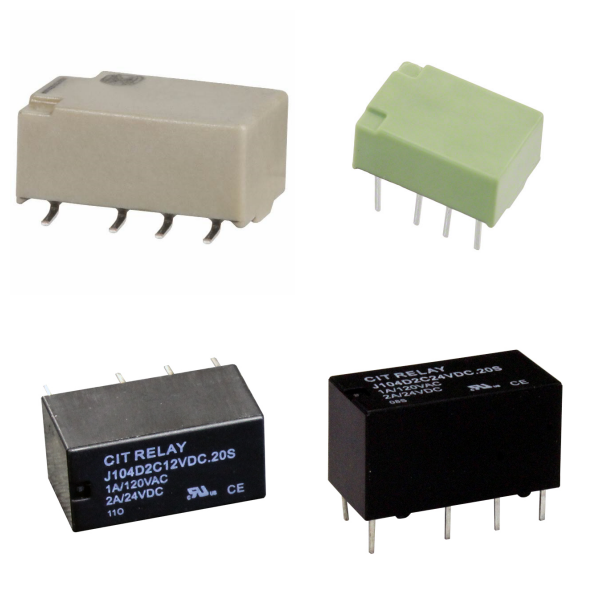
<h1> Signal Relays, Up to 2 Amps </h1> <h2> 1. What are Signal Relays Up to 2 Amps? </h2> <p> A signal relay up to 2 amps is an electromechanical device that uses a small control signal to turn large loads on or off. </p> <p>   </p> <h2> 2. How do Signal Relays Work? </h2> <p> A signal relay is an electromagnetic switch that triggers when there is a change in voltage or current. The relay consists of a coil, a movable armature, and a set of contacts. When the coil is energized, it generates a magnetic field that attracts the armature and closes the contacts. This allows an electrical signal to be transmitted from one circuit to another. When the current is removed, the armature is released, the contacts open, and the circuit is interrupted. </p> <p>   </p> <h2> 3. What are the Types of Signal Relays? </h2> <p> <strong>Signal relays come in various sizes, shapes, and configurations. The most common types are</strong>: </p> <p> DIP Relays </p> <p>   </p> <p> SIP Relays </p> <p>   </p> <p> SMT Relays </p> <p>   </p> <p> They are designed to fit a variety of standard sizes. Many signal relays also offer a variety of mounting options. </p> <p>   </p> <h2> 4. What are Signal Relays Used for? </h2> <p> Signal relays are used to switch between two different circuits and control the flow of power or current. Signal relays are crucial in the automation and control industries because they provide a method for power control without a direct connection to a power source. This feature is especially useful in applications where hazardous voltages are present. </p>
<h1> Solid State Relays (SSR) </h1> <h2> 1. What are Solid State Relays? </h2> <p> A solid state relay (SSR) is an electronic switching device that uses semiconductor components rather than mechanical contacts to control the switching of electrical loads. SSRs are suitable for applications requiring high-speed switching, such as industrial process control, medical equipment, and consumer electronics. They are particularly well-suited for applications requiring high reliability, such as aerospace, automotive, and other critical applications. </p> <p>   </p> <h2> 2. How do Solid State Relays Work? </h2> <p> Solid state relays operate based on a semiconductor switching device, such as a transistor or optoisolator, that is triggered by an input signal. When an input signal is applied to the relay, the semiconductor device is activated, switching the current through the relay on or off, thereby controlling the output load. The input signal can be AC or DC, depending on the relay type. The output load can be AC or DC, depending on the relay type. </p> <p>   </p> <h2> 3. What are the Types of Solid State Relays?  </h2> <p> AC Output SSR (AC Solid State Relay) </p> <p> DC Output SSR (DC Solid State Relay) </p> <p> Zero-Crossing SSR (ZC Solid State Relay) </p> <p> Random-Turn-On SSR (RT Solid State Relay) </p> <p> Opto-Coupler SSR (OC Solid State Relay) </p> <p> Single-Channel SSR (SC Solid State Relay) </p> <p> Dual-Channel SSR (DC Solid State Relay) </p> <p> Quad-Channel SSR (QC Solid State Relay) </p> <p>   </p> <h2> 4. What are Solid State Relays Used for? </h2> <p> Solid state relays are the semiconductor equivalent of electromechanical relays and can be used to control electrical loads. Solid state relays are fairly complex devices, but their purpose is simple—to activate a single output load when power is applied. </p>

Relays

1. Relays Overview

Relays are electronic switching devices that control the on and off of output circuits through input signals. They can realize the functions of controlling large currents with small currents, isolating strong and weak currents, and switching circuits. Its core functions include automatic adjustment, safety protection, and signal conversion, and are widely used in power systems, automation control, communication equipment, and other fields.

2. How Relays Work?

1) Structure Composition

Electromagnetic relay: It is composed of mechanical parts such as an iron core, coil, armature, and contact spring, and relies on electromagnetic effect to drive the contact action.

Solid-state relay (SSR): It has no mechanical parts and consists of three parts: input circuit (control signal), drive circuit (photoelectric coupling or high-frequency transformer isolation), and output circuit (semiconductor devices such as thyristor, MOSFET, etc.).

2) Working Principle

Electromagnetic type: When the coil is energized, a magnetic field is generated, which attracts the armature to drive the contacts to close or open, thereby realizing the on and off of the circuit.

‌Solid-state type‌: The input control signal is isolated by a photocoupler and then triggers the output semiconductor device to switch the load circuit in a contactless manner‌.

3. What are the Main Types of Relays?

1) ‌Classification by load properties‌

‌AC relay‌: The output end uses a bidirectional thyristor (Triac), which is suitable for AC loads‌.

‌DC relay‌: The output end uses MOSFET or IGBT to control DC loads‌.

2) ‌Classification by technical characteristics‌

‌Electromagnetic relay‌: Low cost, easy wear of contacts, suitable for low-frequency scenarios‌.

‌Solid-state relay (SSR)‌: No contacts, long life, fast response, suitable for high-frequency or high-reliability demand scenarios‌.

‌Thermal reed relay‌: Utilizes the temperature control characteristics of magnetic materials, has a coil-free design, and is suitable for temperature-sensitive scenarios‌.

4. What are Relays Used for?

‌Industrial automation‌: Control high-power equipment such as motors and heaters‌.

‌Power system‌: Realize overload protection, remote control, and signal isolation‌.

‌Automotive electronics‌: used for lighting control, battery management, and other modules.

‌Smart home‌: integrated into temperature control and security systems to achieve weak current control of strong current‌.

5. What are the Differences Between Electromagnetic Relay and SSR?

Characteristics

Electromagnetic relay

Solid-state relay (SSR)

‌Contact life‌‌

About 10⁵~10⁶ times (mechanical wear limit)

10⁷~10⁸ times (contactless design)

Response speed

Millisecond level (mechanical action delay)

Microsecond level (semiconductor device response)

‌Isolation method

Electromagnetic isolation

Photoelectric/high-frequency transformer isolation

‌Anti-interference ability

Weak (susceptible to arc)

Strong (no spark interference)

6. Typical Parameter Examples of Relays

Take model ‌34.51.7.012.0010‌ as an example:

√‌Coil voltage‌: 12VDC

√‌Contact capacity‌: 6A/400VAC (SPDT type)

√‌Response time‌: 5ms for pull-in, 3ms for release

√‌Working temperature‌: -40 °C ~ 85 °C‌.

7. How to Choose Relays?

‌Load Type‌: Prioritize matching of AC/DC load characteristics‌.

‌Environmental Conditions‌: Solid-state relays are preferred in high-temperature or vibration scenarios‌.

‌Life Requirements‌: Contactless SSRs are required for high-frequency operation‌.

8. Typical Brands for Relays

Panasonic

‌Omron relay

‌Schneider

HongFa

SIEMENS

CHNT

9. Relays FAQs

1) What is the Difference between Relay and Contactor?

‌Relay‌: Suitable for low power control (usually ≤10A), small size, mostly used in electronic circuits.

‌Contactor‌: Designed for high current (tens to hundreds of amperes), commonly used in industrial motor control.

2) ‌What are the Features of the Safety Relay? ‌

Larger in appearance, modular design, mostly red/yellow‌.

Adopt safety designs such as forced rail contacts to avoid failure caused by contact welding‌.

3) ‌How to Choose the Coil Voltage? ‌

Need to match the rated voltage range to avoid too high (damage to the coil at high temperature) or too low (cannot work properly). The magnetic latching relay needs to ensure that the excitation pulse width is sufficient to prevent entering the neutral state‌.

4) ‌How to Suppress the Reverse Peak Voltage When the Coil is Powered Off? ‌

Use transient suppression diodes or resistors, but it will extend the release time; if sensitive to the release time, you can balance it with a series resistor‌.

5) ‌What is the Effect of Contact Material on the Load? ‌

‌AgNi+gold Plating‌: Suitable for small loads (such as signal relays)‌.

‌AgSnO₂‌: Suitable for inductive/capacitive loads (inrush current can reach 120A)‌.