
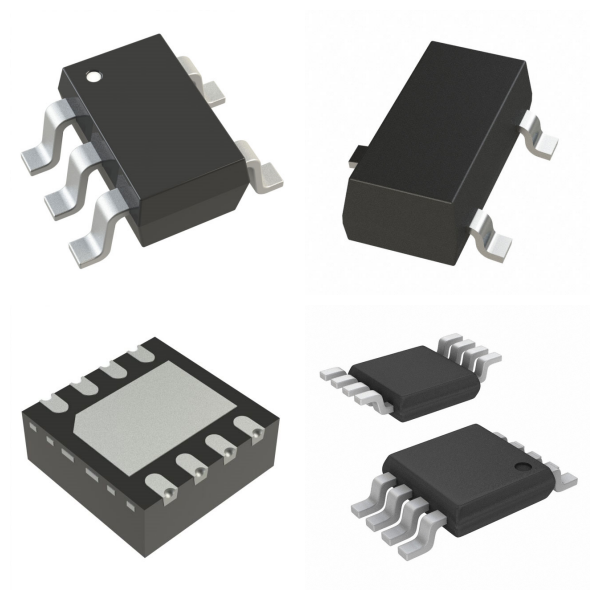
<h1> Analog and Digital Output </h1> <p> Analog and Digital Output Temperature Sensors are designed to measure the amount of ambient heat energy. The characteristics are sensor type, sensing temperature local, sensing temperature remote, output type, voltage supply, and resolution. The sensor types are analog local/remote/infrared, analog-digital, local/remote, digital local/remote/infrared, or internal, with a sensing temperature range of -55°C to 200°C. </p>
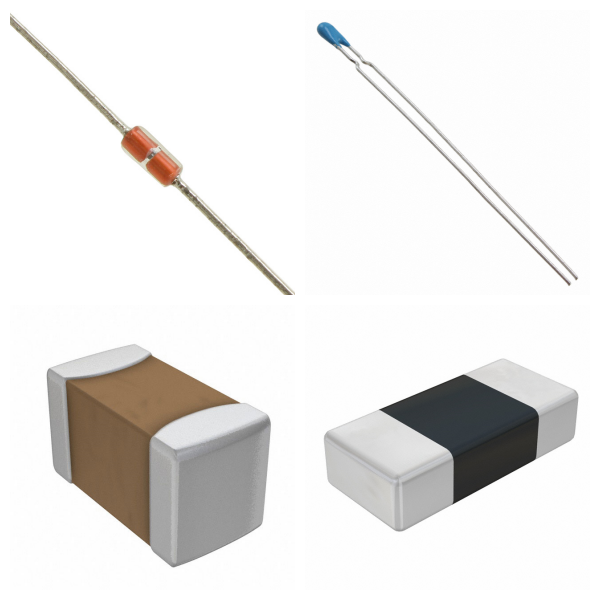
<h1> NTC Thermistors </h1> <p> NTC Thermistors, or Negative Temperature Coefficient Thermistors, are devices that change resistance in response to changes in temperature. With negative coefficient parts, their resistance decreases as their temperature increases. They are typically defined with variables such as the parts base resistance value at a set temperature, usually 25°C, and B values, the performance curve of temperature vs. resistance calibrated between two fixed points. </p>
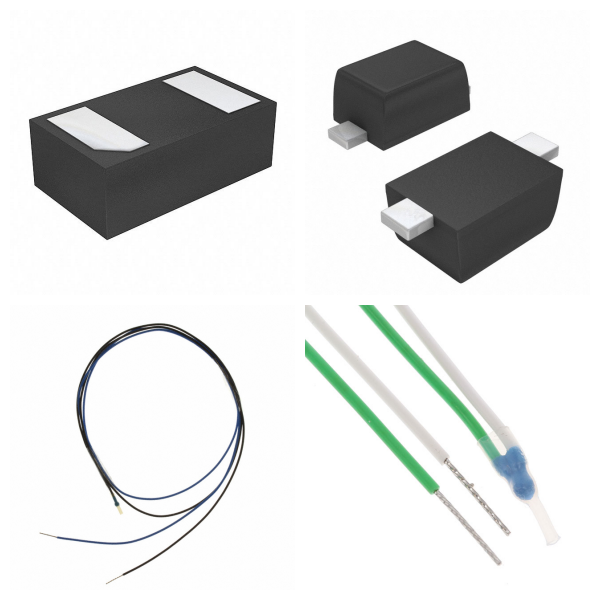
<h1> PTC Thermistors </h1> <p> Positive Temperature Coefficient (PTC) thermistor temperature sensors are devices that exhibit an increase in resistance in response to an increase in temperature. Thermistors produce an output signal that is relatively large and easy to measure compared to many other temperature sensor types, though their characteristics tend to be less stable and less suitable for precise temperature measurements. PTC thermistors in particular are often adapted for over-temperature detection applications, and often exhibit a distinctly nonlinear temperature-resistance relationship that makes them useful for detection of an imprecise "high" temperature condition, though poor for making accurate measurements. </p>
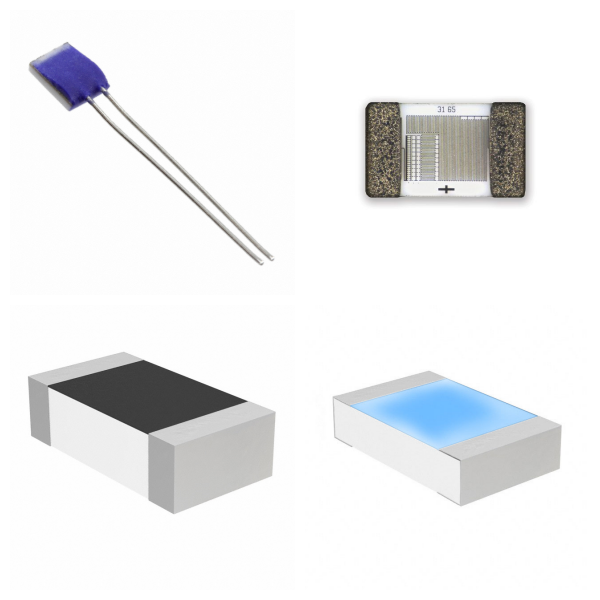
<h1> RTD (Resistance Temperature Detector) </h1> <p> RTD (resistance temperature detector) temperature sensors are devices that change their resistance relative to changes in temperature. The specific metals used in RTD devices show a known change in resistance as the temperature fluctuates. These are available in a range of resistance values from 10 to 1.85K ohms and each has a range of resistance tolerances to consider. They can be free-hanging, panel mount, chassis mount, surface mount, or through-hole. </p>
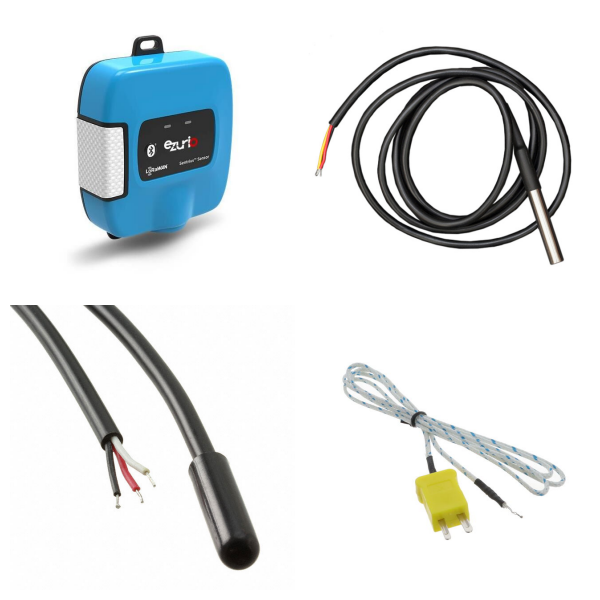
<h1> Thermocouples, Temperature Probes </h1> <p> Thermocouples, fundamental temperature measurement components, convert temperature differences into voltage signals through the Seebeck effect. Temperature probes integrate sensors and protective structures, enabling wide-range sensing from -200°C to 2300°C. Together, these two product types form the temperature sensing layer for industrial automation, scientific research, and equipment monitoring. </p> <p> </p> <h2> 1. What are the Technical Features of Thermocouples, Temperature Probes? </h2> <p> <strong>Thermocouple Types</strong>: K-type (nickel-chromium-nickel-silicon), J-type (iron-copper-nickel), and T-type (copper-copper-nickel), adapting to various oxidizing environments and temperature ranges. </p> <p> </p> <p> <strong>Probe Construction</strong>: Stainless steel sheath, ceramic insulation, explosion-proof design, meeting IP67 protection rating. </p> <p> <strong> </strong> </p> <p> <strong>Response Speed</strong>: Available in multiple ranges, from milliseconds (bare-wire type) to minutes (immersion probe). </p> <p> </p> <h2> 2. What are the Typical Application Scenarios of Thermocouples, Temperature Probes? </h2> <p> <strong>Industrial Process Control</strong>: Furnace temperature closed-loop control, injection molding machine mold temperature monitoring. </p> <p> </p> <p> <strong>Energy Equipment</strong>: Gas turbine exhaust temperature measurement, battery pack thermal management. </p> <p> </p> <p> <strong>Scientific Research</strong>: Material phase change research, low-temperature physics experiments. </p> <p> </p> <h2> 3. Selection Guide for Thermocouples, Temperature Probes </h2> <table> <tbody> <tr class="firstRow"> <td width="121" valign="top" style="padding: 0px 7px; border-width: 1px; border-color: windowtext; background: rgb(190, 190, 190);"> <p> Parameters </p> </td> <td width="214" valign="top" style="padding: 0px 7px; border-width: 1px; border-color: windowtext; background: rgb(190, 190, 190);"> <p> Thermocouple </p> </td> <td width="234" valign="top" style="padding: 0px 7px; border-width: 1px; border-color: windowtext; background: rgb(190, 190, 190);"> <p> Temperature Probe </p> </td> </tr> <tr style="height:31px"> <td width="121" valign="top" style="padding: 0px 7px; border-left-width: 1px; border-left-color: windowtext; border-right-width: 1px; border-right-color: windowtext; border-top: none; border-bottom-width: 1px; border-bottom-color: windowtext;"> <p> Accuracy </p> </td> <td width="214" valign="top" style="padding: 0px 7px; border-left-width: 1px; border-left-color: windowtext; border-right-width: 1px; border-right-color: windowtext; border-top: none; border-bottom-width: 1px; border-bottom-color: windowtext;"> <p> ±1.5°C or ±0.4% </p> </td> <td width="234" valign="top" style="padding: 0px 7px; border-left-width: 1px; border-left-color: windowtext; border-right-width: 1px; border-right-color: windowtext; border-top: none; border-bottom-width: 1px; border-bottom-color: windowtext;"> <p> ±0.3°C (High Accuracy) </p> </td> </tr> <tr> <td width="121" valign="top" style="padding: 0px 7px; border-left-width: 1px; border-left-color: windowtext; border-right-width: 1px; border-right-color: windowtext; border-top: none; border-bottom-width: 1px; border-bottom-color: windowtext;"> <p> Lifespan </p> </td> <td width="214" valign="top" style="padding: 0px 7px; border-left-width: 1px; border-left-color: windowtext; border-right-width: 1px; border-right-color: windowtext; border-top: none; border-bottom-width: 1px; border-bottom-color: windowtext;"> <p> 2000 hours (High Temperature Environment) </p> </td> <td width="234" valign="top" style="padding: 0px 7px; border-left-width: 1px; border-left-color: windowtext; border-right-width: 1px; border-right-color: windowtext; border-top: none; border-bottom-width: 1px; border-bottom-color: windowtext;"> <p> 5000 hours (Standard) </p> </td> </tr> <tr style="height:38px"> <td width="121" valign="top" style="padding: 0px 7px; border-left-width: 1px; border-left-color: windowtext; border-right-width: 1px; border-right-color: windowtext; border-top: none; border-bottom-width: 1px; border-bottom-color: windowtext;"> <p> Signal Output </p> </td> <td width="214" valign="top" style="padding: 0px 7px; border-left-width: 1px; border-left-color: windowtext; border-right-width: 1px; border-right-color: windowtext; border-top: none; border-bottom-width: 1px; border-bottom-color: windowtext;"> <p> mV-level raw signal </p> </td> <td width="234" valign="top" style="padding: 0px 7px; border-left-width: 1px; border-left-color: windowtext; border-right-width: 1px; border-right-color: windowtext; border-top: none; border-bottom-width: 1px; border-bottom-color: windowtext;"> <p> 4-20mA/RTD integrated output </p> </td> </tr> </tbody> </table> <p> </p> <h2> 4. Cutting-Edge Technology of Thermocouples, Temperature Probes </h2> <p> <strong>Wireless Smart Probe</strong>: Supports the LoRaWAN protocol for distributed cloud-based temperature monitoring. </p> <p> </p> <p> <strong>Combined Sensor</strong>: Integrates multi-parameter detection for temperature, pressure, and vibration. </p> <p> </p> <p> <strong>Self-calibration Technology</strong>: Compensates for long-term drift errors using AI algorithms. </p>
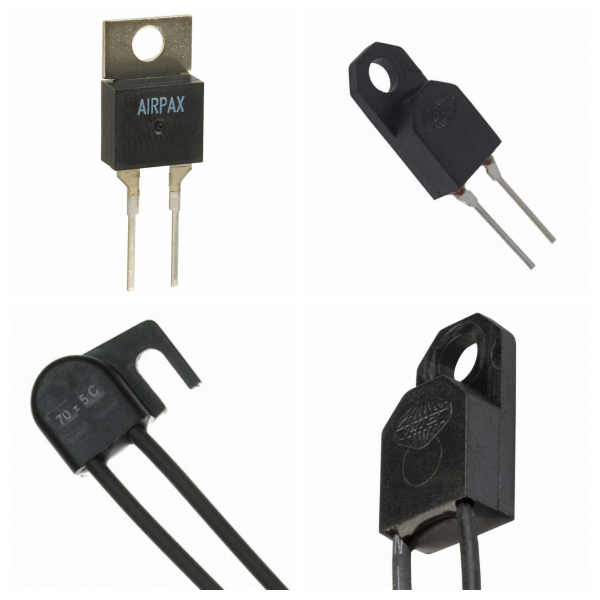
<h1> Thermostats - Mechanical </h1> <p> Mechanical Thermostats are designed to keep components safe in situations where there is an excessive amount of temperature. Components in this family will open or close a circuit that they are installed in when the Switching temperature (Adjustable, 14°F to 500°F) of the device is exceeded. The Reset temperature ranges are Manual Reset, One Shot, and 20°F to 440°F with Current ratings of 0.045 A to 25 A. </p>
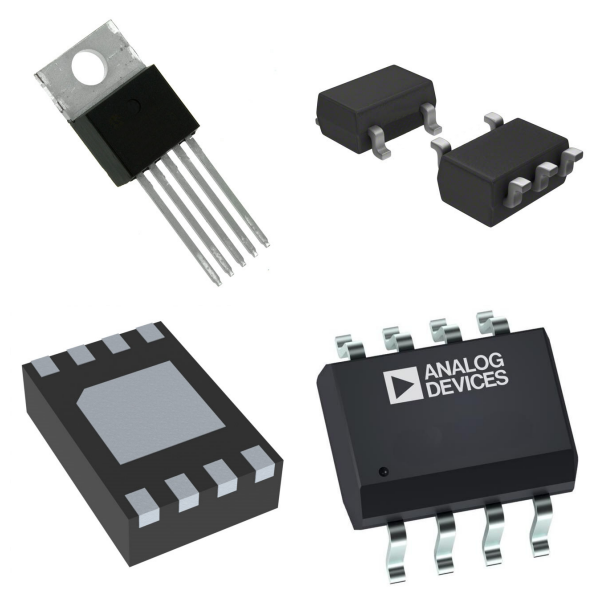
<h1> Thermostats - Solid State </h1> <p> Solid state thermostat products are semiconductor-based temperature detection devices that produce a two-state output, the state of which changes in response to the measured temperature exceeding a fixed limit or falling outside a defined window. Devices with pre-set threshold temperatures as well as programmable/configurable thresholds are available. </p>
Temperature Sensors
Temperature Sensors are devices that detect hot or cool temperatures and convert the findings into an electrical signal relative to the detection. Types include analog and digital output, industrial analog and digital output, NTC thermistors, PTC thermistors, resistance temperature detectors (RTDs), thermocouples, temperatures probes, thermostats (mechanical, industrial mechanical, solid state), and more.