
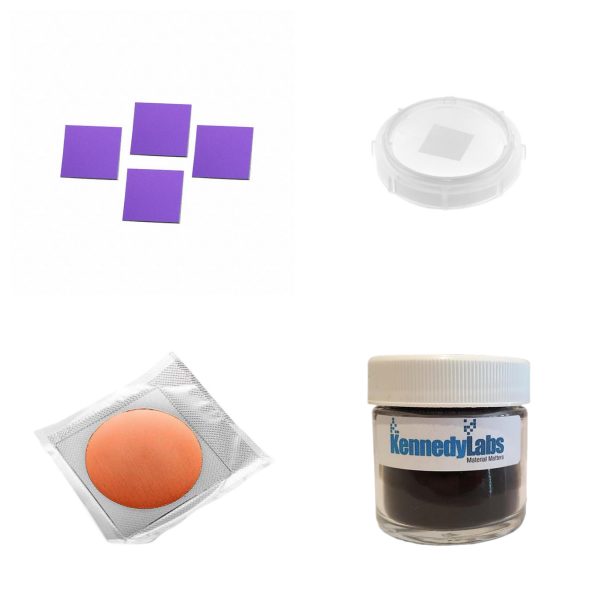
<h1> 2D Materials </h1> <p> Two dimensional materials are thin sheets and powders made from graphene. Graphene film is a strong candidate for the replacement of indium tin oxide, a commercial product used extensively as a transparent conductor. It is used in touchscreens and smartphones and as an electrode in solar cells and OLEDs. Graphene is available as a film, ink, nanoplatelets, oxide beads, oxide paste, and oxide powder. </p>
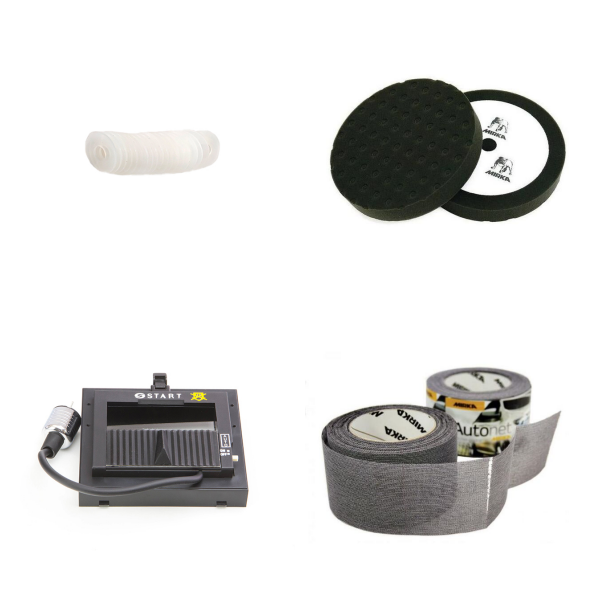
<h1> Accessories </h1> <p> Supplementary items used with other devices in this category. </p> <p>
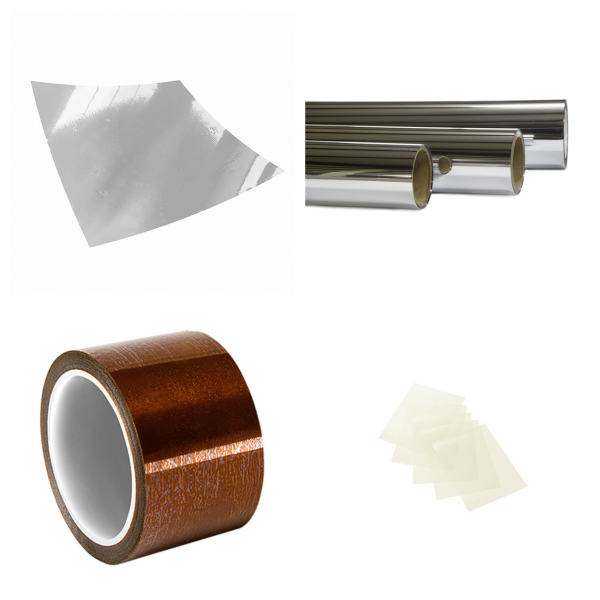
<h1> Films </h1> <p> The Films range in size from 0.13” (3.18mm) to 18.00” (457.20mm) in width and 0.50” (12.70mm) to 75’ (22.9m) in length. The types of films include infrared blocking film, prismatic remote sensing target, radiant light film, safety window film, specular film, and transparent conductive film. </p>

<h1> Glue, Adhesives, Applicators </h1> <p> Products within the glue, adhesive, and applicator product family include a variety of general-purpose and specialized bonding and sealing agents, such as hot-melt and spray adhesives, thread lockers, potting compounds, superglues, epoxies, and sealants. Applicator tools within this product family are those which are integrated into the packaging of adhesive products, or sold with the adhesive materials in kit form. </p>
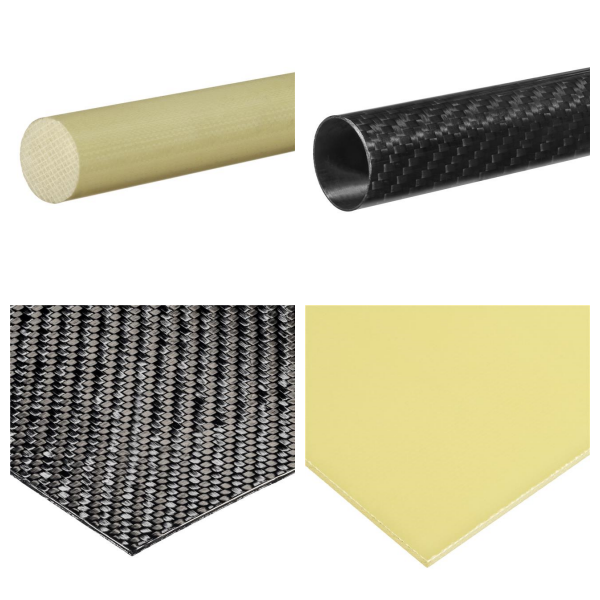
<h1> Raw Materials - Composites </h1> <h2> 1. What are the Basic Components of Composite Materials? </h2> <p> <strong>Resin Matrix</strong>: This includes thermosetting resins (such as unsaturated polyesters and epoxy resins) and thermoplastic resins (such as Dow Chemical's Fulcrum products). Thermosetting resins dominate electronic substrates (such as PCBs) due to their low cost and excellent performance. </p> <p> </p> <p> <strong>Reinforcing Fiber</strong>: These fibers, such as glass fiber, provide mechanical strength and dimensional stability and are commonly used in the manufacture of copper foil substrates (such as FR-4). </p> <p> </p> <p> <strong>Additives</strong>: Fillers reduce costs (such as boron nitride insulators), flame retardants enhance safety, and release agents improve processing efficiency. </p> <p> </p> <h2> 2. What are the Applications of Composite Materials? </h2> <p> <strong>Printed Circuit Boards (PCBs)</strong>: Resin compositions serve as substrate materials, protecting circuits and ensuring insulation. Copper foil substrates achieve electrical conductivity through a composite of copper foil and resin. </p> <p> </p> <p> <strong>Semiconductor Encapsulation</strong>: Resins are used to secure chips and require a low coefficient of thermal expansion and high heat resistance (such as polyimide resins). </p> <p> </p> <p> <strong>High-Temperature Insulation</strong>: Boron nitride insulators, for example, can withstand temperatures exceeding 2000°C and are suitable for use in extreme environments. </p> <p> </p> <h2> 3. Industry Trends and Challenges of Composite Materials </h2> <p> <strong>Thermoplastic vs. Thermoset</strong>: Thermoplastic resins are gaining attention due to their recycling advantages, but their high cost and processing difficulties limit their widespread adoption. </p> <p> </p> <p> <strong>Environmental Requirements</strong>: The development of new, low-toxic resins, such as halogen-free flame-retardant materials, is being promoted. </p>

<h1> Raw Materials - Felt </h1> <p> Although felt itself is not an electronic component, it can be used as an auxiliary material for the following purposes: </p> <p> </p> <p> <strong>1) Protection and Insulation</strong>: It acts as a cushion or buffer layer in electronic devices to protect components from vibration and wear. </p> <p> </p> <p> <strong>2) Process Support</strong>: For example, it is used for cleaning or polishing in circuit board manufacturing. </p>
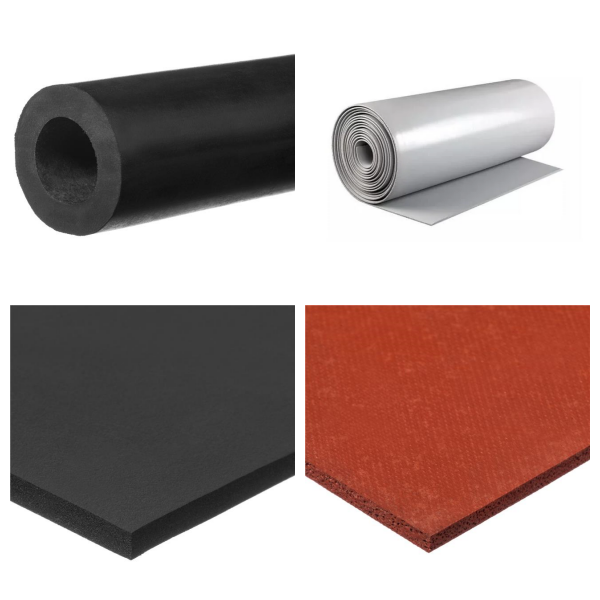
<h1> Raw Materials - Foam </h1> <p> Foam materials (such as polyurethane and polypropylene carbonate) offer low density, high specific strength, low thermal conductivity, and excellent sound insulation, making them suitable for cushioning, insulation, and lightweighting requirements in electronic components. For example, polypropylene carbonate (PPC) is an emerging choice for electronic foam materials due to its environmental friendliness and high impact resistance. Foam materials are commonly used in chip packaging, circuit board protection, and consumer electronics (such as smartphone foam bonding). </p>

<h1> Raw Materials - Graphite </h1> <h3> 1) Material Properties </h3> <p> <strong>Crystal Structure</strong>: Hexagonal layered structure, resulting in excellent electrical conductivity (resistivity 0.5-5×10⁻⁶ Ω·m) and thermal conductivity (300-1500 W/m·K in the direction parallel to the layers). </p> <p> </p> <p> <strong>Chemical Stability</strong>: High-temperature resistance (sublimation point 3650°C), corrosion resistance, and stable performance in an inert environment. </p> <p> </p> <p> <strong>Mechanical Properties</strong>: Soft texture (Mohs hardness 1-2), yet strong interlayer bonding, allowing for processing into high-purity thin sheets. </p> <p> </p> <h3> 2) Key Applications </h3> <p> <strong>Electrode Materials</strong>: Lithium battery anodes (energy density ≥350 mAh/g), fuel cell bipolar plates. </p> <p> </p> <p> <strong>Heat Dissipation Components</strong>: Highly thermally conductive graphite film (perpendicular thermal conductivity 800-1800 W/m·K) for chip cooling. </p> <p> </p> <p> <strong>Conductive Fillers</strong>: Conductive inks for flexible circuit boards, antistatic packaging materials. </p>
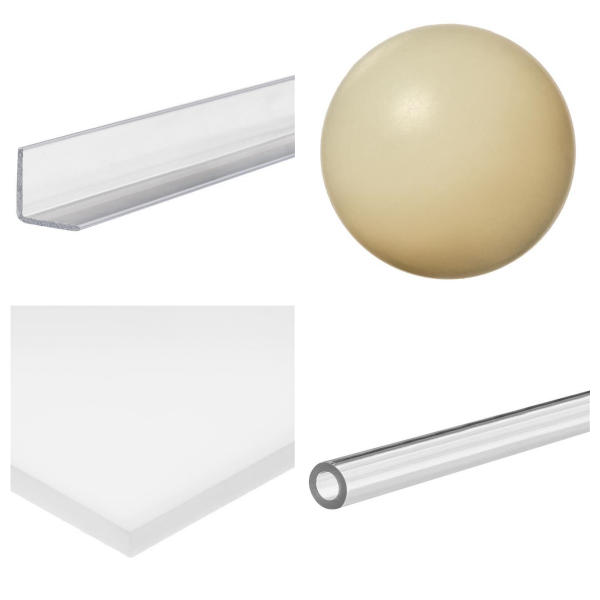
<h1> Raw Materials - Plastics </h1> <h3> 1) Core Functions </h3> <p> Provides signal pathways, heat dissipation support, current connection, and mechanical protection for semiconductor chips, directly impacting the device's electrical, thermal, and mechanical performance and reliability. </p> <p> </p> <p> <strong>Four major functions</strong>: signal input/output, heat dissipation, current conduction, and environmental protection. </p> <p> </p> <h3> 2) Engineering Plastic Requirements </h3> <p> <strong>Electrical Properties</strong>: High resistivity and low dielectric constant (e.g., high-frequency connectors require low dielectric loss). </p> <p> </p> <p> <strong>Flame Retardancy</strong>: Must comply with safety certifications (e.g., UL94 V-0), with halogen-free flame retardant materials preferred to balance performance and environmental friendliness. </p> <p> </p> <p> <strong>Mechanical Properties</strong>: Strength and toughness must be tailored to the product structure (e.g., housings require impact resistance, gears require wear resistance). </p> <p> </p> <h3> 3) Common Materials </h3> <p> <strong>General-purpose Plastics</strong>: ABS (high impact strength), PP (chemical resistance). </p> <p> </p> <p> <strong>High-Performance Engineering Plastics</strong>: PC (optical lenses), POM (precision gears), PPS (high-temperature sensors). </p> <p> </p> <h3> 4) Typical Applications </h3> <p> flexible electronic substrates (polyimide), circuit board adhesive layers (epoxy resin), and electronic housings (ABS/PC). </p>
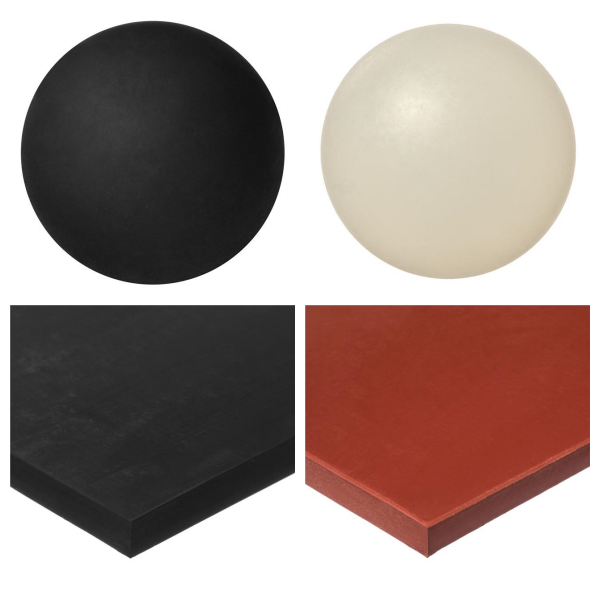
<h1> Raw Materials - Rubber </h1> <h3> 1) Material Properties </h3> <p> As a key material in electronic packaging, rubber must possess excellent electrical insulation, weather resistance, and sealing properties. It is often used to protect semiconductor chips from environmental damage (such as moisture and chemicals). </p> <p> </p> <h3> 2) Application Scenarios </h3> <p> Plastic encapsulation of electronic components (such as integrated circuits) replaces traditional ceramic/metal packaging, reducing costs and accommodating automated production. </p> <p> </p> <p> Automotive electronic components (such as seals and cable sheaths) require high-temperature resistance, oil resistance, and mechanical stability. </p>
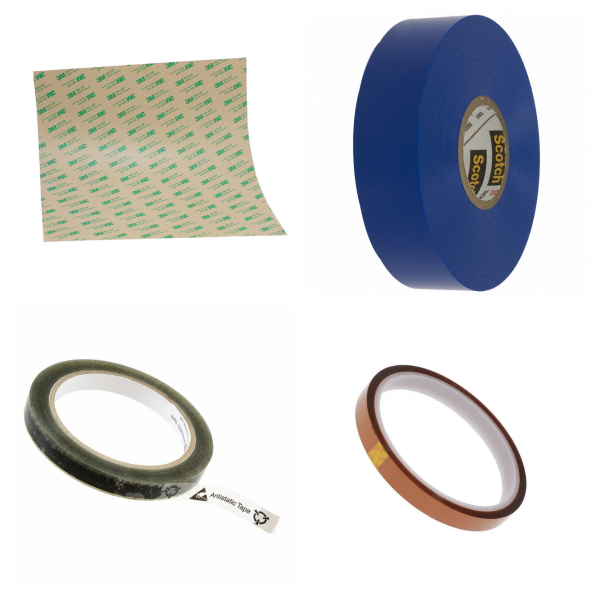
<h1> Tape </h1> <p> Tape is a material that has adhesive on one or two sides and is used to make a bond between two or more items. Tape should be selected based on the type of material being bonded and the required bond strength. Tape is classified by the type (antistatic, electrical, duct, etc.), the adhesive (acrylic, epoxy, polymer, rubber, etc.) , the backing (acrylic, aluminum, paper, etc.), size, and its usage. </p>
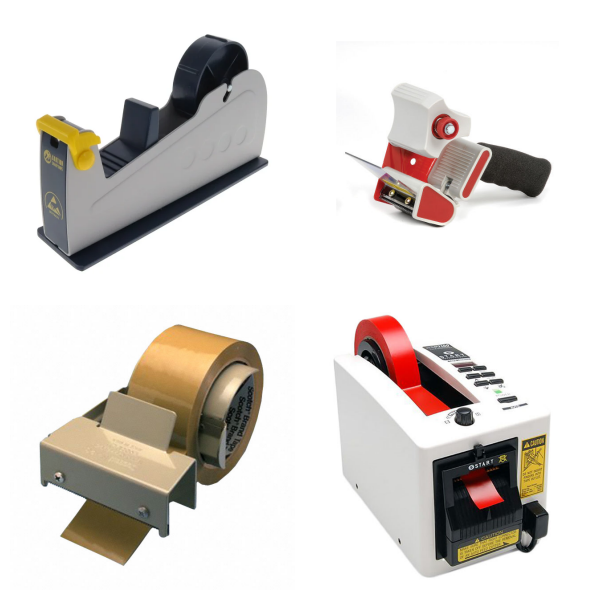
<h1> Tape Dispensers </h1> <p> Tape Dispensers are devices that are used to hold and cut adhesive tape for home, office or industrial uses. Tape dispensers can be handheld or desk mount for a range of tape sizes ranging from 0.75 inches to 8 inches in width. Special features such as antistatic construction, hand breaks, multiple rolls per dispenser, or knifes are available. </p>
Tapes, Adhesives, Materials
Products in this category include tapes, adhesives, and material products other than those used for thermal interface or RF shielding applications. In addition to single-layer graphene, specular reflective films, hot melt adhesives, potting adhesives, and similar products, there are dozens of tapes: adhesive transfer tapes, anti-static tapes, barricade tapes, duct tapes, electrical tapes, flame retardant tapes, magnetic tapes, reflective tapes, ventilation tapes, and more.