Conformal Coating vs. Potting: Choosing the Right Way
Printed Circuit Boards(PCBs) are the unseen backbone of nearly every electronic device, from the smallest consumer gadgets to robust industrial machinery. Their flawless operation is critical for the overall functionality and reliability of these devices. However, PCBs are inherently delicate and highly susceptible to a range of environmental hazards that can significantly shorten their lifespan and lead to costly failures.
Protecting these vital components from moisture, dust, chemicals, vibration, and extreme temperature stress is paramount for ensuring long-term reliability and extending product lifespan. Two prominent methods stand out in the realm of PCB protection: conformal coating and potting(also known as encapsulation). While both techniques aim to shield PCBs from environmental damage, they employ distinct approaches, offering unique advantages and limitations in terms of application, performance, maintenance, and cost.
This comprehensive guide will delve into the intricacies of conformal coating and potting, exploring their characteristics, materials, pros and cons, and ideal applications. By understanding the fundamental differences and specific benefits of each, you will be equipped to make an informed decision, selecting the optimal PCB protection method for your project’s unique needs and ensuring the durability of your electronic devices.
1. Understanding PCB Protection: Why It Matters
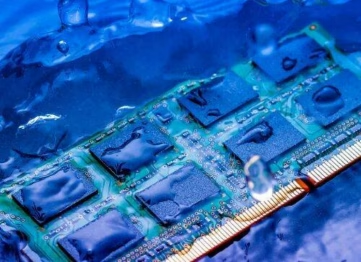
The operational environment of an electronic device dictates the level of protection required for its internal PCBs. Without adequate safeguarding, PCBs face numerous threats that can compromise their integrity and performance.
- Moisture and Humidity:Water vapor and liquid ingress can lead to corrosion, short circuits, and electrochemical migration, severely degrading circuit functionality. This is a primary concern for devices used outdoors or in humid climates.
- Dust and Debris:Particulate matter can accumulate on PCB surfaces, creating conductive pathways, hindering heat dissipation, and causing component failures.
- Chemical Exposure:Industrial environments, cleaning solvents, or even airborne pollutants can chemically attack PCB traces, solder joints, and components.
- Mechanical Stress:Shock, vibration, and impact can physically damage delicate components, break solder joints, or cause interconnections to fail. This is particularly critical in automotive, aerospace, or portable applications.
- Temperature Extremes:Rapid temperature cycling or prolonged exposure to very high or low temperatures can cause material expansion and contraction, leading to stress on components and solder fatigue.
Failure to protect PCBs against these factors directly translates to reduced product lifespan, increased warranty claims, and potential safety hazards. Implementing a robust protection strategy from the design phase is crucial for ensuring the long-term reliability and performance of modern electronic devices, ultimately enhancing customer satisfaction and brand reputation.
2. What is Conformal Coating?
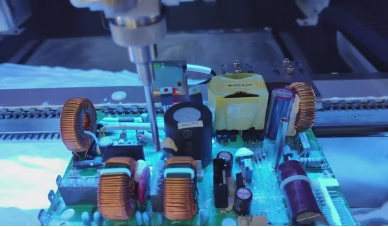
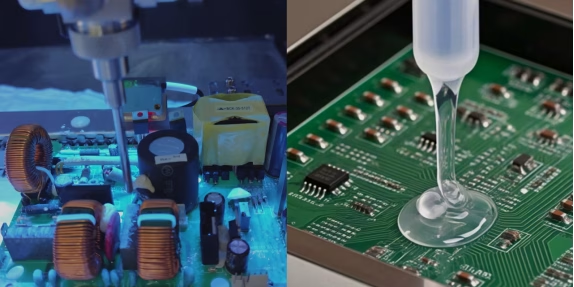
Conformal coating is a thin, protective polymeric film that “conforms” to the contours of an assembled PCB. It’s typically applied as a liquid and then cured, forming a lightweight barrier against environmental stressors. This method aims to provide electrical insulation and protection without significantly altering the board’s dimensions or weight.
2.1 Key Characteristics
- Thin Layer:Conformal coatings are applied in very thin layers, typically ranging from 25 to 250 microns(0.001-0.010 inches). This ensures minimal impact on board dimensions and weight, making it ideal for compact designs.
- Flexibility:Many conformal coatings remain flexible after curing, allowing them to withstand thermal expansion and contraction without cracking.
- Transparency:Most coatings are transparent, which permits visual inspection of components and markings after application.
- Reworkability:A significant advantage is that many conformal coatings can be removed or repaired, allowing for component replacement or circuit modifications.
- Lightweight:The thinness of the coating contributes to minimal added weight, crucial for applications where weight is a constraint, such as aerospace.
2.2 Common Materials
Various materials are used for conformal coatings, each offering a distinct set of properties:
- Acrylic(AR):Easy to apply and rework, good moisture resistance, but limited solvent resistance.
- Urethane(UR):Excellent abrasion and chemical resistance, good moisture protection, but more difficult to rework.
- Silicone(SR):Good moisture and chemical resistance, excellent flexibility, wide temperature range, but can be difficult to rework and offers limited abrasion resistance.
- Epoxy(ER):Very hard, excellent abrasion, chemical, and humidity resistance, but difficult to rework and less flexible.
- Parylene(XY):Applied via vapor deposition, providing an ultra-thin, pinhole-free, truly conformal layer with excellent dielectric properties and chemical resistance. It is non-reworkable in the traditional sense and requires specialized equipment.
2.3 Advantages & Disadvantages
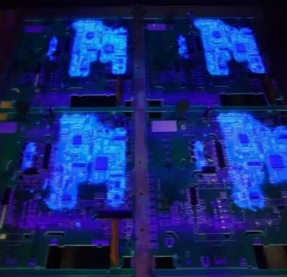
Advantages:
- Reworkability:Most types(except Parylene) can be removed for repair or modification.
- Lightweight and Minimal Bulk:Adds negligible weight and thickness, suitable for space-constrained designs.
- Cost-Effective:Generally less expensive per board than potting, especially for high-volume production.
- Heat Dissipation:The thin layer does not significantly impede heat dissipation from components.
- Good Dielectric Strength:Provides excellent electrical insulation.
Disadvantages:
- Limited Mechanical Protection:Offers moderate protection against physical shock and vibration compared to potting.
- Less Robust:Not ideal for extremely harsh environments with severe chemical exposure or constant abrasion.
- Coverage Challenges:Can be challenging to ensure complete coverage under low-standoff components or in complex geometries.
2.4 Ideal Applications
Conformal coatings are a preferred choice for electronics requiring moderate environmental protection and the potential for future rework. Common applications include:
- Consumer electronics(smartphones, laptops)
- Medical devices(less harsh environments)
- Aerospace(internal components)
- Industrial controls(controlled environments)
- Automotive electronics(inside the cabin)
3. What is Potting(Encapsulation)?
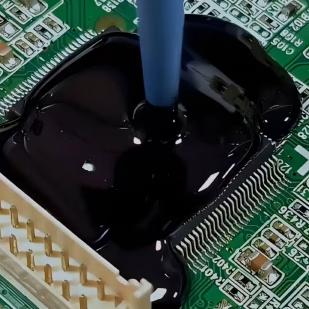
Potting, or encapsulation, involves completely immersing the PCB and its components in a liquid resin or compound that then cures to form a solid, protective block. This method creates a robust, often permanent, physical barrier around the entire assembly.
3.1 Key Characteristics
- Thick and Robust:Potting compounds typically fill an enclosure, creating a much thicker and more substantial protective layer than conformal coatings.
- Permanent Protection:Once cured, potting is generally irreversible, making rework extremely difficult or impossible.
- Weight and Bulk:Significantly adds to the weight and overall dimensions of the PCB assembly.
- Thermal Management:Potting compounds can affect thermal dissipation, potentially trapping heat if not properly engineered with thermally conductive materials.
- Tamper-Proofing:The hardened compound makes it difficult to reverse-engineer or tamper with the circuitry.
3.2 Common Materials
The choice of potting compound depends on the specific protection requirements:
- Epoxy:Known for its hardness, excellent adhesion, and superior chemical resistance. Offers very strong mechanical protection.
- Urethane:More flexible than epoxy, providing better shock and vibration absorption. Good for thermal cycling and impact resistance.
- Silicone:Offers the most flexibility and widest operating temperature range. Excellent for vibration dampening and moisture resistance, but typically softer than epoxies or urethanes.
3.3 Advantages & Disadvantages
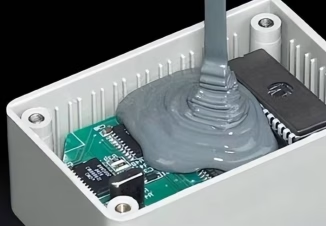
Advantages:
- Superior Mechanical Protection:Provides excellent resistance against physical shock, vibration, and impact.
- Harsh Environmental Resistance:Offers robust protection against moisture, chemicals, solvents, and extreme temperatures.
- Tamper-Proof:Makes reverse engineering or unauthorized access to the circuitry extremely challenging.
- Vibration Dampening:The bulk material helps to absorb and dissipate vibrational energy, protecting sensitive components.
- Dielectric Strength:Provides excellent electrical insulation and helps prevent arcing.
Disadvantages:
- Non-Reworkable:Once applied and cured, components are virtually impossible to repair or replace without destroying the PCB.
- Adds Weight and Bulk:Significant increase in the overall size and weight of the electronic assembly.
- Heat Dissipation Issues:Can trap heat, requiring careful design and selection of thermally conductive potting compounds for power-intensive applications.
- Higher Cost:Generally more expensive due to material volume and application complexity.
- Exothermic Reaction:Some potting compounds generate heat during curing, which can potentially damage sensitive components if not managed properly.
3.4 Ideal Applications
Potting is best suited for electronics that operate in extremely harsh and demanding environments where maximum durability and protection are paramount, and rework is not anticipated. Applications include:
- Automotive electronics(under the hood, engine control units)
- Industrial control systems and sensors(exposed to chemicals, vibration)
- Marine electronics(saltwater exposure)
- Military and aerospace(ruggedized systems)
- Outdoor LED lighting and signage
- High-voltage power supplies
4. Conformal Coating vs. Potting: A Direct Comparison
Choosing between conformal coating and potting hinges on a detailed evaluation of several critical factors. The following comparison highlights their differences across key performance metrics, application considerations, and cost implications.
| Feature | Conformal Coating | Potting(Encapsulation) |
| Thickness | 25-250 microns(thin film) | Several millimeters to centimeters(fills enclosure) |
| Weight Added | Minimal | Significant |
| Mechanical Protection | Moderate(abrasion, light impact) | Excellent(heavy shock, vibration, impact) |
| Environmental Protection | Good(moisture, dust, mild chemicals) | Superior(harsh moisture, chemicals, solvents, salt spray) |
| Reworkability | Generally easy(removable for repair, except Parylene) | Extremely difficult to impossible(destructive) |
| Heat Dissipation | Minimal impact, allows airflow | Can impede; requires thermally conductive compounds |
| Tamper Resistance | Low | High |
| Application Method | Spray, dip, brush, selective coating(Parylene: vapor deposition) | Dispensing into an enclosure, then curing |
| Typical Materials | Acrylic, Urethane, Silicone, Epoxy, Parylene | Epoxy, Urethane, Silicone |
| Cost(per unit) | Lower | Higher |
4.1 Performance Metrics
In terms of sheer protective strength, potting generally outperforms conformal coating. Potting compounds create a solid , impenetrable block that offers superior resistance to extreme mechanical stresses like heavy shock and constant vibration, and provides excellent barriers against corrosive chemicals, saltwater, and high-pressure water ingress. Conformal coatings, while effective, offer moderate protection suitable for less aggressive environments. Their thin film nature means they might not withstand severe physical impacts or highly corrosive chemical baths as effectively as a thick potted enclosure.
4.2 Application & Rework Considerations
Application methods also differ significantly. Conformal coatings can be applied via spraying, dipping, brushing, or selective coating machines, allowing for relatively fast and precise application. Parylene, a special type of conformal coating, uses a vacuum deposition process. Potting involves mixing two-part compounds and dispensing them into a housing that contains the PCB, followed by a curing process that can be time-consuming and sometimes exothermic. The most crucial distinction lies in reworkability: conformal coatings, excluding Parylene, can often be removed or burned through for component replacement or repairs, preserving the board’s serviceability. Potting, conversely, creates a permanent seal, making any form of rework virtually impossible without destroying the entire assembly. This makes initial quality and design robustness critical for potted systems.
4.3 Cost Implications
The cost difference between the two methods can be substantial. Conformal coating is typically the more cost-effective option per PCB, primarily due to the lower material volume required and often simpler, faster application processes. Potting, on the other hand, involves a higher material volume, the need for an enclosure or housing, and potentially more specialized dispensing equipment. The higher cost is justified when the superior durability and tamper-proofing of potting are essential for the product’s intended application and long-term reliability in harsh conditions. However, the cost of potential rework must also be factored in, as failed potted units are usually scrapped, whereas coated units might be salvaged.
5. Choosing the Right Protection Method
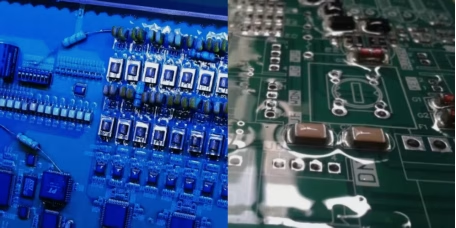
The decision between conformal coating and potting is not a matter of which is inherently “better”, but rather which method is more appropriate for the specific application. A careful evaluation of environmental conditions, functional requirements, and economic factors will guide the optimal choice.
5.1 Factors to Consider
1) Environmental Severity:
- Mild to Moderate:If the PCB will face typical indoor conditions, light moisture, dust, or minor vibrations(e.g., consumer electronics, office equipment), conformal coating typically suffices.
- Harsh to Extreme:For exposure to severe vibration, heavy impact, corrosive chemicals, saltwater, deep-sea pressures, or extreme temperatures(e.g., automotive under-hood, industrial machinery, military hardware), potting offers the necessary robust protection.
2) Rework and Repair Needs:
- Required/Expected:If future repairs, component replacement, or design modifications are anticipated or desired, conformal coating’ s reworkability is a significant advantage.
- Not Expected/Impossible:If the product is designed for a “fit and forget” philosophy, or if security/tamper-proofing is paramount, potting is suitable.
3) Weight and Space Constraints:
- Compact/Lightweight:For applications sensitive to size and weight(e.g., drones, wearables, portable medical devices), conformal coating is the clear choice due to its thin, lightweight film.
- Less Critical:If added bulk and weight are acceptable, potting can be considered.
4) Thermal Management:
- High Power/Heat Generation:Conformal coatings allow better heat dissipation due to their thinness and potential for air circulation. If potting is chosen, ensure the use of thermally conductive potting compounds and careful thermal design.
- Low Power/Low Heat:Heat dissipation is less of a concern, making potting more viable.
5) Budget and Production Volume:
- Cost-Sensitive/High Volume:Conformal coating often offers a lower cost per unit, especially in high-volume production, due to less material usage and faster application.
- Higher Protection Justifies Cost:Potting involves higher material costs and potentially more complex application, but its superior protection can prevent costly field failures in critical applications, justifying the initial investment.
6) Regulatory Compliance and Lifespan: Consider any industry-specific standards for environmental protection(e.g., automotive, medical) and the desired operational lifespan of the product. These factors can heavily influence the choice of protection method to ensure long-term reliability and compliance.
Ultimately, the decision requires a holistic understanding of the product’s life cycle, from manufacturing and assembly to end-use environment and potential servicing. Engaging with experienced PCB manufacturers and coating/potting material suppliers can provide invaluable insights for making the optimal choice.
6. Conformal Coating and Potting FAQs
7. Summary
Protecting Printed Circuit Boards from environmental hazards is critical for the longevity and reliability of electronic devices. Conformal coating and potting(encapsulation) are the two primary methods employed, each with distinct characteristics and applications. Conformal coating involves applying a thin, lightweight, and often rework able polymeric film, ideal for moderate protection in space-constrained or repairable designs. It offers good resistance against moisture, dust, and mild chemicals, with materials like Acrylic, Urethane, Silicone, Epoxy, and Parylene.
Potting, conversely, encapsulates the entire PCB in a thick, robust compound, providing superior mechanical protection against severe shock, vibration, and extreme environmental elements like harsh chemicals and water immersion. While highly durable and tamper-proof, potting is generally permanent and non-reworkable, adds significant weight and bulk, and can impact heat dissipation. Common potting materials include Epoxy, Urethane, and Silicone.
The choice between these methods depends heavily on the specific operating environment’s severity, the need for future rework, constraints on size and weight, thermal management requirements, and overall budget. Understanding these trade-offs is essential for selecting the optimal PCB protection strategy that ensures long-term reliability and extends the lifespan of electronic products in their intended applications.
Key Takeaways
- Conformal Coating is for Moderate Protection:Ideal for general environmental shielding and applications where reworkability and minimal weight are crucial.
- Potting Offers Extreme Durability:Best for PCBs exposed to severe mechanical stress, harsh chemicals, or extreme moisture, where a permanent, robust barrier is needed.
- Reworkability is a Major Differentiator:Conformal coatings(mostly) allow repairs, while potted PCBs are generally non-reworkable.
- Consider Environmental Severity First:The operational environment should be the primary driver for choosing between these two protection methods.
- Cost vs. Protection:Conformal coating is typically more cost-effective, but potting’s superior protection can prevent higher costs from field failures in critical applications.