
New title

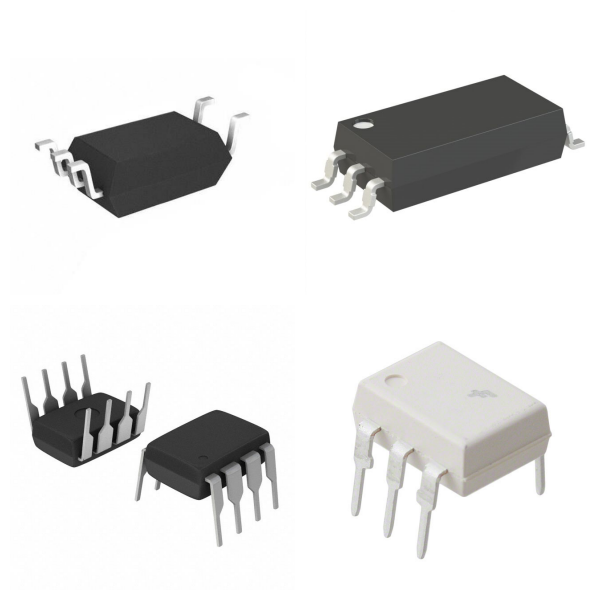
<h1> Logic Output Optoisolators </h1> <p> Logic output optoisolators are primarily used to transmit electrical signals between two independent circuits while providing electrical isolation, preventing direct current flow, and thus protecting sensitive circuits from damage caused by high voltage or noise interference. Their core function is to transmit logic-level signals (such as high or low) via optical signals, ensuring complete electrical isolation between the input and output terminals. This is crucial in systems that operate in different voltage domains. </p> <p>   </p> <h2> 1. What are the Working Principles and Structure of Logic Output Optoisolators? </h2> <p> <strong>Basic Structure</strong>: They consist of a light-emitting diode (LED) and a photodetector (such as a phototransistor). An input electrical signal drives the LED to emit a light signal of a specific wavelength, which is then transmitted through an isolation channel to the photodetector and converted into an output electrical signal. </p> <p> <strong>Signal Conversion Process</strong>: Current at the input terminal activates the LED to generate a light signal (electrical-to-optical conversion). The detector receives the light signal, generating a photocurrent, which is amplified and output as a stable logic level (optical-to-electrical conversion), completing the isolated transmission. </p> <p> <strong>Isolation Mechanism</strong>: The unidirectional transmission nature of optical signals prevents noise on the output side from coupling to the input, effectively blocking ground loops or voltage surges. </p> <p>   </p> <h2> 2. What are the Key Advantages of Logic Output Optoisolators? </h2> <p> <strong>High Reliability</strong>: Provides excellent response performance during low-frequency signal transmission, withstands rapid voltage changes, and prevents circuit damage from high-voltage surges. </p> <p> <strong>Strong Anti-Interference Capability</strong>: The low-impedance design at the input and optical isolation significantly suppress common-mode noise, improving the signal-to-noise ratio over long-distance transmission. </p> <p> <strong>Safety Isolation</strong>: Electrical isolation meets high-voltage application standards, protecting downstream low-voltage circuits, and is suitable for harsh environments. </p> <p>   </p> <h2> 3. What are the Typical Applications of Logic Output Optoisolators? </h2> <p> <strong>Industrial Automation</strong>: Used to isolate sensor and controller signals, preventing industrial noise from interfering with the logic level stability of control systems. </p> <p> <strong>Medical Equipment</strong>: Provides an electrical barrier in patient monitoring circuits, ensuring safe isolation between human contact parts and internal circuitry. </p> <p> <strong>Communication Systems</strong>: Serves as an isolation interface for digital signals, enhancing the reliability of data communications, such as in microprocessor logic level conversion. </p> <p>   </p> <p> Logic output optoisolators significantly improve the stability and safety of electronic devices through efficient optical-to-electrical conversion, making them an indispensable component of modern isolation technology. </p> <p>
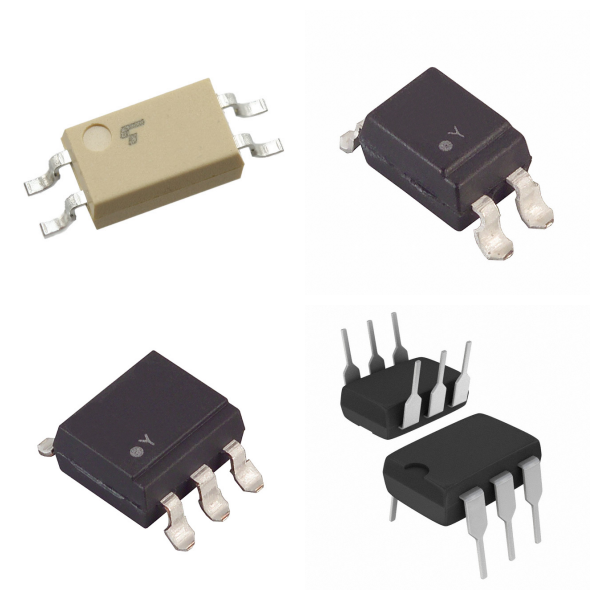
<h1> Transistor, Photovoltaic Output Optoisolators </h1> <p> Transistor or photovoltaic output optoisolators use light to transmit information across an electrical insulation barrier, usually for safety or functional reasons. They are distinguished from other optoisolator types by their use of a simple phototransistor or photovoltaic cell (solar cell) as an output device. The outputs of these devices do not require an external power source for operation and are analog in character, allowing their use for transmitting analog information between circuits which cannot be electrically connected. </p> <p>
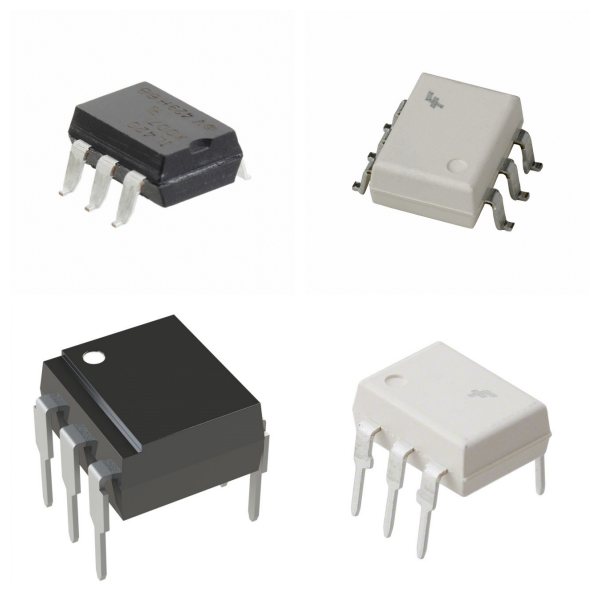
<h1> Triac, SCR Output Optoisolators </h1> <p> Triac and SCR output optoisolators allow bi-directional or unidirectional control of an AC (alternating current) source while providing isolation between the control and load circuits. An LED is optically coupled to a photodiode in a single device package. The photodiode controls the gate of the Triac or SCR and may include zero cross circuity. These optoisolators are selected by on-state current, forward voltage, turn on time, and mounting type. </p> <p>

Optoisolators

Optoisolators, also known as optocouplers or photocouplers, are electronic components that achieve electrical isolation based on optical signals. They use a combination of a light-emitting diode (LED) and a photosensor (such as a phototransistor or photodiode) to completely isolate the input circuit from the output circuit, allowing only one-way optical signal transmission, thereby preventing high voltage, noise, or interference from affecting the low-voltage system.


1. What are the Working Principles and Structure of Optoisolators?

Core Mechanism: When input current activates the LED, it emits infrared light. This light signal is transmitted through a transparent isolation layer to the photosensor, which converts the light energy into an electrical signal for output. This "electrical-optical-electrical" process ensures no direct electrical connection between the input and output circuits. The isolation resistance can exceed 10¹²Ω, effectively blocking transient interference up to 10kV.

Internal Structure: Typically enclosed in a light-tight housing, it contains an LED light source and a photosensor (such as a phototransistor or thyristor). The isolation layer is composed of air, glass, or plastic, enabling low-loss signal transmission (typical loss ≤ 0.2dB).


2. What are the Core Functions of Optoisolators? 

‌Electrical Isolation‌: Separates high-voltage and low-voltage circuits, preventing high-voltage leakage into the low-voltage side, protecting sensitive components (such as MCUs), and serving as a "safety gate" in switching power supplies, inverters, and medical devices.

‌Interference Immunity‌: The high internal resistance of interference sources prevents them from providing sufficient current to drive LEDs, blocking noise signals (such as electromagnetic interference) at the input, ensuring signal integrity and system reliability.

‌Signal Transmission‌: Supports digital and analog signal transmission. Current Transfer Ratio (CTR) is a key parameter (typical CTR is 20-30%), affecting response speed and stability. CTR decreases in high-temperature environments, requiring design margins.


3. What are the Advantages and Disadvantages of Optoisolators?

‌Advantages‌: High isolation (up to 63dB), fast response, compact size (miniaturized diameter 3-4mm), and suitable for wide operating temperatures (-20°C to +70°C).

Disadvantages: LED drive current is low, making them susceptible to low-power interference and requiring software noise filtering. Traditional devices rely on temperature control, but integrated approaches (such as magneto-optical photonic crystals) are addressing these size and dependency issues.


4. What are the Types of Optoisolators?

Common types include phototransistors (such as the 4N35, used for general signal isolation), Darlington diodes (with a CTR of up to 500%, amplifying weak signals), photothyristors (such as the MOC3071, controlling AC circuits), and optical isolators (specifically for use in the 1310nm-1550nm optical fiber communication band).


5. What are the Applications of Optoisolators?

Power Supply Isolation: Prevents power supply interference when input and output voltages are inconsistent, protecting circuit boards (such as modems and lightning arresters).

Communication Systems: Prevents optical feedback in optical fiber amplifiers and lasers, ensuring unidirectional transmission; and filters atmospheric interference in data transmission, such as in CAN buses.

Industrial Control: Isolates high dV/dt noise in inverters and PLC systems, reducing the error rate (case studies have shown this can be reduced to 0.3%).

Level Conversion: Enables passive conversion between 3.3V and 5V systems with microsecond latency.