
|
Images
|
Mfr.Part #
|
In Stock
|
Manufacturer
|
Description
|
Package
|
|---|
|
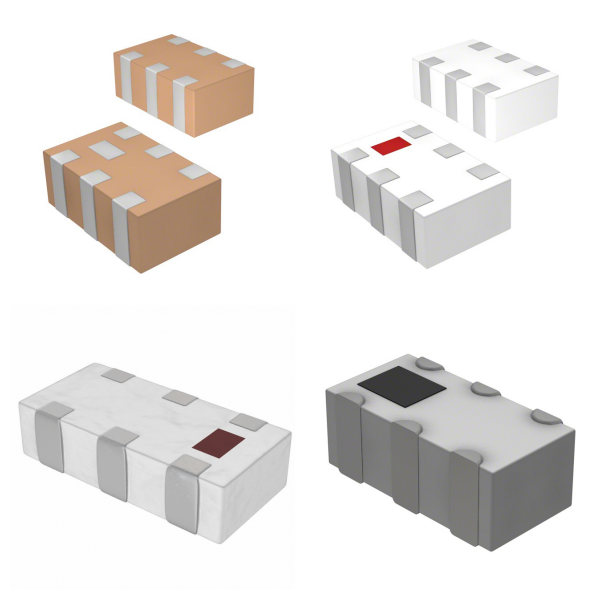
RFBLN1608060ACT | 9002 | Walsin Technology Corporation | BALUN | 0603 (1608 Metric), 6 PC Pad |

|
0900BL15D0050001E | 33294 | Johanson Technology Inc. | 900MHZ 1:2 BALUN | 0805 (2012 Metric), 6 PC Pad |
|
|
6750BL14A0050001T | 372324 | Johanson Technology Inc. | WIFI 6E WIFI 7 BALUN 1:1 | 0603 (1608 Metric), 6 PC Pad |
|
|
6750BL14A0100001T | 300348 | Johanson Technology Inc. | WIFI 6E WIFI 7 BALUN 1:2 | 0603 (1608 Metric), 6 PC Pad |
|
|
RFBLN2012090BM6T16 | 321279 | Walsin Technology Corporation | BALUN | Tape & Reel (TR) |
|
|
RFBLN2012090A9T | 324872 | Walsin Technology Corporation | BALUN | 0805 (2012 Metric), 6 PC Pad |
|
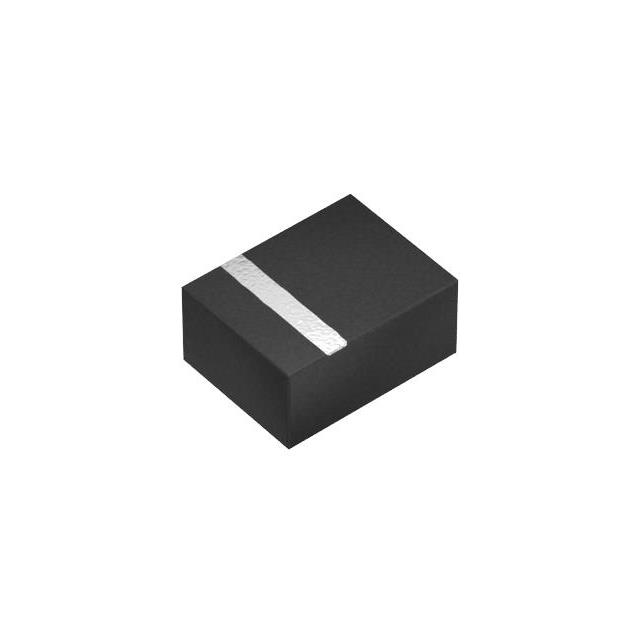
TFSZ06051897-3317A1X | 430860 | TDK Corporation | THIN-FILM BALUN FOR 1805-1990MHZ | 0202 (0505 Metric), 4 PC Pad |
|
|
RFBLN2520090YC3T10 | 448046 | Walsin Technology Corporation | BALUN | Tape & Reel (TR) |
|
|
TFSZ06050775-3338A1X | 243697 | TDK Corporation | THIN-FILM BALUN FOR 729-821MHZ ( | 0202 (0505 Metric), 4 PC Pad |
|
|
RFBLN1005040A1T | 124639 | Walsin Technology Corporation | BALUN | 0402 (1005 Metric), 4 PC Pad |

Balun
A balun is a three-port passive device designed for converting balanced and unbalanced signals. Its core functions include interface conversion between differential and single-ended signals, impedance matching, and common-mode noise suppression.
1. What are the Basic Functions of Balun?
Signal Conversion: Converts single-ended unbalanced signals (such as coaxial cables) to differential balanced signals (such as twisted pair cables), and vice versa.
Impedance Matching: Optimizes power transfer between circuits with different impedances by using specific impedance ratios (such as 1:1, 1:2, and 4:1).
Noise Suppression: Reduces common-mode interference through the common-mode rejection ratio (CMRR), improving the system's interference immunity.
2. What are the Key Performance Indicators of Balun?
Frequency Range: Determines the applicable operating frequency band for the balun.
Insertion Loss (IL): The power loss of the signal passing through the balun must be as low as possible.
Amplitude and Phase Balance: The amplitude difference and the degree to which the phase deviates from 180° in the differential output directly affect signal quality.
Common-Mode Rejection Ratio (CMRR): Measures the ability to reject common-mode signals.
3. What are the Common Types of Balun?
Flux-Coupled Transformer Balun: Achieves signal conversion through magnetic core coupling and is suitable for high-frequency circuits.
Transformer Balun: Uses independent coil windings to provide electrical isolation and is suitable for applications with grounding issues.
Transmission Line Balun: Uses windings of a transmission line to achieve impedance transformation and is commonly used in broadband applications.
4. What are the Typical Application Scenarios of Balun?
Communication Systems: RF front-end signal processing in mobile phones and routers.
RF Circuits: Signal adaptation between power amplifiers (PAs) and antennas.
Long-Distance Transmission: Interfaces between balanced transmission lines and unbalanced signal sources.
The design and selection of baluns must comprehensively consider factors such as frequency characteristics, impedance matching, and environmental noise to ensure optimal system performance.