What Is the Maximum Temperature That a Printed Circuit Board Can Withstand?
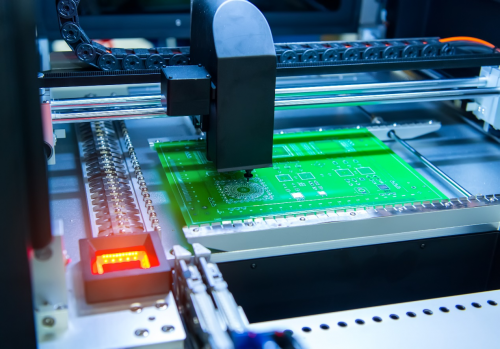
Printed Circuit Boards are a vital part of the electronic industry. They’re used in a wide range of electrical instruments and equipment.
Temperature resistance is one of the most important properties. What is the maximum temperature that aPCB board can withstand? Let’s have a closer inspection.
First, PCB Thermal Resistance
Temperature resistance of the Printed Circuit Board is the ability to resist cracking, deformation and
other phenomena in a high temperature environment. The temperature resistance of the circuit board is
therefore very important.
In normal conditions, the temperature resistance of PCB processing depends on many factors, such as the
material, manufacturing processes, circuit structure, etc. The material is the most important factor
that affects the temperature resistance.
Second, the Performance of Materials Commonly Used in PCB Boards with Respect to Temperature
Resistance.
1. FR-4 Material
FR-4, a glass-fiber reinforced epoxy material, is commonly used to manufacture PCBs. The temperature
resistance for FR-4 is typically around 130degC. Exceeding this temperature can cause the board to
deform or fail.
FR-4 materials have also been extensively used in high-end electrical industries and have been
thoroughly tested through long-term use. FR-4 materials are not suitable for high-temperature
application due to their temperature resistance.
2. FR-4 High Temperature Material
High-temperature FR-4, a glass-fiber-reinforced epoxie material, is specially designed for environments
with high temperatures. High-temperature FR-4 has a better temperature resistance than FR-4 and can
withstand temperatures up to 150degC.
The high-temperature FR-4 has a high manufacturing cost, but its reliability is superior to the general
FR-4 in high-temperature conditions. This is why it is widely used in high-end electrical products.
3. Polyimide Is a Material That Can Be Used to Make a Variety of Products.
It is a high-performance material that has excellent properties such as high temperature resistance,
chemical resistance to corrosion, electromagnetic interference and others. It is one the best
high-temperature resistant materials available, capable of withstanding temperatures over 380degC. Very
few brands can even handle temperatures above 500degC.
Polyimide is mainly used for aerospace, military and high precision temperature measurement equipment.
Polyimide materials may be expensive, but their reliability is unmatched at high temperatures.
To summarize the resistance temperature of the PCB can reach 500degC, or even higher, depending on the
materials used. We use FR-4 and high-temperature FR-4 in general electrical equipment, including meters.
These materials can be used to meet the majority of application requirements. In some applications, like
aerospace, military and other industries, high-performance polyimide materials are required.
When selecting PCB materials, it’s important to choose the right material and the appropriate
temperature resistance according to the application. This will ensure the board is reliable and stable
in high-temperature environments.