Brittle Fracture of BGA Caused by Mechanical Shock
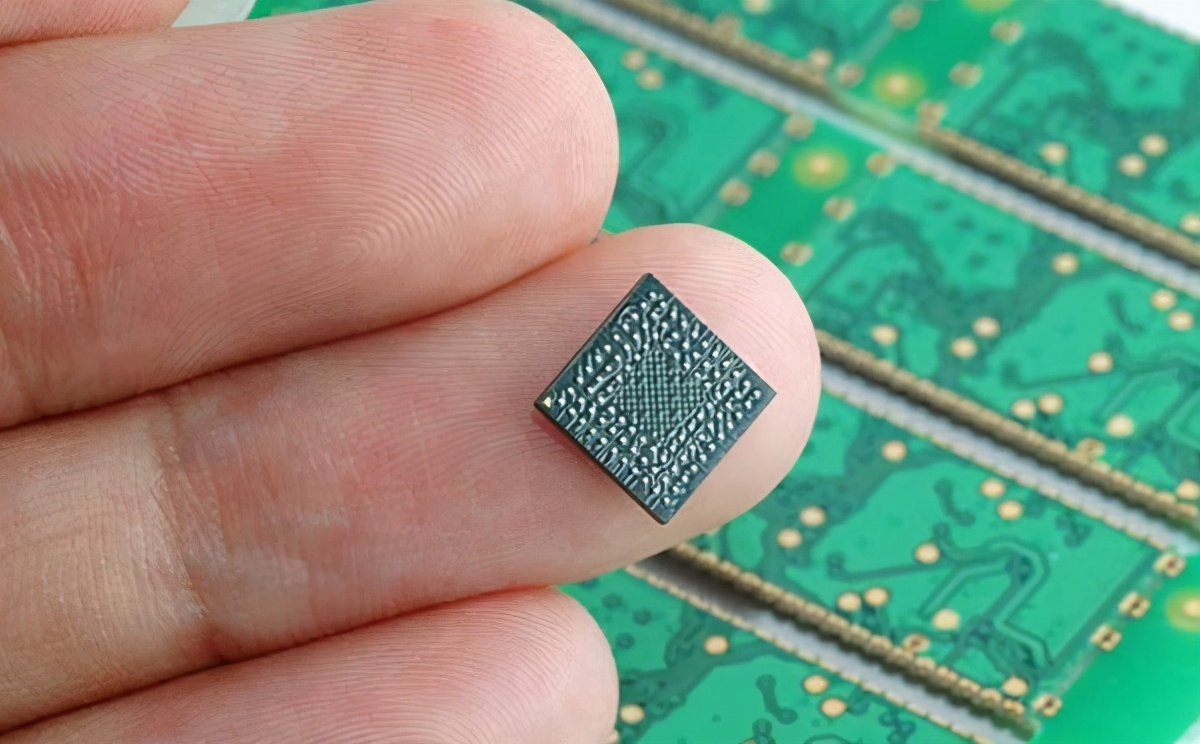
Lead-free solder has become increasingly popular in BGA packaging. This is especially true for portable
devices. When mechanically impacted, this packaging method is prone to brittle fracture failure between
the solder pad and the ball. It is unacceptable to have a brittle crack at the interface of the solder
ball with the bonding pad on the package substrate.
In principle, the reliability and durability of solder joints are determined by
board-level drops tests. However, this test has several flaws. Drop tests require many
solder joints and packages, which can result in significant costs. If the system is not equipped with
high-speed real-time data collection, it may be possible for cracks to close in the solder joints after
impact. This makes potential failures impossible to detect. The data analysis is also time-consuming,
and expensive. There is a need for an alternative method of evaluating solder joint strength under
mechanical shock loading conditions.
The study compares high-speed testing with board-level drops testing for BGA packages, using different
surface finishes and lead-free solder ball.
The study of BGA structures was conducted using a variety of combinations including solder alloys and
surface finishes. Also, different solder ball sizes were used. Typical test devices included 316 PBGA
structures (27 mm x27 mm), using Sn 4.0%/Ag 0.5 %/Cu (SAC 404), and various substrate surfaces including
electroless Nickel Immersion Gold (ENIG) or organic solderability preservers (OSP).
316 PBGA sample use standard 0.76 mm spheres. The package substrate is BT laminate of
thickness 0.36 mm. The mask layer defines the solder mask pad, which has an opening of 0.635mm. In a
hot-air convection reflow oven with a lead-free soldering temperature profile of 150degC+-2degC and a
maximum reflow of 260degC the solder balls will be attached to substrate.
The samples were separated into groups, and then thermally aged for a period of 125degC in order to
encourage the formation of intermetallic compounds (IMCs) at the interface between package substrate and
solder joint. High-speed ball tensile and shear tests are conducted at speeds ranging from 5 mm/s up to
500 mm/s. A high-speed test machine is used that has control and analysis software, as well as
next-generation force sensor technology. This allows the tester to evaluate the fracture energy of ball
in ball pull and shear tests.
The brittle fracture surfaces were analyzed after the drop test (Sn4.0%Ag0.5Cu+OSP aged for 500 hrs). In
the second part of this study, we performed board-level drops, measuring resistance, board strain and
fixture acceleration. To identify failed solder joint failure modes, a detailed analysis was conducted.
The failure modes and loading rates of the solder ball pullout and shear tests were compared to
mechanical drop tests. The energy absorption values obtained during the solder ball pull and shear tests
are also considered effective indicators to explain solder joint failure mode.
Thermal aging was used to accelerate the growth rate of IMC. The temperature of the treatment was set at
125degC, and the duration of the treatment varied between 100, 300 and 500 hours. After thermal aging
some PBGA with solder ball samples were shaped and cross-sectioned. They were then etched and inspected
by scanning electron microscope (SEM). BGA samples of the same type were assembled onto a test board,
and then dropped tested using a dual rail guide. Some board-level samples were also subjected to thermal
aging, as mentioned above. All samples are daisy chained for real time data collection.
SEM analysis of two complementary surfaces that failed in brittle fractures during shear and strain test
specimens revealed striking similarity to fracture interfaces produced by board-level drop tests and
high-speed tension and shear testing. The results indicate that the brittle fracture observed in
high-speed bonds is a good indicator of board level drop test behavior. The current work has a notable
feature: the direct comparison between the physics of high-speed bonding tests and board-level drops.

Drop Test
The test boards used for the board-level drops tests were made with pad geometries that are defined by
either solder mask or non-solder-mask. The pad diameter in both cases was 0.684mm and soldered. SMD has
the advantage that it can correlate board-level drop tests fractures, which are more likely to happen on
the package side. It is important to note that shear/pull tests of solder balls can only be used to
evaluate fractures on the component side as they are not connected with the PCB. The drop test revealed
brittle cracks on the surface of the solder joints.
The summary of test board assembly results for the drop test (8 components/data point) shows the thermal
aging caused the OSP substrate surface to degrade quicker than the OSP substrate surface with ENIG
coated.
Bond Testing at High Speed
Orinew Technology SMT processing: Brittle failures of ENIG surfaces finish specimens
typically occurred between the IMC layers and Ni layers. Brittle fracture failures were observed for the
OSP specimens that had not been aged and reflowed twice between the Cu 6 Sn5 IMC layer and the Cu Layer.
After heat aging, brittle fracture failure occurred between the Cu 3 Sn IMC and Cu 6 Sn IMC phases. As
shown in Figure 2, brittle fractures appeared on the surface solder joints that were subjected
high-speed pull and shear tests.
There has been limited cross-sectional evidence in previous evaluations of high speed solder ball pull
and shear tests. The fracture patterns were similar to those observed on board-level drop-test
assemblies. It is partly due to the difficulty of conducting such studies. This includes obtaining
individual sheared and pulled balls, matching them with corresponding pads, and completing subsequent
cross-sectional analysis.
Direct Correlation
The correlations between board-level drop tests and high-speed test parameters were strong, in addition
to microstructural correlations. These graphs are a result of the complex mathematical correlations
between the results of the solder ball drop and shear/pull tests. They relate the percentages for
brittle fractures in the shear/pull solder balls to the drop-to-failure test conditions. The graphs were
derived from plotting each drop value against the data equivalent to the shear/pull test and performing
a power-law curve fit. Each curve represents a solder ball pull or shear test speed.