Unlock Efficiency: The Automated PCBA Assembler
Introduction: The Dawn of Automated PCBA
In the rapidly evolving world of electronics manufacturing, the demand for faster, more reliable, and cost-effective production of Printed Circuit Board Assemblies (PCBAs) has never been higher. Manual assembly processes, once the industry standard, are now largely confined to niche applications, making way for the transformative power of the automated PCBA assembler. These sophisticated systems are not just about speed; they represent a paradigm shift in how electronic components are brought to life, ensuring unparalleled precision and efficiency.
This article delves into the intricate world of automated PCBA, exploring the technologies that drive it, the profound benefits it offers, and its critical role in shaping the future of electronics. From high-speed component placement to AI-driven quality control, understanding automated PCBA is essential for anyone looking to optimize manufacturing processes and stay competitive in the digital age.
What is Automated PCBA Assembly?
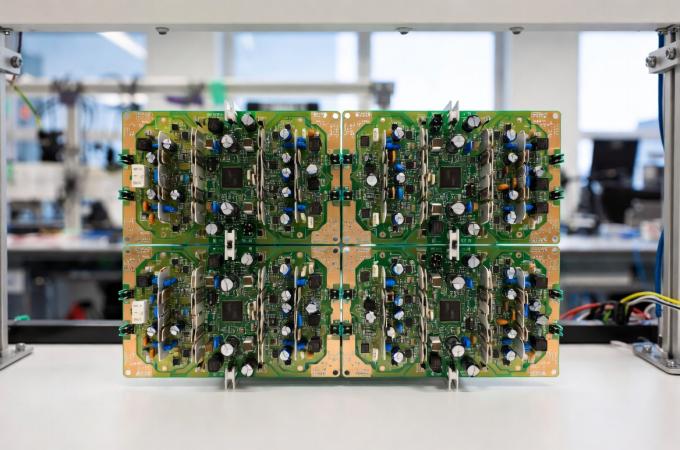
Automated PCBA assembly is a sophisticated process that leverages advanced machines and robotic systems to meticulously place and solder electronic components onto printed circuit boards. This method stands in stark contrast to manual PCB assembly, which relies on human operators using handheld tools for component placement and soldering. The manual approach is inherently slower, less precise, and significantly more labor-intensive, rendering it impractical for the high-volume, high-complexity demands of modern electronics manufacturing.
At its core, automated assembly minimizes human intervention, thereby reducing the potential for human error and dramatically increasing throughput. It’s a cornerstone of modern electronics production, enabling manufacturers to meet stringent quality standards and accelerate time-to-market. The goal is a repeatable, scalable process that adapts to evolving design complexities, ensuring error rates below 0.1% in high-volume production, as noted by Andwin Circuits.
The Core Technologies of Automated PCBA
The efficiency of an automated PCBA assembler is built upon an integrated suite of advanced technologies, each playing a crucial role in the production chain. These systems work in concert to transform bare PCBs into fully functional electronic assemblies.
High-Speed Pick-and-Place Machines
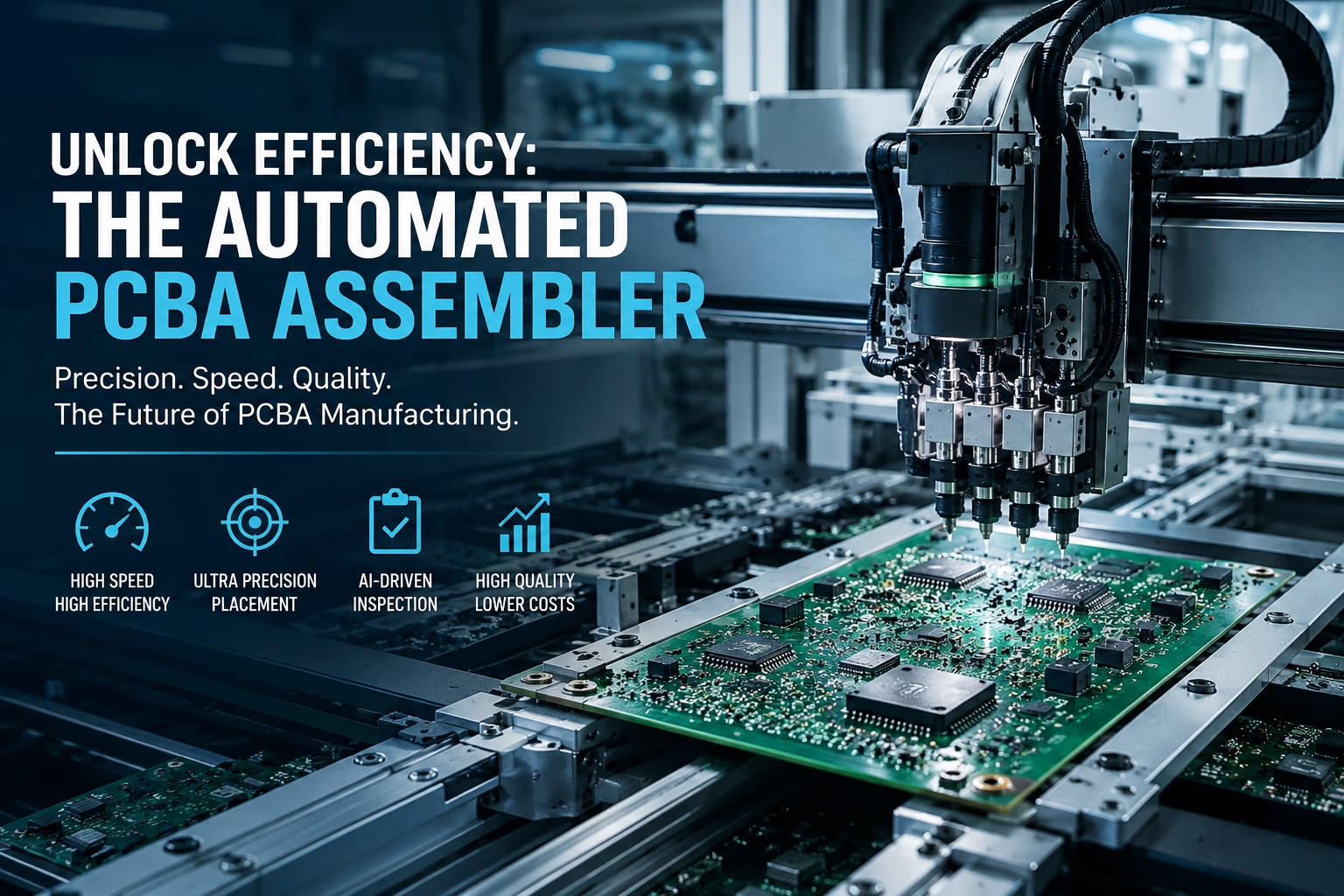
At the heart of Surface Mount Technology (SMT) assembly lines are high-speed pick-and-place machines. These robotic marvels are designed for extreme precision and speed, capable of placing tens of thousands of components per hour onto a PCB. Using vacuum nozzles and advanced vision systems, they accurately pick tiny components from feeders and place them onto designated solder pads with micron-level accuracy. This technology is critical for handling the increasingly miniaturized components found in today’s electronics.
Automated Reflow Ovens and Soldering
Once components are placed on a PCB covered with solder paste, the board moves into an automated reflow oven. This oven precisely controls temperature profiles, melting the solder paste to create robust electrical and mechanical connections between components and the PCB pads. For through-hole technology (THT) components, automated wave soldering machines are often employed, passing the board over a molten wave of solder to create connections. These automated soldering processes ensure consistent, high-quality solder joints, crucial for the reliability of the final product.
Multi-Stage Inspection Systems (SPI, AOI, AXI)
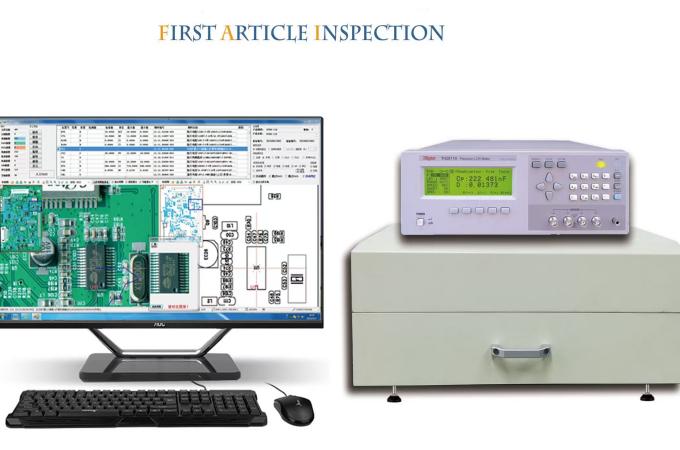
Quality control is paramount in PCBA, and automated systems excel here. Rather than relying on subjective human inspection, modern lines incorporate multi-stage inspection technologies:
- Solder Paste Inspection (SPI):Occurring before component placement, SPI systems use 3D imaging to verify the volume, height, and alignment of solder paste deposits. This proactive step catches defects early, preventing costly rework later.
- Automated Optical Inspection (AOI):After reflow soldering, AOI machines use high-resolution cameras to scan the PCBA for visual defects such as missing components, incorrect polarity, solder bridges, or insufficient solder. AI-driven systems further enhance AOI by learning from past defects and improving detection accuracy.
- Automated X -ray Inspection (AXI):For complex PCBs with hidden solder joints (e.g., under Ball Grid Array – BGA components), AXI provides a non-destructive way to inspect these unseen connections. It’s vital for ensuring the integrity of connections that optical methods cannot reach.
These inspection systems collectively ensure that almost every potential defect is identified and addressed, maintaining exceptionally high quality standards.
Unpacking the Benefits: Why Automate PCBA?
The adoption of an automated PCBA assembler isn’t merely an upgrade; it’s a strategic move that delivers a multitude of advantages across the entire manufacturing lifecycle. Businesses that embrace automation often see a transformative impact on their operations and bottom line.
Unprecedented Manufacturing Efficiency and Speed
Automated systems operate tirelessly, around the clock, without performance degradation. They significantly boost production throughput, allowing manufacturers to produce more boards in less time. High-speed pick-and-place machines can achieve placement rates of 30,000+ components per hour, a feat impossible with manual labor. This acceleration directly translates into shorter lead times and increased capacity to meet market demands.
Superior Accuracy and Reduced Defects
Precision robotics ensures components are placed with extreme accuracy, virtually eliminating errors common in manual assembly. The integration of AI-driven inspection systems (like AOI and AXI) further minimizes rework by identifying defects early in the process. This rigorous quality control leads to significantly lower defect rates, often below 0.1% in high-volume production, enhancing product reliability and reducing warranty claims.
Cost Savings and ROI
While the initial investment in automated equipment can be substantial, the long-term return on investment (ROI) is compelling. Automated systems reduce labor costs, minimize material waste by up to 15%, and decrease the need for manual rework. The increased throughput and higher quality yield also contribute to significant cost savings, making automation a financially sound decision for many manufacturers.
Scalability and Flexibility
Modern automated PCBA lines, especially those utilizing Flexible Manufacturing Systems (FMS), offer remarkable scalability. They can be rapidly reprogrammed to switch between different product designs, supporting both low-volume prototype batches and mass production runs without compromising cycle times. This adaptability is crucial for manufacturers dealing with diverse product portfolios and fluctuating market demands, enabling quick pivots and efficient resource allocation.
Sustainability and Waste Reduction
The precision inherent in automated processes leads to less material waste due to fewer errors and more efficient resource utilization. By minimizing rework and scrap, automated PCBA aligns with sustainable manufacturing goals, reducing the environmental footprint of electronics production. This aspect is increasingly important for companies aiming for ISO 14001 certification and demonstrating corporate social responsibility.
Adapting to Diverse Production Needs
One common misconception is that automated PCBA assemblers are exclusively for high-volume manufacturing. While they excel in mass production, advanced flexible manufacturing systems (FMS) have made automation increasingly viable for a broader range of production volumes. These systems allow for rapid reprogramming and retooling of PCBA lines, supporting not only large-scale production but also low -volume prototypes and high-mix, low-volume scenarios.
This adaptability is crucial for innovation, as it allows companies to iterate quickly on new designs without incurring prohibitive costs or lengthy setup times. Manufacturers like Fest offer cost-effective pick-and-place systems and readily available automation solutions that cater to various needs, from initial prototyping to full-scale production, whether for THT or SMT processes.
The Future of PCBA: AI, Robotics, and Smart Manufacturing
The evolution of the automated PCBA assembler is far from over. The industry is rapidly integrating even more sophisticated technologies to push the boundaries of efficiency and quality.
Artificial intelligence (AI) is already playing a pivotal role in refining inspection processes, making AI-driven inspection a standard. AI algorithms can analyze vast amounts of data from AOI and AXI systems, learning to identify subtle defects that might escape human operators and even predict potential failures. This proactive approach significantly reduces defects and improves overall product reliability.
Furthermore, the concept of “smart manufacturing” is transforming PCBA lines into interconnected ecosystems. This involves real -time data analysis, machine-to-machine communication, and the implementation of digital twin simulations. Digital twins create virtual models of the entire production process, allowing manufacturers to preemptively identify bottlenecks, optimize thermal profiling for solder paste, and make real-time adjustments during PCBA, all while minimizing rework and ensuring compliance with stringent standards like ISO 9001.
The continuous integration of advanced robotics, AI, and comprehensive data analytics is paving the way for fully autonomous factories, where PCBA processes are not just automated but intelligent and self-optimizing.
FAQ
- Question1:Can automated PCBA assembly adapt to low-volume prototypes?
Answer: Yes, modern automated PCBA assemblers, especially those utilizing flexible manufacturing systems (FMS), can be rapidly reprogrammed to support both prototype batches and mass production without compromising cycle times or resource efficiency. - Question2:How does AI-driven inspection reduce defects in PCB manufacturing?
Answer: AI-driven inspection systems use advanced algorithms to analyze high-resolution images from AOI and AXI machines. They learn from defect patterns, identify subtle anomalies, and even predict potential failures with higher accuracy and speed than human inspectors, significantly reducing defect rates and rework. - Question3:What are the primary types of inspection used in automated PCBA?
Answer: The primary inspection types include Solder Paste Inspection (SPI) for solder paste quality, Automated Optical Inspection (AOI) for visual component placement and soldering defects, and Automated X-ray Inspection (AXI) for hidden solder joints like those under BGAs.
Summary
The automated PCBA assembler is indispensable for modern electronics manufacturing. By harnessing precision robotics, high-speed pick-and-place machines, automated reflow ovens, and intelligent multi-stage inspection systems like SPI, AOI, and AXI, these solutions deliver unparalleled manufacturing efficiency, accuracy, and reliability. The benefits extend from significant cost savings and superior product quality to enhanced scalability and sustainability. As the industry moves towards smart manufacturing and integrates more AI and digital twin technologies, automated PCBA will continue to be a cornerstone of innovation, driving the future of electronics production.
Key Takeaways
- Automated PCBA assembly significantly boosts manufacturing efficiency and throughput, reducing manual intervention and human error.
- Key technologies include high-speed pick-and-place machines, automated reflow ovens, and multi-stage inspection systems (SPI, AOI, A XI).
- Automation leads to superior accuracy, defect rates below 0.1%, substantial cost savings, and improved ROI.
- Modern automated lines offer flexibility for both high-volume production and low-volume prototyping through flexible manufacturing systems.
- The future of PCBA is driven by AI-driven inspection, digital twin simulations, and smart manufacturing principles, enhancing predictive capabilities and optimization.
OrinewPCB has focused as a one-stop PCB assembly manufacturer from PCB Manufacturing to Electronic Components Sourcing to PCB Assembly to Test to Program IC for more than 14 Years with reliable quality and fastest delivery for global clients.